

01.27.2026 PropStream
Disclaimer: This guide is for educational purposes only and should not be considered legal, financial, or professional advice. Real estate laws and licensing requirements in Georgia may change, and wholesalers should consult a qualified real estate attorney or licensed professional before entering into any agreement or transaction.
|
Key Takeaways:
|
Georgia has grown into one of the country’s most attractive places to live, and the numbers prove it. According to 2025 estimates, the state’s population has reached approximately 11.3 million, making it the 8th most populous state and continuing to rise steadily. That wave of new residents has kept the housing market active, with median home prices remaining in the high $300,000s. As of fall 2025, the housing inventory is up more than 12% year-over-year.
For wholesalers, this creates an interesting setup: a strong long-term market with just enough softening to reveal new opportunities. More listings, motivated sellers, and consistent demand mean that deals are often hiding in plain sight. And while wholesalers need to stay aware of Georgia’s rules around assignments and marketing, the state remains one of the most promising places to find undervalued properties in 2025 and beyond.
Before getting started, it’s essential to understand how wholesaling is treated legally in Georgia.
Table of Contents |
Is Wholesaling Real Estate Legal in Georgia?
Wholesaling is generally permitted in Georgia in 2025 when it’s done by assigning your contractual rights in a purchase agreement, not by marketing or selling the property itself. In other words, you may profit from the equitable interest you hold in a contract, but unless you’re a licensed real estate professional, you should avoid presenting yourself as listing, brokering, or selling the home for the owner.
Put simply, wholesaling in Georgia is generally acceptable as long as you:
- Work through assignment agreements or use a double-closing structure
- Avoid publicly marketing or listing a property you don’t own
- Are transparent about your role and your equitable interest in the contract
Whether an agreement can be assigned often depends on the terms of the contract. Many purchase agreements require clear assignment language or the seller’s written consent, making it essential for wholesalers to understand what their specific contract allows. Georgia’s real estate and licensing laws define which activities require a license, so anyone exploring wholesaling should review the relevant statutes or consult with a qualified real estate attorney for clarification.
As regulations and consumer protections continue to evolve, the safest path is to operate transparently, focus on assigning your contractual interest, and avoid actions that could be interpreted as brokerage activity.
| Note: This information is for educational purposes only and should not be considered legal advice. |
Pro Tip: If you’re new to the process, signing up for PropStream Academy’s free Introduction to Wholesaling course is a great way to build confidence and understand the basics before tackling your first deal.
7 Essential Steps To Start Wholesaling in Georgia
Wholesaling in Georgia is accessible to beginners, but success starts with understanding a few core steps. The process is less about spending money and more about learning how to find deals, build relationships, and move quickly. Here’s how most wholesalers in Georgia get started:
1. Understand the Market and Focus on High-Opportunity Areas
Before jumping into your first deal, take time to learn how different parts of Georgia are performing. Not every city or neighborhood offers the same level of activity or motivation. Look for regions with strong population growth, rising rental demand, older housing stock, or pockets of distressed properties.
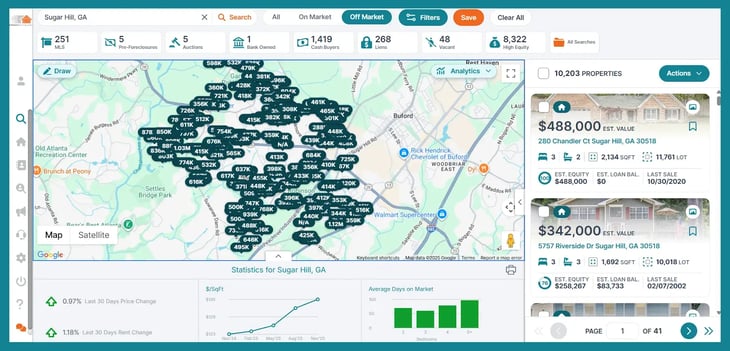
| This quick snapshot from the PropStream property search shows more than 10,000 off-market properties available in Sugar Hill, GA, a great example of how much hidden inventory you can uncover with the right data. |
Start your 7-day free trial to explore off-market opportunities nationwide.
Even smaller counties can produce great leads if you know where to look. By pinpointing areas where investors actively buy and sellers are more likely to negotiate, you’ll increase your chances of finding profitable wholesale deals right away.
2. Build a Solid Buyers List First
Before looking for properties, identify who will actually purchase your contracts, connect with local investors, fix-and-flippers, and landlords. You can find cash buyers through PropStream, real estate meetups, investor groups, social media communities, and county auction events. Having buyers ready ensures you can move fast once a deal comes your way.
3. Identify Motivated Sellers and Distressed Properties
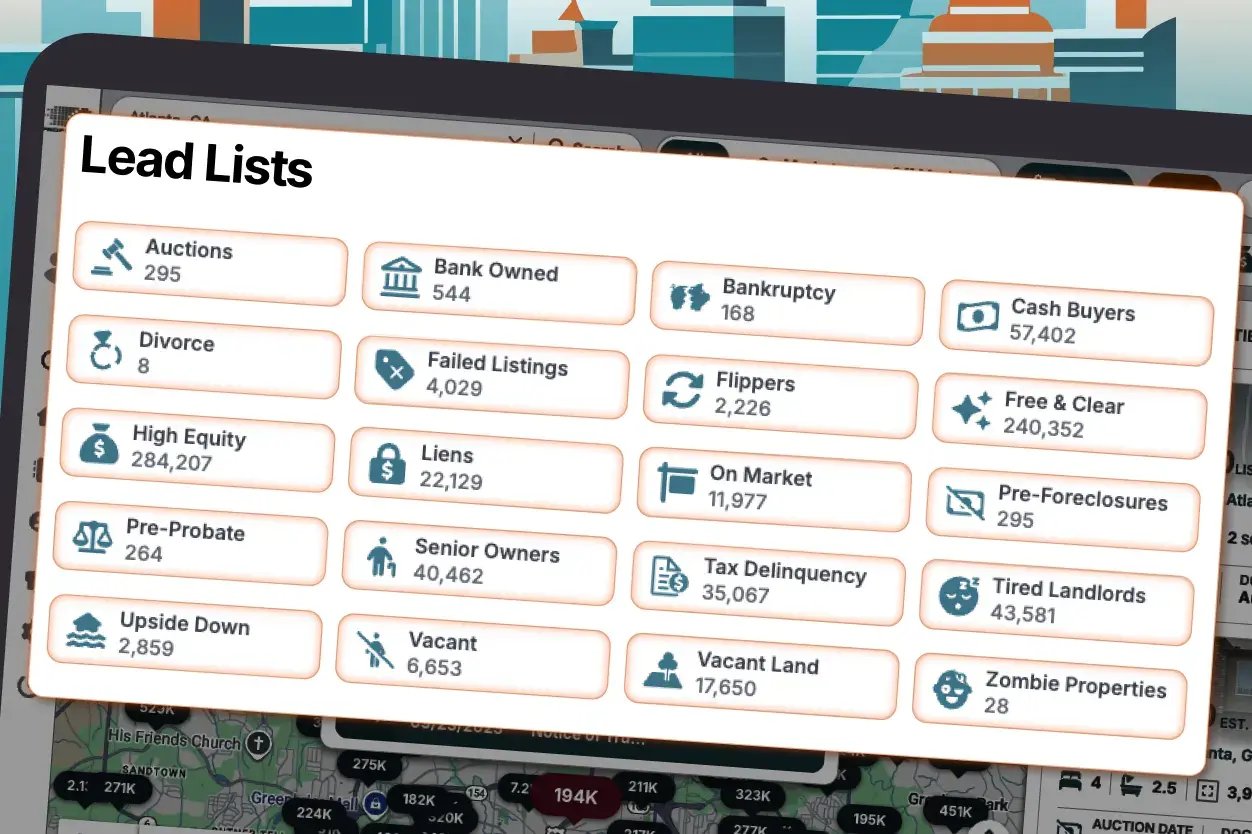
Georgia offers a variety of lead types, absentee owners, tax-delinquent properties, pre-foreclosures, vacant homes, probate leads, and more. Your goal is to find sellers who want a fast and simple transaction. Research public records, drive local neighborhoods (“driving for dollars”), or use real estate data platforms like PropStream to uncover opportunities quickly.
4. Run the Numbers and Understand Property Value
To wholesale successfully, you need to know what a good deal looks like. This means checking comparable sales, estimating repair costs, rehab costs, and understanding after-repair value (ARV). Investors only buy if the numbers make sense, so accurate analysis is key.
If you want a deeper breakdown of how wholesalers structure their offers, check out this article on how wholesalers calculate their pricing structure.
5. Systematically Plan Your Outreach and Follow-Up
Generating leads is essential, but consistent outreach and well-timed follow-up are what move deals across the finish line. Wholesalers who rely on a structured communication plan, rather than random check-ins, see significantly higher response and conversion rates.
Use tools like BatchDialer to organize your outbound calling with features such as local presence dialing and multi-touch campaigns that help increase connection rates. Pair this with PropStream’s built-in marketing options, including direct mail, targeted emails, and automated follow-up sequences, to stay top-of-mind with motivated sellers. A systematic approach ensures no lead slips through the cracks and helps you convert more conversations into signed contracts.
Also Read: How Wholesalers Use BatchDialer to Scale Outreach
6. Secure the Deal With the Right Contract
When you find a promising property, negotiate and sign a purchase agreement that clearly outlines your rights, including whether it can be assigned. Make sure you understand what a wholesale real estate contract must include and, most importantly, avoid presenting yourself as a broker or agent if you are not licensed.
7. Assign the Contract and Close With a Real Estate Attorney
.webp?width=1252&height=834&name=propstream-blog-inline-image-top-10-signs-bankrupt-2-1252x834%20(2).webp)
Once you’ve secured a purchase agreement and identified a buyer, the next step is to transfer your interest through an assignment agreement or, in some cases, a double closing. Your role is simply to connect the buyer and the deal, not to market or represent the property unless you’re licensed or the actual owner.
In Georgia, all real estate closings must be handled by a licensed attorney. They’ll oversee the paperwork, disclosures, and final transaction details. After closing is completed, your assignment fee is paid, and the deal is officially wrapped up.
Top 10 Trending Housing Markets in Georgia for Wholesaling
Here is a data-driven list of Georgia markets that have shown notable movement in 2025. While not exhaustive, these areas reflect a mix of price growth, activity levels, and general market trends that may be useful for wholesalers exploring different parts of the state.
| Rank | Market | 2025 Insight | Wholesaling Opportunity |
| 1 | Milton, GA | Fastest-growing sales price (+38.7%) | High demand and ARV potential |
| 2 | Alpharetta, GA | Strong price growth (+20.3%) | Strong comps; ideal for assignment spreads |
| 3 | Columbus, GA | Price growth +17.3%; large rental base | Consistent rental and investor activity |
| 4 | Pooler, GA |
Price growth +16.4%; |
Rising demand + expanding inventory |
| 5 | Braselton, GA | Price growth +15.4%; major development corridor |
Strong flip and build-to-rent potential |
| 6 | Acworth, GA | Price growth +14.5%; high competitiveness |
Fast-moving deals; investor-heavy |
| 7 | Hoschton, GA | Price growth +11.3%; growing suburban demand |
Great for family buyers and off-market leads |
| 8 | Roswell, GA | Price growth +10.6%; highly competitive market |
Premium ARV market; strong investor demand |
| 9 | Savannah, GA | Price growth +8.7%; strong rental/tourism demand |
Consistent demand; stable rental market |
| 10 | Cartersville, GA | Price growth +10.9%; manufacturing and logistics hub |
Balanced distress + investor appetite |
Source: Redfin
These markets are just the starting point. With PropStream, you can dig deeper into local trends, filter for motivated sellers, and build targeted lead lists across any market nationwide.
Common Pitfalls To Avoid When Wholesaling in Georgia
Before wrapping up, it’s important to be aware of a few common pitfalls that can impact your success when wholesaling in Georgia. Psst! It’s a long list, but each one is worth keeping in mind as you navigate real deals.
- Rushing into deals without verifying ownership: Some properties in Georgia may have multiple owners, inherited interests, or incomplete title records. Failing to confirm ownership early can delay your closing or kill the deal entirely.
- Ignoring liens and other title issues: Tax liens, municipal fines, HOA balances, and utility arrears are common in distressed properties. Without a title check or preliminary research, wholesalers may contract properties that buyers won’t touch.
- Using a one-size-fits-all contract for every deal: Georgia sellers vary widely, some want earnest money, some want shorter timelines, and others need creative terms. Relying on a single template can limit negotiations or make certain deals unattractive.
- Overpromising timelines to sellers or buyers: New wholesalers often underestimate how long assignment, buyer coordination, or title prep can take. Setting unrealistic expectations can damage credibility and future deal flow.
- Neglecting record-keeping and deal tracking: With multiple leads, conversations, and follow-ups happening daily, it’s easy to lose track. Poor documentation leads to missed opportunities, forgotten seller commitments, and buyer confusion.
- Not understanding local nuances between Georgia counties: Georgia markets vary dramatically, Atlanta suburbs, coastal cities like Savannah, and central Georgia towns all behave differently. Failing to factor in local demand, rental dynamics, or turnover speed can make a deal look better (or worse) than it actually is.
- Depending solely on digital outreach: In Georgia’s mix of urban and rural markets, some sellers respond better to direct mail, door knocking, or community referrals. Relying only on calls or emails may reduce your reach.
- Failing to plan for backup buyers: Even strong buyers occasionally back out. Wholesalers without backup options risk contract expiration or having to renegotiate under pressure.
Conclusion: Start Wholesaling in Georgia With Confidence
Wholesaling in Georgia offers beginners and experienced investors a flexible, low-capital way to enter the real estate market. With strong population growth, expanding inventory, and a wide range of property types, the state offers plenty of opportunities for those willing to learn the process. By understanding the legal framework, using reliable data, analyzing deals accurately, and following a structured outreach plan, you can build a repeatable wholesaling system and move confidently toward your next deal.
What makes the biggest difference is access to the right tools. With nationwide property data, 165+ filters, 20+ pre-built Lead Lists, skip tracing, and built-in marketing features, PropStream helps you find motivated sellers faster.
*PropStream engages an independent third party to perform skip-tracing.