
03.17.2026 PropStream
Disclaimer: PropStream does not offer legal advice. This article is for informational purposes only. Consult a legal professional to see which real estate grants you may qualify for.
|
Key Takeaways:
|
Housing grants aren’t just for homebuyers. As long as you meet the eligibility requirements, you might be able to use them to help buy investment property.
In this article, we’ll highlight five housing grant programs to explore if you want to lower the upfront cost of your first real estate deal.
Why Grants in Real Estate Are Often Misunderstood
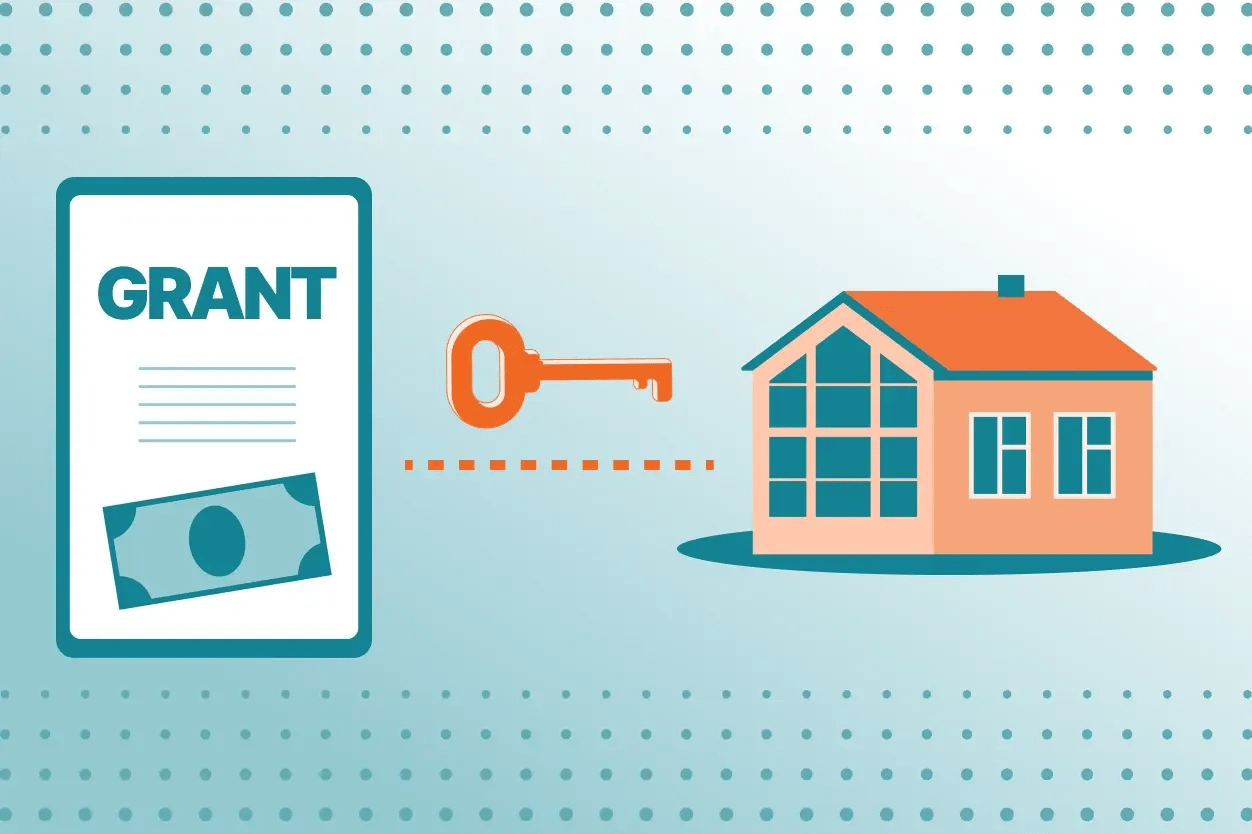
Before diving into the top five grants for beginner investors, it’s important to clarify a few things.
First, true “free money” for rental investing is rare. Most grants are tied to affordable housing, redevelopment zones, or rural initiatives. In other words, grants are designed to further housing goals and priorities, not necessarily lower costs for investors.
As a result, many grants impose strict rules and reporting requirements. For instance, you may need to develop housing in a low-income neighborhood or rent to low-income tenants to qualify.
Additionally, grants must be paired with strong deal sourcing to be effective. It’s one thing to qualify for a grant. It’s another to find a property that pencils out. However, if you can meet eligibility requirements and find a great deal, grants can be a great way to break into the market.
1. HOME Investment Partnerships Program (HOME Program)
The HOME Investment Partnerships Program (HOME Program) is the largest Federal block grant to state and local governments designed exclusively to create affordable housing for low-income households.
While the HOME program doesn’t provide funding directly to investors, it funds local government programs that may be able to pass those savings on to investors. Eligibility requirements vary, but income limits on benefitting households typically apply. Contact your local or state government to learn more.
2. Community Development Block Grants (CDBG)
The Community Development Block Grant (CDBG) Program provides grants to states, cities, and counties for funding housing development in low- to mid-income communities. Since the program is administered locally, you’ll need to confirm eligibility requirements for your market.
However, all CDBG funds must benefit low- and moderate-income households, whether that’s through the rehabilitation of outdated buildings, new housing development projects, or other community improvement efforts. Try to find a distressed property in a CDBG area to see if it qualifies for funding.
Related: How Can Predictive AI Help You Find Off-Market & Distressed Leads?
3. Affordable Housing Program (AHP)
The Affordable Housing Program (AHP) administers grants through the country’s 11 regional Federal Home Loan (FHL) Banks. These are designed to support the purchase, construction, or rehabilitation of housing for low- or moderate-income households, including owner-occupied homes and rental units.
Participating banks must typically apply and compete for funding in partnership with a nonprofit or housing organization. However, banks can also receive special grant funding to set aside as a down payment, closing cost, or counseling assistance for homebuyers.
These programs are best for small-scale developers interested in developing rental housing for low- to moderate-income households, not casual investors.
4. USDA Rural Housing Grants
The United States Department of Agriculture (USDA) offers different housing grant programs for rural communities. These fund construction or renovation projects. However, properties must be located in a designated “rural” area, and recipients must fall below an income threshold.
Check the USDA’s Property Eligibility Map to see if a property meets the location requirement. USDA grants can be a good fit for investors interested in rural or small-town areas.
5. State Housing Trust Funds
Lastly, state housing trust funds offer ongoing funding for affordable housing projects. Requirements vary by state, but most focus on preserving or rehabilitating housing for low-income households or workforce tenants.
For qualifying projects, state housing trust funds can also be a great source of gap funding. For example, it may help fill a funding gap after your capital investment and mortgage funds. Contact your state housing authority to learn more about state housing trust funds in your area.
Important Note: Many grants require long-term affordability commitments, and most are not structured for traditional fix-and-flip strategies. Ultimately, grants are tools, not shortcuts to profit.
Pair Funding With Smart Deal Sourcing
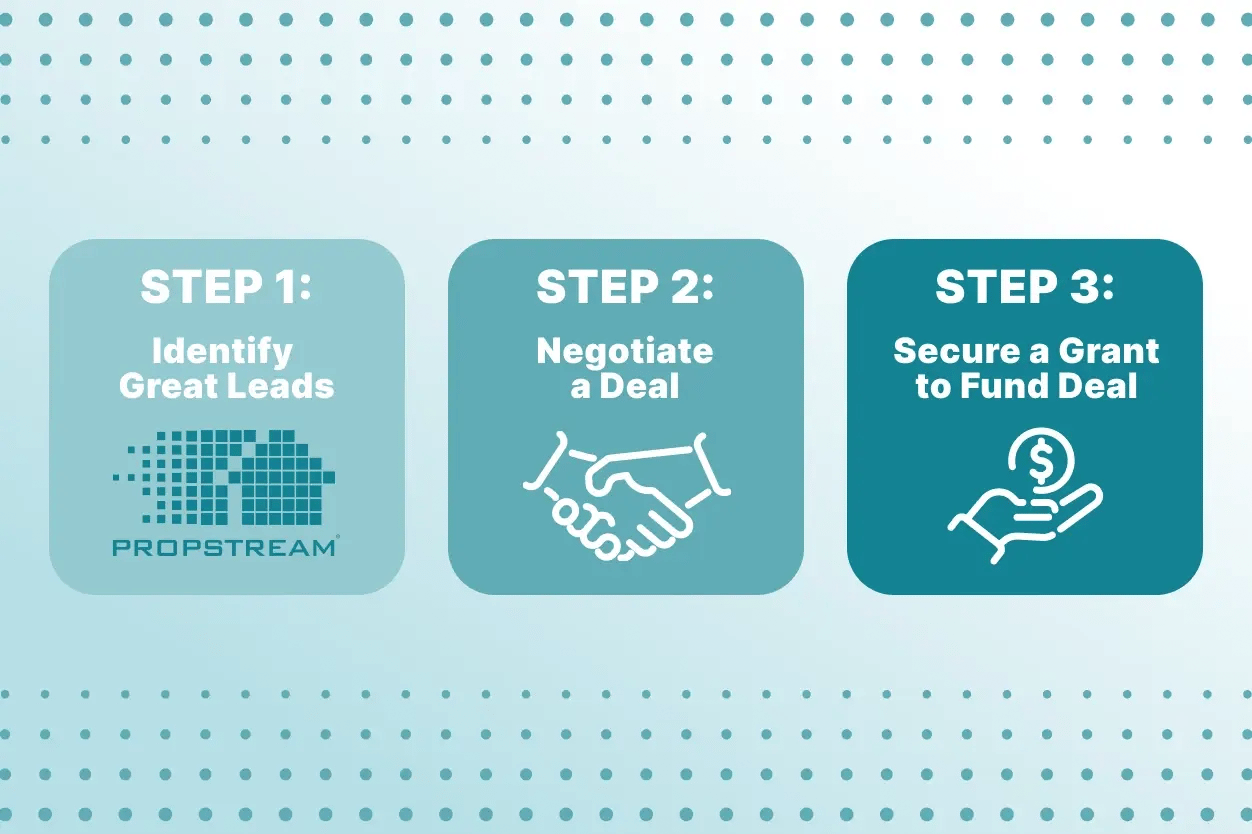
Note: PropStream can help you find leads and start your outreach. However, securing grants cannot be done within PropStream.
Even with funding secured, you won’t make it far in real estate investing without buying right.
With PropStream, you can quickly find and qualify properties. For example, you can search over 160 million properties for off-market opportunities in redevelopment zones, apply search filters to narrow in on potential selling motivations, and run comps to avoid overpaying.
Some popular filters include High Equity, Absentee Owner, Pre-Foreclosure, and Tax Delinquency. You can even stack multiple to get highly tailored lead lists.
The best part is that PropStream is affordable and beginner-friendly. Anyone can use it to validate deals before committing capital.
Finding Eligible Properties Before Applying for Funding
PropStream can help you identify grant-eligible properties by making it easier to:
- Search rural ZIP codes for USDA programs.
- Search distressed properties that may qualify for rehab assistance.
- Validate projected rents and after-repair value (ARV) before submitting applications.
|
Struggling to secure a grant for your next deal? |
5 Tips for Success
To get the most out of grants for real estate investing, follow these best practices:
- Research local eligibility guidelines before structuring your deal.
- Start with small projects aligned with grant criteria.
- Always confirm affordability requirements and timelines.
- Use data to ensure margins remain strong after compliance restrictions.
- Be transparent with banks and programs about your project and goals.
In the end, grants can open doors. But it’s the right deals that lead to long-term success. Use PropStream to find discounted properties, analyze opportunities, and invest with confidence.
*PropStream engages an independent third party to perform skip-tracing.