

03.20.2026 PropStream
Disclaimer: PropStream does not offer legal advice. This article is for informational purposes only. Consult a legal professional before agreeing to a cash-for-keys agreement.
|
Key Takeaways:
|
Sometimes, the best way to get a non-paying tenant out of your property is to pay them to leave. It’s usually faster and cheaper than eviction, and it can help fund the tenant’s relocation.
In this article, we’ll explain how cash-for-keys agreements work and how to use them as a landlord or investor seeking discounted, off-market opportunities.
What Is a Cash for Keys Agreement?
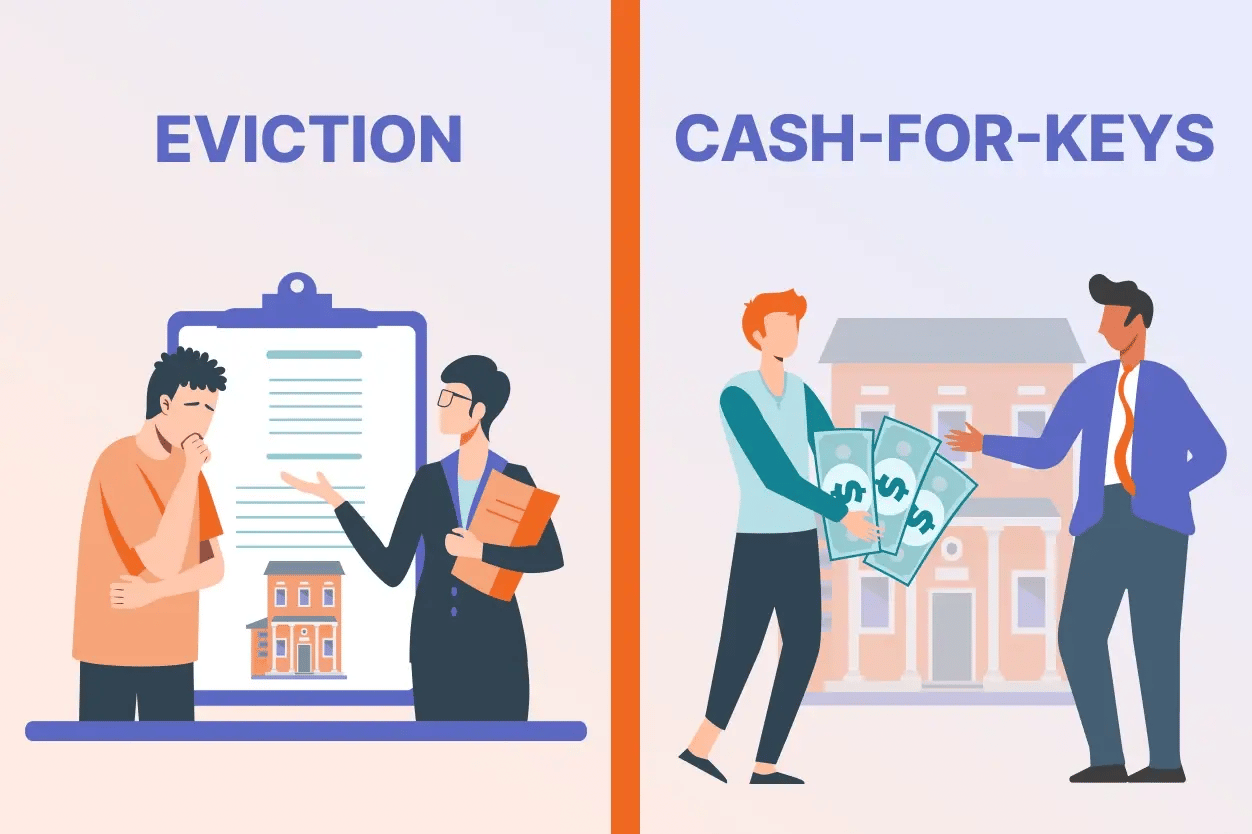
A cash-for-keys agreement is a voluntary arrangement in which a property owner offers a tenant a cash payment for vacating the property by a set date. It’s often used as an alternative to formal eviction proceedings, which cost an average of $3,500 and can take as long as 3-4 weeks.
By contrast, cash-for-keys can cost as little as a few hundred dollars and have faster deadlines. As long as you follow all state and local regulations, that is. For example, some jurisdictions may have rules about how cash-for-keys agreements are documented, how much time tenants have to vacate, and whether a cash amount can replace a security deposit.
Important: Always check your local housing regulations and/or consult a legal professional before arranging a cash-for-keys agreement.
Why Investors Use Cash-for-Keys Instead of Eviction
Cash-for-keys agreements can be an attractive option for many reasons.
For one, formal eviction proceedings can take months and involve hefty court fees and legal expenses. But that’s not all. As a property owner, you’re still on the hook for holding costs like mortgage payments, utilities, and property taxes—even if the tenant is no longer paying.
Furthermore, forced removal can lead to greater property damage, as embittered tenants may vent their anger by vandalizing your property.
By opting for a cash-for-keys agreement, you can minimize these risks and ensure a faster turnover with a predictable cost you set (the cash payment).
When Does Cash-for-Keys Make Sense?
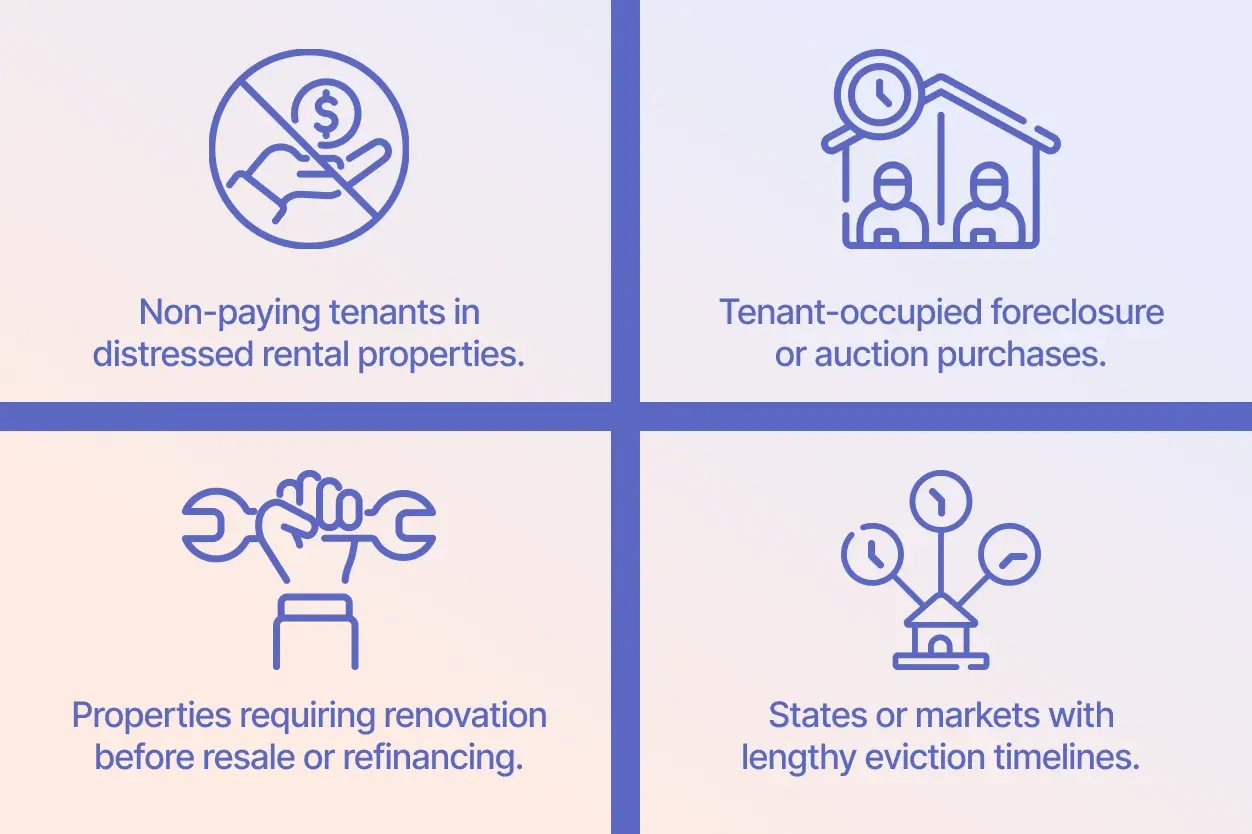
Consider the following scenarios when a cash for keys agreement may make sense:
- Non-paying tenants in distressed rental properties. Every month that passes where you don’t receive rent is money lost.
- Tenant-occupied foreclosure or auction purchases. Some foreclosure and auction properties may come with existing tenants who won’t agree to your rental terms.
- Properties requiring renovation before resale or refinancing. A distressed property in need of repairs may require existing tenants to vacate for renovations to take place.
- States or markets with lengthy eviction timelines. When eviction is particularly costly or time-consuming, a cash-for-keys agreement may be faster and cheaper.
How to Negotiate a Cash-for-Keys Agreement
A cash-for-keys agreement is fully negotiable (so long as you comply with government regulations).
To arrive at a mutually beneficial deal, first calculate your holding costs and the cost of pursuing an eviction. Then, determine a reasonable cash offer to present to the tenant in a respectful and professional manner.
If the tenant accepts your offer, put the deal terms in writing with clear deadlines and inspection provisions, and only release payment after you’ve verified the property has been vacated and left in the agreed condition. This protects you from paying the tenant prematurely.
Of course, before finalizing the agreement, it’s always wise to consult a legal professional. A legal professional can also help you set fair terms.
Risks and Legal Considerations

Keep in mind that landlord-tenant laws vary by state and municipality. As a result, you’ll need to research the regulations in your market before drafting a cash-for-keys offer.
That said, Fair Housing regulations apply nationwide and prohibit housing discrimination based on race, color, national origin, religion, sex, familial status, and disability. In other words, you can’t ask a tenant to leave solely because they fall under one of these protected classes.
Whatever you do, avoid any behavior that could be interpreted as coercion or harassment, and always ensure you maintain proper documentation of any cash-for-keys agreement.
How Cash-for-Keys Connects to Distressed Property Investing
As an investor, cash-for-keys agreements can also pave the way for new off-market opportunities.
For example, imagine a rental property has non-paying tenants who won’t leave. The owner may be willing to sell the property at a discount as a result. By locking in a low price while negotiating a cash-for-keys offer, you could still end up with a great deal. Plus, many investors avoid tenant issues, which lowers your competition and gives you more negotiation leverage.
The key is to properly structure your purchase offer and cash-for-keys agreement in advance, so you can ensure a sufficient profit margin upfront.
Important: Before purchasing a distressed property with troublesome tenants, we recommend seeking legal advice.
BEST OPTION: PropStream
Not sure where to find off-market property deals? Try PropStream.
Our real estate data platform lets you search over 160 million properties nationwide and apply filters for potential selling motivations, including Pre-Foreclosure, Tax Delinquency, Bankruptcy, and Absentee Owner. You can even stack multiple filters to identify highly motivated sellers.
Once you’ve narrowed your search, you can save it to receive automatic notifications when new properties meet your criteria. The goal is to focus on off-market, tenant-occupied properties that many investors overlook.
With PropStream’s built-in dialing and campaign tools, you can turn your lead list into real conversations and uncover off-market deals faster—start your 7-day free trial today.
Analyzing the Deal Before Moving Forward

While no deal is risk-free, you can minimize risk by carefully reviewing a property’s history, condition, and market.
For example, PropStream lets you run comps to estimate a property’s current and After-Repair Value (ARV), review mortgage balances and equity positions, and analyze ownership history and distress indicators such as liens or deferred maintenance.
By reviewing all of these factors, you can ensure the numbers justify both the acquisition and cash-for-keys costs before committing to a deal.
5 Tips for Success
For best results with cash-for-keys agreements, follow these best practices:
- Treat cash-for-keys as a calculated financial strategy, not an emotional decision.
- Factor negotiation payouts into your total acquisition cost.
- Keep documentation clear and compliant.
- Focus first on sourcing discounted properties with strong margins.
- Always treat tenants with respect and dignity.
Ultimately, distressed and tenant-occupied properties can present real opportunities when approached strategically. Find out for yourself by using PropStream to find discounted, off-market properties, analyze equity, and uncover opportunities other investors overlook.
*PropStream engages an independent third party to perform skip-tracing.