

10.13.2025 PropStream
Disclaimer: This article is for educational purposes only and does not constitute legal, financial, or tax advice. Wholesaling laws in Virginia may change, and compliance requirements vary depending on the situation. Always consult a licensed attorney, CPA, or real estate professional before acting on the information provided.
Key Takeaways
- Wholesaling is typically permitted in Virginia if proper practices are followed, with recent legislation dictating when a real estate license may be required.
- The difference between operating compliantly and triggering licensing issues often comes down to how you market and assign contracts.
- With the right systems and data tools, you can uncover motivated sellers across Virginia’s diverse markets before your competition does.
As 2026 begins, Virginia’s housing market remains active and competitive. In 2025, the statewide median home price held in the mid $400,000 range, according to Virginia REALTORS®, with median prices in parts of Northern Virginia surpassing $700,000 based on reports from the Northern Virginia Association of Realtors. Inventory levels also increased in several regions compared to prior years, signaling a market that is adjusting rather than slowing.
For wholesalers, higher baseline prices combined with shifting supply can create spread potential, but only when deals are analyzed carefully and structured within Virginia’s regulatory framework. Before entering your next agreement, it is important to understand how wholesaling works in Virginia and what compliance considerations may apply in 2026.
What Is Wholesaling Real Estate?
Wholesaling real estate is a strategy where an investor secures a property under contract and then transfers their contractual rights to another buyer for a fee. Instead of purchasing and renovating the home, the wholesaler focuses on finding the opportunity and structuring the deal.
At a high level, the process involves three steps:
- Finding a homeowner who may be open to selling
- Securing a purchase agreement
- Assigning that contract to an end buyer, often another investor
Unlike fix-and-flip or buy-and-hold investing, wholesalers typically do not take ownership of the property. Instead, they focus on identifying opportunities, analyzing the numbers, and transferring their contractual rights to another buyer. Because the strategy centers on assigning a contract rather than selling the property itself, understanding local regulations and proper contract language is essential.
Pro tip: If you are just getting started, PropStream’s Academy offers a free Introduction to Wholesaling course designed to help you build confidence and understand the fundamentals before pursuing your first deal.
Is Wholesaling Real Estate in Virginia Legal in 2026?
Important: PropStream does not offer legal advice regarding wholesale real estate in Virginia. Before attempting a wholesale deal, always research local laws and consider meeting with a legal professional.
Virginia law typically permits contract assignments, but the state clarified how it treats repetitive contract activity under its real estate licensing laws.
In 2024, the Virginia General Assembly passed HB 917 (effective July 1, 2024), which amended the definition of a Code of Virginia real estate broker to include individuals or business entities who “sell, buy, negotiate, or otherwise deal in real estate contracts, including assignable contracts, on two or more occasions in any 12-month period for compensation or valuable consideration.” This change effectively means that engaging in multiple assignable contract activities within a year may require a real estate broker license in Virginia.
Regulatory oversight and enforcement are handled by the Virginia Real Estate Board under the Department of Professional and Occupational Regulation.
What This Means in Practice
Virginia draws a distinction between:
- Assigning your own contractual interest in a property.
- Acting in a way that may resemble unlicensed brokerage.
If you are repeatedly negotiating contracts for compensation, marketing properties you do not own, or representing buyers or sellers, Virginia’s updated broker definition may trigger licensing requirements. Understanding where that line sits is essential before scaling your wholesaling business in the state.
7 Considerations for Wholesaling Real Estate in Virginia
Below are important guidelines to keep in mind as you wholesale in Virginia. They can help you stay within the state’s regulations while building a smooth and compliant process.
1. Work With a Real Estate Attorney Early On

In Virginia, your wholesale deal begins with the contract. Because you are assigning contractual rights rather than selling the property itself, the wording of your agreement is especially important.
Working with a real estate attorney who understands investor transactions can help you structure contracts clearly and define your role appropriately.
Key points to keep in mind:
- Assign your contract, not the property. You are transferring contractual rights, not ownership.
- Include a clear assignment clause so your ability to transfer the agreement is defined upfront.
- Communicate openly with the seller about how the process works. Transparency builds trust.
- Consider building a relationship with one attorney who understands your investing strategy.
If you are unsure where to start, the Virginia State Bar offers a Lawyer Look-up service that connects individuals with licensed attorneys across the state. You can also explore directories like FindLaw to search for real estate attorneys by location and practice area.
As your wholesaling activity grows, having consistent legal guidance can help streamline your process and provide clarity with each transaction.
2. Understand Licensing Boundaries in Virginia
Under the state’s updated broker definition in HB 917, engaging in contract activity, including assignable contracts, on two or more occasions within a 12-month period for compensation may fall within broker licensing requirements. That means if wholesaling becomes a repeated business activity rather than an occasional transaction, additional considerations may apply.
In practice, this may include:
- Repeatedly negotiating contracts for compensation
- Advertising properties you do not own as if you are selling them
- Acting on behalf of buyers or sellers without a license
If you plan to wholesale consistently, obtaining a real estate license can be a strategic step. A license can provide added flexibility, direct access to the MLS, and expanded opportunities within Virginia’s real estate market. As your business grows, being intentional about how you structure transactions and present your role can help you build credibility and operate with greater confidence.
3. Be Transparent With All Parties
Clear communication is one of the most important parts of a successful wholesale transaction. Transparency helps protect your reputation and creates smoother closings for everyone involved.
Best practices include:
- Clearly stating that you are assigning your contractual interest.
- Using written documentation that outlines each party’s role.
- Explaining how the assignment process works in simple terms, as most won’t be familiar with real estate jargon like “assignment clauses” or “contractual rights.”
When sellers and buyers understand the deal structure from the beginning, it reduces confusion and helps build long-term credibility in your market.
4. Contract Assignment vs. Double Closing
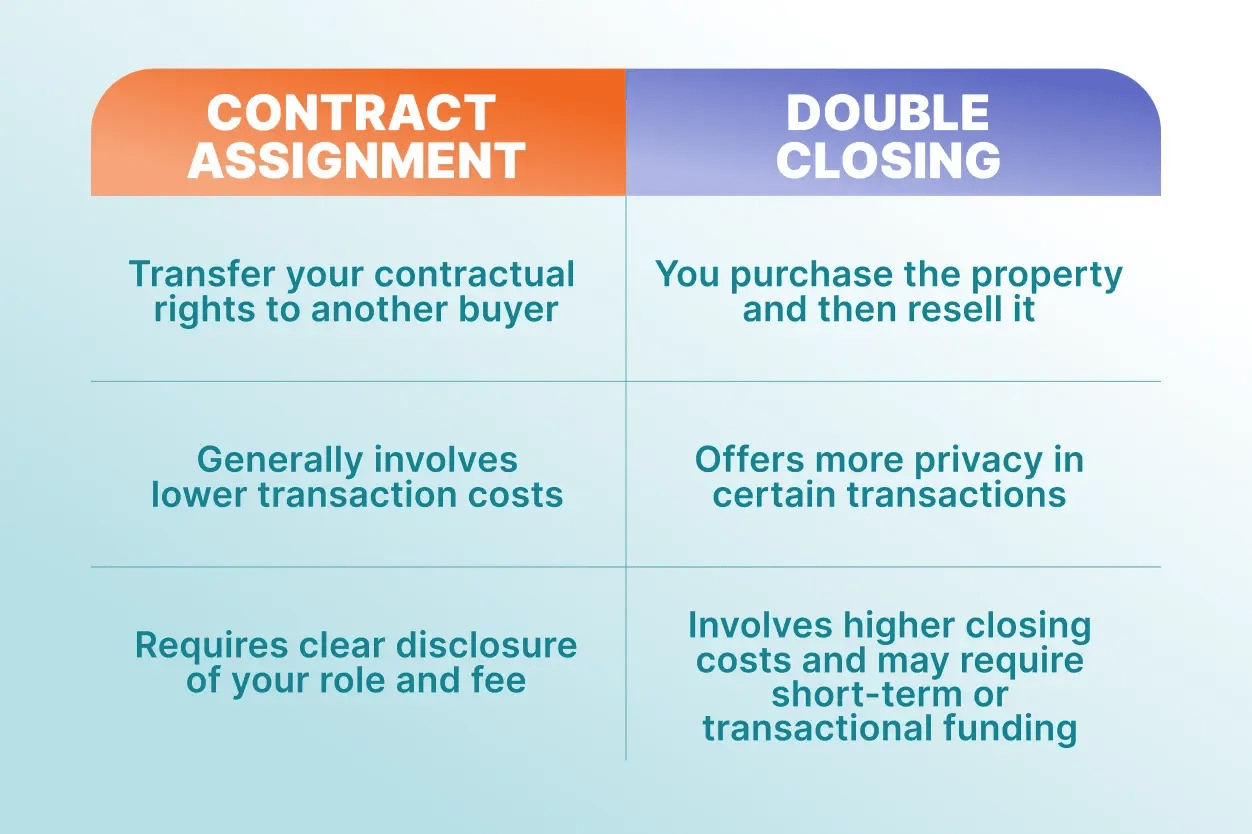
Virginia wholesalers typically exit a deal using one of two approaches. Understanding both can help you choose the strategy that fits your situation. Each strategy comes with its own structure, costs, and level of disclosure. Choosing the right option often depends on the details of your agreement, the expectations of the seller and buyer, and how you prefer to structure the transaction.
To better understand the differences, here’s a simple comparison:
|
Contract Assignment |
Double Closing |
|
Transfer your contractual rights to another buyer |
You purchase the property and then resell it |
|
Generally involves lower transaction costs |
Offers more privacy in certain transactions |
|
Requires clear disclosure of your role and fee |
Involves higher closing costs and may require short-term or transactional funding |
Understanding both options gives you flexibility when structuring each transaction.
Assignments are often simpler and cost less when everyone is comfortable with the structure. Double closings can offer more control when the contract does not allow assignment or when you prefer to complete the purchase first.
Pro Tip: Research and create a recent cash buyers list in your area before choosing your exit strategy. Understanding who is actively purchasing can help you structure deals more efficiently.
5. Advertising and Marketing Limitations for Wholesalers
In Virginia, how you advertise your deal matters.
Key points to remember:
- Focus on marketing your contractual rights to purchase the property.
- Avoid posting wholesale deals on the MLS or public platforms as if you are selling the home unless you hold a license.
- Many wholesalers build and maintain private cash buyer lists or use closed investor groups to share contract opportunities.
Virginia law draws a distinction between marketing a property and marketing your contractual interest. Keeping your advertising aligned with your role in the transaction can help you operate more smoothly while still connecting with active buyers in your market.
6. Stay TCPA Compliant When Marketing

Cold calling and text message outreach are common strategies for reaching homeowners, but the federal Telephone Consumer Protection Act guidelines apply in Virginia.
Key practices include:
- Obtain appropriate consent before sending text messages
- Provide a clear opt-out option in your communications
- Keep records of calls, messages, and consent
Using outreach systems designed with compliance in mind, such as PropStream’s built-in Click-to-Dial, you can make one-on-one calls directly within the platform via a softphone, keeping your outreach centralized and compliant.
Taking a proactive approach to compliance not only helps avoid fines but also strengthens your professional reputation as your marketing expands.
7. Understand How Wholesaling Income Is Taxed in Virginia
Assignment fees are generally treated as ordinary income at both the federal and state levels. In Virginia, state income tax rates apply based on your taxable income and business structure.
Because wholesaling income is typically not treated as capital gains, planning ahead is important.
Make sure to:
- Choose an entity structure that aligns with your goals
- Keep track of deductible expenses such as marketing, software, and professional services
- Prepare for estimated payments and reduce surprises at tax time
Clear recordkeeping and proactive planning can make tax season more manageable as your wholesaling activity grows.
Pro Tip: Consider consulting a certified public accountant early in your wholesaling journey. Getting guidance at the beginning can help you structure your business properly and prepare for how assignment income will be reported.
How PropStream Helps Smarter Virginia Wholesalers
Virginia markets range from high-priced Northern Virginia suburbs to steady-growth cities like Richmond and Hampton Roads. With varying price points and active investor competition, having accurate data and efficient outreach tools can make a difference. With PropStream, you can:
Find Motivated Sellers Faster
Search using over 165 filters and 20 pre-built Lead Lists, including pre-foreclosures, tax delinquencies, high equity properties, absentee owners, and vacant homes across Virginia counties.
Build a Cash Buyer List
Use the Cash Buyer Lead List to identify investors who have recently purchased properties without financing. Reviewing purchase history helps you understand who is actively buying in your market.
Run Comps and Estimate ARV
Pull comparable sales using MLS and public records data. Use the Rehab Calculator to estimate renovation costs so you can determine a more informed maximum allowable offer.
Watch: How to utilize Rehab Calculator in PropStream
Skip Trace and Identify Accurate Owner Information
PropStream’s enhanced skip tracing experience, which now includes Corporate Skip Tracing, makes it easier to access contact information and manage outreach directly within the platform.
Skip tracing is free with the Pro or Elite plan, or with the PropStream Connect add-on to the Essentials plan. Once you’ve identified a property, you can initiate contact without switching systems.
Instantly Connect With Leads using Click-to-Dial
With the latest Click-to-Dial feature, you can place one-on-one calls directly from PropStream using an integrated softphone. This can be especially useful for beginners who want a streamlined way to contact owners without having to manage multiple tools.
Check out the demo below to learn how Click-to-Dial functions within PropStream.
AI-Powered Deal Analysis for Virginia Wholesalers
With PropStream Intelligence, you can review predictive data and evaluate potential margins before entering into a contract, helping you make more informed decisions.
- Increased Data Accuracy: Property data updates as new information becomes available.
- Property Condition Analysis (Photo AI): AI reviews MLS photos to grade condition from Disrepair to Luxury.
- Foreclosure Factor: A predictive score estimating the likelihood of mortgage default.
- Wholesale Value Calculation: An AVM-based estimate set at 70 percent of the AI-calculated property value, offering a quick pricing benchmark.
Together, these AI enhancements provide added context so you can assess opportunities with greater clarity.
Final Thoughts on Wholesaling in Virginia
Virginia offers real opportunities for wholesalers who understand the rules and operate within clear boundaries.
Long-term success often comes down to preparation and the quality of the resources you use. Reliable, up-to-date property data, ongoing education, and structured outreach systems can help you evaluate deals with greater confidence. Platforms like PropStream bring property research, analysis, and communication tools into one place, making it easier to stay organized as your business grows.
Staying informed about market shifts and regulatory updates should remain a priority. With the right data and support, you can approach wholesaling in Virginia with clarity and steady momentum.
*PropStream engages an independent third party to perform skip-tracing.


