

07.15.2026 PropStream
Disclaimer: PropStream does not offer financial advice. This article is for informational purposes only. Consult a financial professional before investing in Arizona real estate.
|
Key Takeaways: |
|
With more and more people moving to Arizona, now may be a smart time to invest in the state’s real estate market. The growing population, housing demand, and home price appreciation could amplify your returns, whether you’re a buy-and-hold investor or a local real estate agent.
Read on to learn more about Arizona’s inbound migration trends, their impact on the local real estate market, and how to use PropStream to act on them.
Arizona’s Population Growth: What the Data Shows

According to data from HireAHelper, Arizona (AZ) had a net migration rate of 7.1 per 10,000 people in 2025. That means the state gained 7.1 new residents for every 10,000 existing residents. Among all 50 U.S. states, this net migration rate is the 21st highest.
For real estate professionals, these migration trends present new opportunities. They indicate increased demand for housing in Arizona, which leads to higher home prices and rents (all else equal).
Check out the video below for a quick overview.
Why People Are Relocating to Arizona
Interestingly, the vast majority of Arizona’s new move-ins are age 55 or older (69.5%) and have an income of $100,000 or more (75.90%), according to United Van Lines. This suggests many are choosing to relocate to Arizona for retirement, perhaps for the warmer climate.
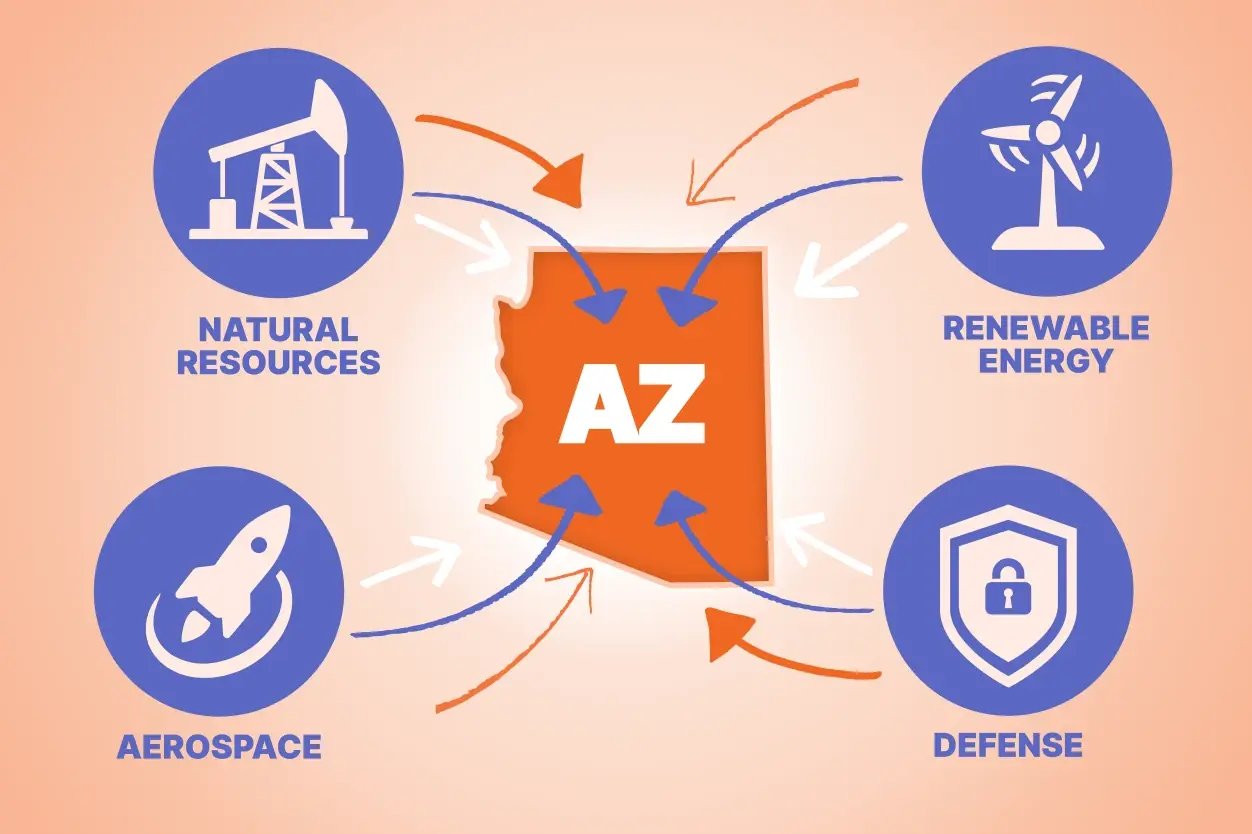
However, it’s not just Arizona’s heat that attracts people. The state also boasts a vibrant economy with large natural resources, aerospace and defense, and renewable energy industries. The state is also very business-friendly, ranking 14th for the best state for entrepreneurs in 2025.
Since economic drivers can sustain housing demand beyond short-term trends, these are good signs. They mean Arizona’s housing market may grow for the foreseeable future.
How Migration Impacts Housing Demand
Let’s dive deeper into how Arizona’s migration patterns can affect housing demand.
First, a thriving economy may drive increased demand for entry-level and workforce housing. This can create tight inventory levels in high-demand areas, leading to demand spilling over into secondary and tertiary markets. You may then see more competition between existing owner-occupants and investors buying up homes to capitalize on rising home values.
The net effect of inbound migration on Arizona’s real estate, then, is higher absorption rates (how quickly properties are sold or leased) and steady property appreciation.
Build-to-Rent Development Opportunities
One type of real estate growing particularly fast is built-to-rent developments. These are residential properties that are built to be rented out rather than sold. According to a recent report, Phoenix leads the nation in developing built-to-rent homes.
The opportunity for built-to-rent developments in Arizona is significant due to the land availability and yield potential compared to coastal markets and other Sunbelt states. Furthermore, as the infrastructure for housing expands, so will the feasibility of the built-to-rent model.
Identifying Emerging Growth Corridors in AZ
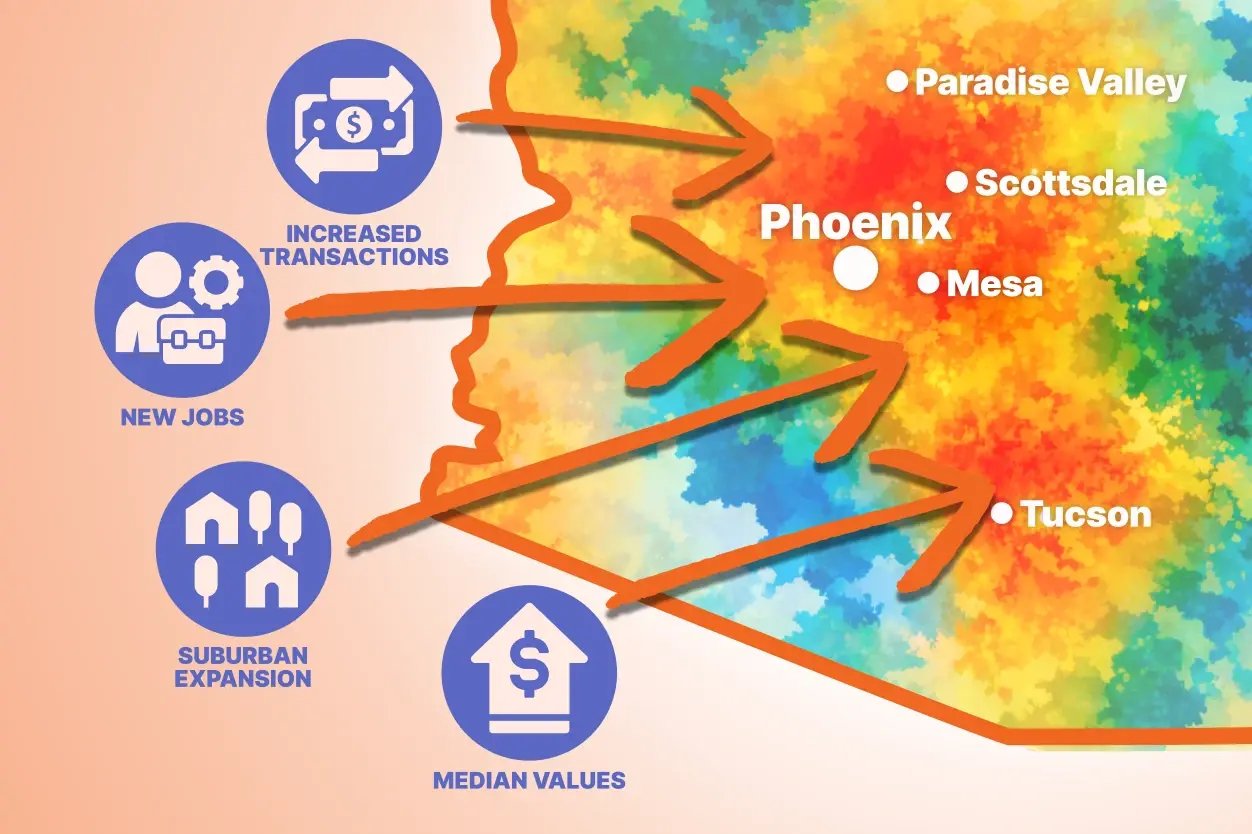
Of course, some markets in Arizona are more promising than others. Instead of relying on feeling or hype, choose markets based on available data.
For example:
- Track transaction volume increases by ZIP code.
- Monitor rising median values without extreme price spikes.
- Identify areas near new job hubs and infrastructure projects.
- Watch suburban expansion zones outside central Phoenix.
How to Analyze Arizona Markets Using PropStream
With PropStream’s real estate records and analysis tools, you can do market research in minutes.
Start by entering the zip code of your market to view trends across sales volume, price, and days on market. From there, you can filter properties by potential selling motivations, such as Absentee Owner or High Equity. Once you find a promising property, you can analyze its rental comps and projected cash flow to determine whether the numbers pencil out.
Doing this research manually would take much longer, potentially causing you to miss trends.
Did You Know?
PropStream offers built-in calling with Click-to-Dial and Dialer Campaigns for everyday outreach, making it ideal for solo investors and small teams. You can also use the Push to BatchDialer feature to run high-volume calling campaigns when you are ready to scale.
Finding Off-Market Deals in Arizona Before Markets Become Saturated
To find off-market deals before your competition does, focus on motivated sellers in growth corridors. For example, you could search secondary and tertiary AZ markets for owners who live out of state, have high equity, and have a long ownership history (stack filters for all three). Then save your search and pay attention to any underpriced properties that meet your search criteria.
By proactively sourcing deals this way rather than waiting for properties to be listed on the MLS, you may have a much better chance of finding off-market opportunities.
Related read: Why Do Investors Prefer Off-Market Deals?
Risk Management for Out-of-State Investors
Investing in AZ real estate from out of state has its risks. Here are some ways to manage them:
- Verify local landlord laws and rental regulations. That way, you don’t buy a property only to realize it’s not zoned for your intended use.
- Analyze price-to-rent ratios carefully. The higher the price-to-rent ratio, the better it is for tenants to rent, increasing rental demand.
- Avoid oversaturated flip-heavy neighborhoods. The increased competition can squeeze your profit margins.
- Use data instead of headlines when evaluating relocation trends. This helps ensure you don’t make poor investment decisions.
To minimize investment risk, adopt a disciplined approach to expanding into Arizona markets. Overall, Arizona’s population growth is creating real estate opportunities across Phoenix and surrounding markets. Take advantage of this by using PropStream to identify emerging growth corridors, analyze rental demand, and uncover off-market deals.
*PropStream engages an independent third party to perform skip-tracing.