07.8.2026 PropStream
Disclaimer: PropStream does not offer financial advice. This article is for informational purposes only. Consult a financial professional before buying real estate based on the 70% rule.
|
Key Takeaways:
|
Finding a property that looks like a deal is easy, but finding one that actually is a deal depends on the numbers. The 70% rule provides a quick rule of thumb for gauging the viability of a potential fix-and-flip, so you don’t waste time and resources chasing bad opportunities.
What Is the 70% Rule in Real Estate?
In real estate, the 70% rule states that you should pay no more for a property than 70% of its after-repair value (ARV) minus renovation costs. Here’s the formula:
Maximum Allowable Offer (MAO) = (ARV x 0.7) - Estimated Renovation Costs
By sticking to the MAO dictated by the 70% rule, you help ensure there’s enough potential profit for the deal to be worthwhile.
However, the 70% rule is only a rule of thumb, not a guarantee. Some deals that meet the 70% rule may not be worth pursuing, while others that don’t meet the rule could still be worthwhile.
Why the 70% Rule Became a Standard for Fix-and-Flip Investing
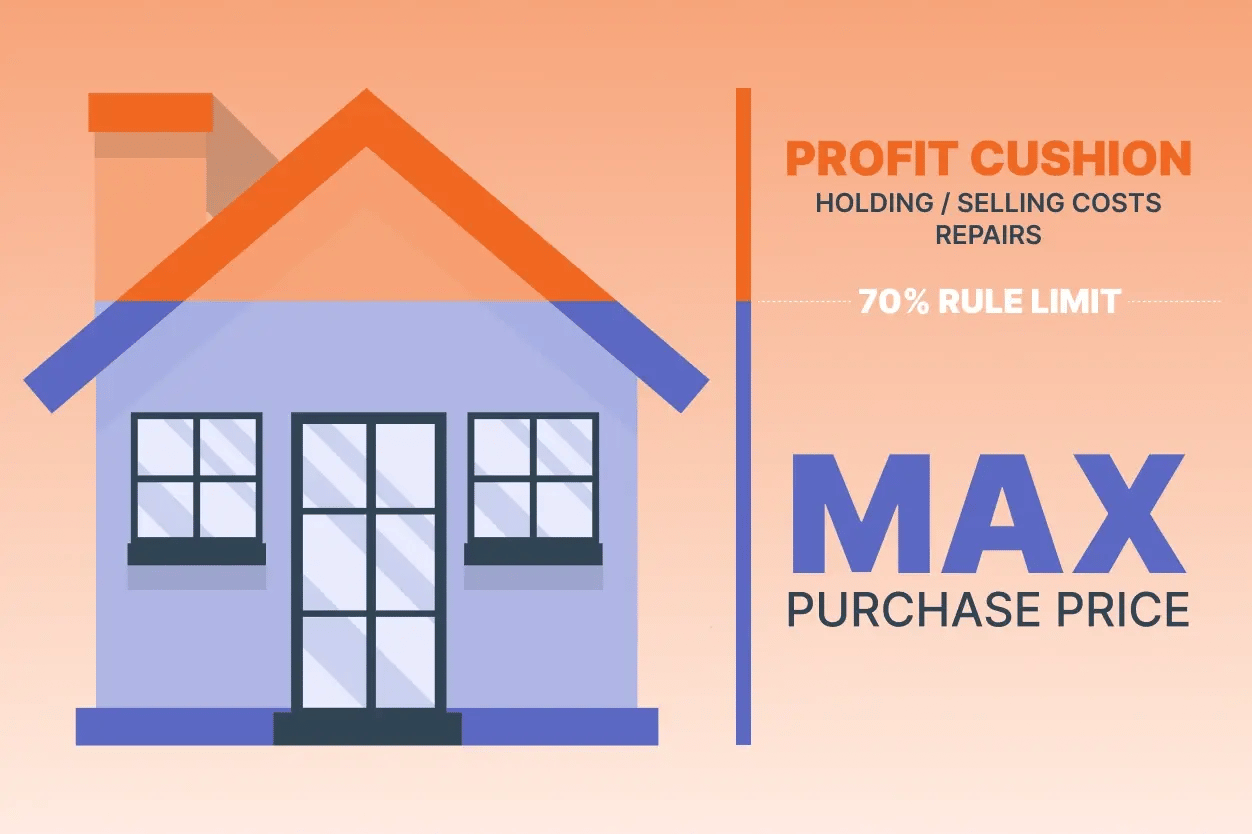
For home flippers, following the 70% rule has become a popular way to account for risk, renovation costs, and resale uncertainty. It builds a financial cushion into every deal, such that even if the investment goes over budget, there’s often ample cushion to absorb the extra costs.
Furthermore, the 70% rule makes it easy to quickly screen potential deals in a competitive market, so you’re not using valuable time and resources to analyze the details of every property.
Pro Tip: Treat the 70% rule as your initial screening tool. If a deal passes, follow up with a detailed analysis of ARV accuracy, rehab scope, and total carrying costs.
70% Rule Examples for Fix and Flippers
Now that you know how to use the 70% rule, let’s go over an example scenario.
Imagine you find a distressed property that looks like a great fix-and-flip opportunity. To know how much you should offer, you first determine the after-repair value (ARV). Based on recent sales prices of similar properties nearby (aka “comps”), you estimate the ARV at $500,000.
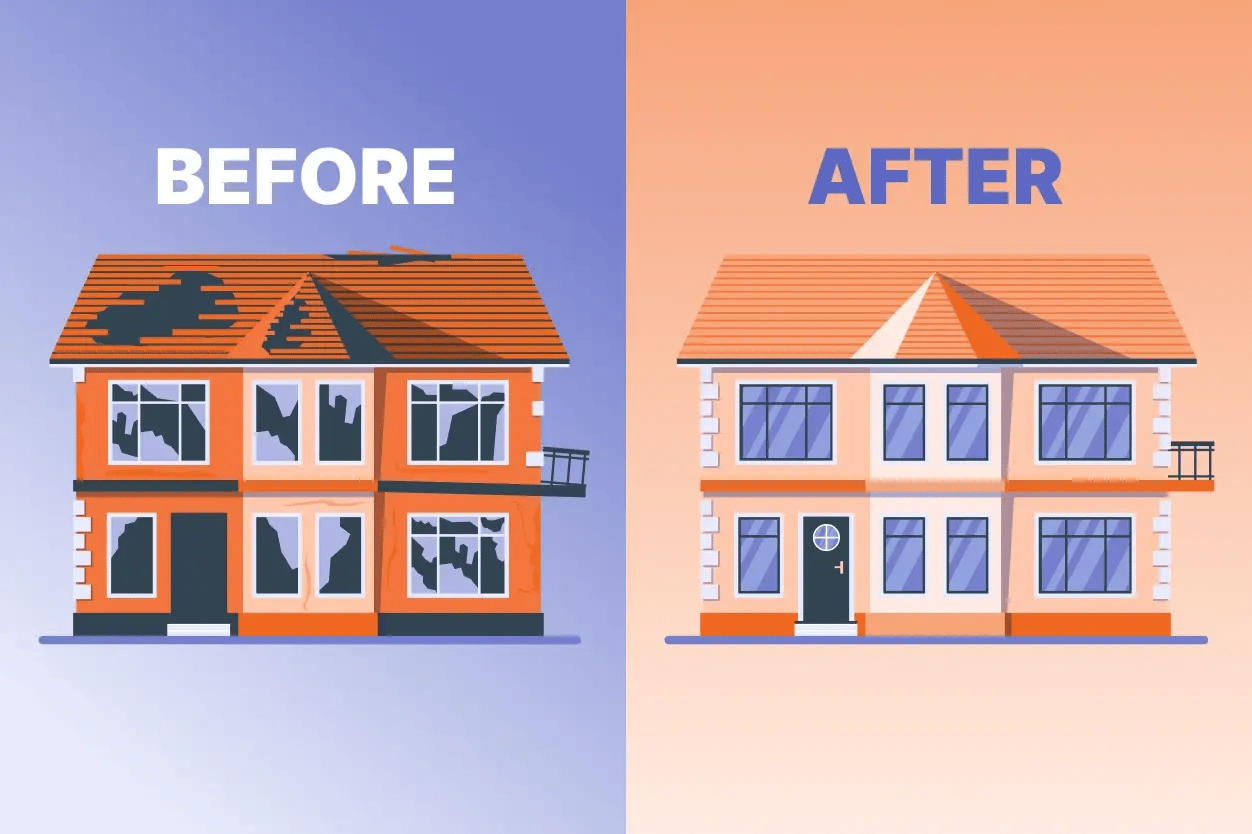
The property will require painting, landscaping, and a new roof. Based on quotes from local contractors or subcontractors, you expect the total renovation costs to be $50,000. This means you should offer no more than $300,000 for the property ([$500,000 x 0.7] - $50,000).
Keep in mind that any changes to the ARV or rehab costs will impact your maximum allowable offer (MAO). The same goes for any miscalculations or poor estimates. For example, if after further analysis you determine the rehab costs will be $60,000, you’ll want to adjust your MAO to $290,000 ([$500,000 x 0.7] - $60,000).
Whatever you do, be conservative in your rehab and ARV estimates to protect your profit margins. Ultimately, it’s better to outperform your projected ROI than regret using aggressive assumptions.
Also Read: 6 Renovations That Add Value to Your Fix-and-Flip
Pros & Cons of 70% Rule in Today’s Market
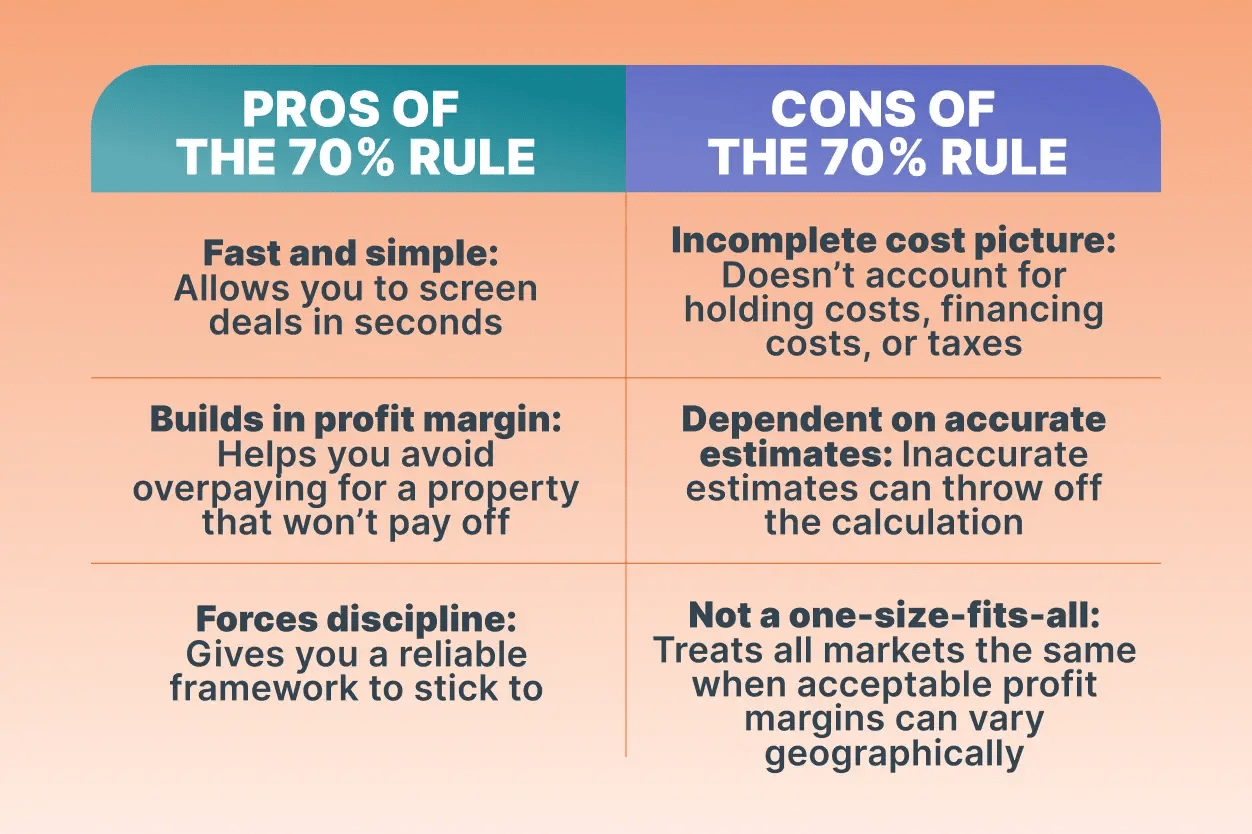
That said, the 70% rule doesn’t work the same in every market or price range.
Here are some pros and cons to be aware of:
|
Pros of the 70% Rule |
Cons of the 70% Rule |
|
Fast and simple: Allows you to screen deals in seconds |
Incomplete cost picture: Doesn’t account for holding costs, financing costs, or taxes |
|
Builds in profit margin: Helps you avoid overpaying for a property that won’t pay off |
Dependent on accurate estimates: Inaccurate estimates can throw off the calculation |
|
Forces discipline: Gives you a reliable framework to stick to |
Not a one-size-fits-all: Treats all markets the same when acceptable profit margins can vary geographically |
Depending on your market, you may need to adjust the 70% rule to a lower (or higher) percentage, such as 60% or 50%. In some cases, it may be better to follow a different rule altogether, such as the 1% rule or a gross rent multiplier (GRM) benchmark.
How PropStream Helps Flippers Apply the 70% Rule
Fortunately, you can avoid some of the pitfalls of the 70% rule by using quality real estate information and intuitive analysis tools.
With PropStream, you can identify potential fix-and-flip opportunities based on their Property Condition Score. Simply apply the relevant condition filter to your search. You can also review individual property details, including sales history, ownership information, and comparable sales data to estimate a property's after-repair value (ARV).
|
Need a second opinion on a deal? PropStream's AI-powered PropStream Intelligence Assistant (PSI) on the Property Details page can help you quickly evaluate opportunities. Try prompts like:
The PSI assistant can instantly analyze property details, explain the numbers behind a deal, identify potential risks, and provide recommendations on what metrics to review before moving forward. It can even back fill the Fix & Flip Analyzer for you! |
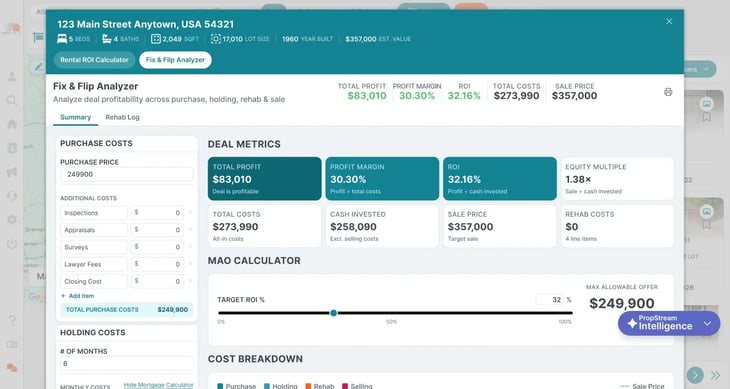
Once you've identified a promising opportunity, use PropStream's Fix & Flip Analyzer to perform a deeper financial analysis.
The analyzer helps you evaluate purchase costs, holding costs, rehab expenses, selling costs, projected sale price, profit margin, ROI, and total projected profit in one place. It also includes a built-in Maximum Allowable Offer (MAO) Calculator, allowing you to adjust your target ROI and instantly see how your offer price should change.
Watch this demo to learn how to easily use the built-in Calculators & Analyzers in PropStream
To complete your analysis, PropStream's Rehab Calculator helps you estimate renovation costs while reviewing a property, making it easier to compare rehab expenses against your projected ARV and expected profit margins. Together, these tools can help you move beyond a simple rule of thumb and make more informed fix-and-flip decisions.
Pro Tip: Use PropStream's built-in Click-to-Dial feature to contact property owners directly from the platform as soon as you've identified a promising fix-and-flip opportunity.
Just getting started? Enroll in PropStream’s Fix-and-Flip Academy Course for free!
Final Takeaway
Use the 70% rule as a starting point, not the final decision-maker.
Remember, you still need to account for holding costs, financing (LoanGeek can help here), and market conditions to pull off a successful fix-and-flip. Even your exit strategy, whether it’s a resale or a refinance into a long-term rental loan (aka the “BRRRR” strategy), can have a major impact.
That’s why PropStream is such a powerful tool. It can help you determine whether deals that pass the 70% rule are actually worthwhile based on further analysis. Instead of relying solely on a rule of thumb, investors can validate ARV, estimate rehab expenses, analyze holding costs, project profits, and determine an appropriate offer price from a single platform. In short, PropStream can take you beyond quick formulas and give you the confidence you need to make an investment decision.
Use PropStream today to find fix-and-flip opportunities, run accurate comps, and analyze deals before you make an offer.