

Disclaimer: This article is for informational purposes only and should not be considered legal, financial, or real estate advice. Always conduct your own due diligence and consult qualified professionals before making investment decisions.
|
Key Takeaways:
|
For many people, buying a home is the American Dream.
But when financial hardships threaten that dream, foreclosure opens a critical door for real estate professionals. Whether you’re an agent looking to secure a meaningful listing or an investor seeking a below-market opportunity, stepping into this space allows you to provide a vital exit strategy for the homeowner while expanding your own portfolio.
However, understanding what a foreclosure is, how a homeowner reaches this point, and how it impacts the local market is essential for navigating this complex and emotional situation with empathy and ease.
In this post, we define foreclosure, explain how it occurs, and explore the benefits it offers to real estate professionals.
Table of Contents |
What Is Foreclosure?
At its core, a foreclosure is a legal process in real estate where a lender tries to recover a loan’s balance from a borrower who has stopped making payments.
When a buyer uses a mortgage to buy property, the property itself becomes loan collateral. If the buyer (AKA the “borrower”) defaults on their mortgage, the lender can seize the property, evict the owner, and sell the property to recoup their financial losses.
How an Owner Ends up in Foreclosure
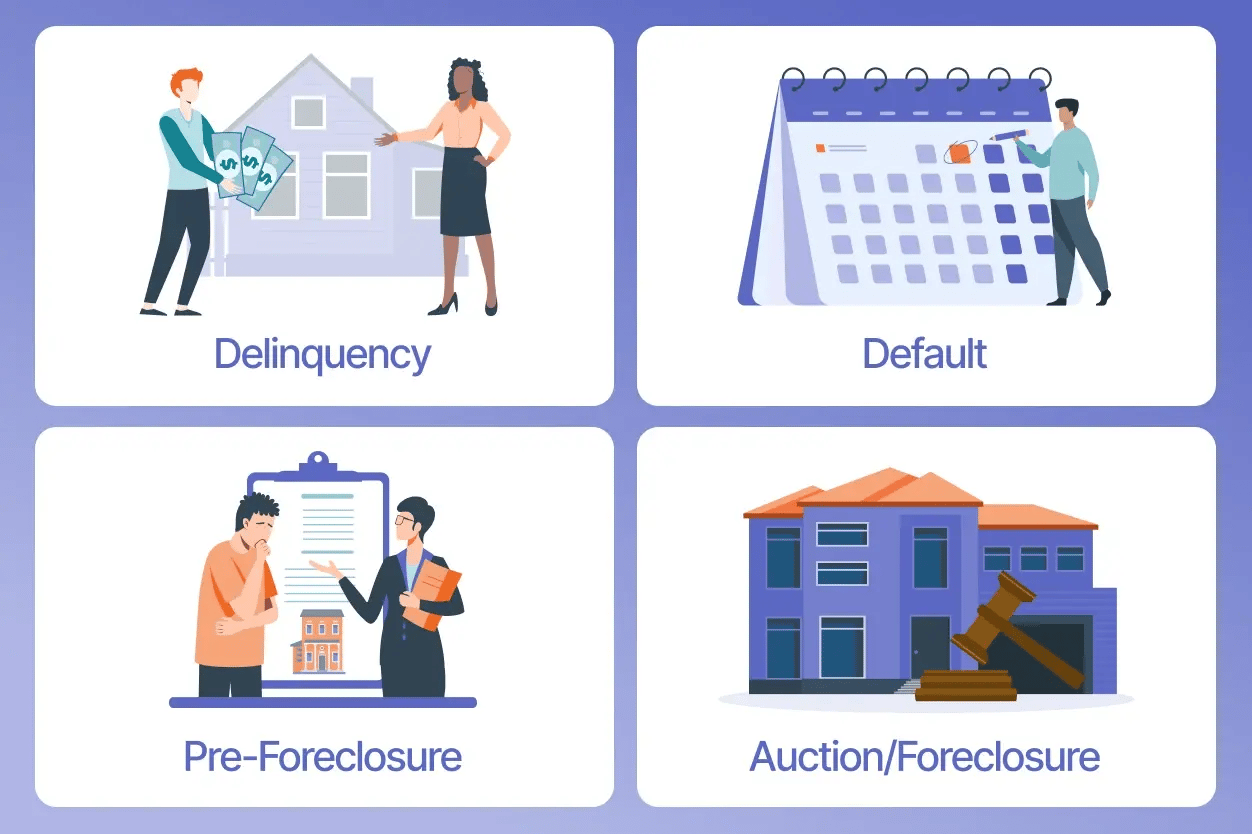
The journey to foreclosure rarely happens overnight; it is a gradual process triggered by missed payments.
Here are the typical steps in the foreclosure process:
The process begins the moment a homeowner misses a monthly mortgage payment. Lenders typically offer a grace period, but if the payment is not made, the account is flagged as delinquent.
After consecutive missed payments—usually 90 days—the lender officially places the loan in default.
During this phase, the lender issues a formal Notice of Default (NOD) or a Lis Pendens, depending on state laws. This publicly warns the homeowner that legal action has commenced. The owner is given a specific window to pay the overdue balance or negotiate a solution.
If the debt is not cleared, the lender schedules a foreclosure auction to sell the home to the highest bidder. If the property doesn’t sell at auction, it becomes a Real Estate Owned (REO) property and is added directly to the lender's inventory.
Related Read: 3 Types of Foreclosure (+ Tips for Navigating Them)
How Foreclosures Impact Real Estate Professionals
While facing foreclosure is an incredibly stressful experience for a homeowner, it also represents an opportunity for real estate professionals to step in as problem-solvers. For individuals stuck in a difficult financial situation, a pre-foreclosure property can quickly become an overwhelming burden. Real estate investors and agents who specialize in this market aren't just looking for properties—they are looking for ways to guide homeowners toward a fresh start.
By intervening before a property reaches a public auction, real estate professionals can offer mutually beneficial solutions. Waiting until the public auction stage is often too late to help the resident, as the property is already being seized, and the damage to their credit is done.
Related Read: 8 Agent Tips for Communicating with a Homeowner in Pre-Foreclosure
Focusing on the pre-foreclosure stage allows professionals to act as advocates, working directly with homeowners to help them transition out of a burdensome situation gracefully. This is where PropStream comes in!
Finding Properties in Pre-Foreclosure with PropStream
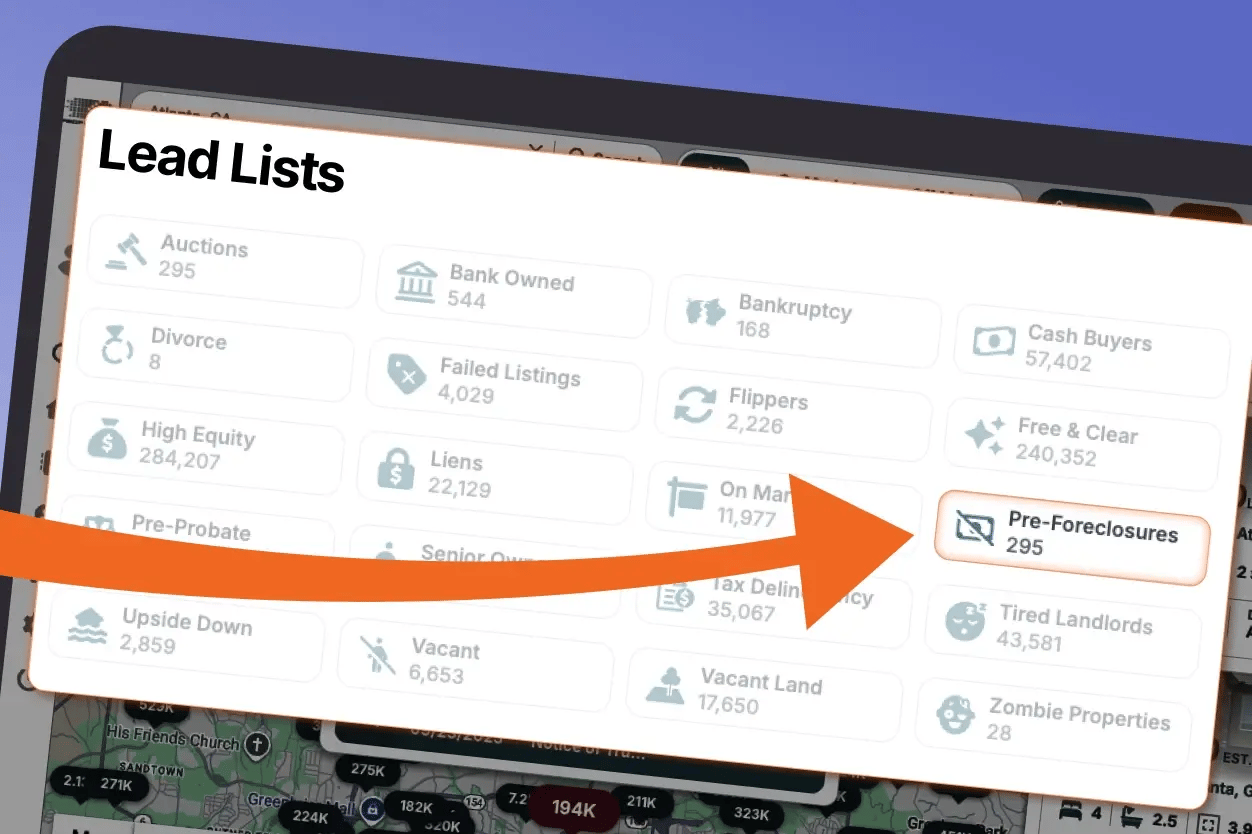
To find these properties before they hit the auction block, real estate pros rely on advanced aggregated data platforms. PropStream features a dedicated Pre-Foreclosure Lead List designed to help users identify distressed properties early in the cycle.
Related Read: What Is the Difference Between Foreclosure and Pre-Foreclosure?
By utilizing PropStream’s aggregated data and Lead List, real estate professionals can pinpoint homeowners who have recently received a Notice of Default. This allows agents and investors to reach out to the owner and negotiate directly.
Because these individuals face the looming threat of foreclosure that could ruin their credit for years, they are often highly motivated to sell. Direct negotiation allows the professional to secure a property off-market, while giving the homeowner a vital exit strategy to pay off their debt and avoid a devastating foreclosure on their record.
Connecting with these homeowners at the right time is key to providing a timely solution before the clock runs out. With PropStream’s 7-day free trial, you can immediately access the Pre-Foreclosure Lead List and start identifying distressed properties in your target market.
Find Pre-Foreclosure Opportunities Before They Hit the Market
Sign up today to discover highly motivated sellers (like those facing foreclosure), build meaningful connections, and help local homeowners navigate their way to a fresh financial start.
Frequently-Asked Questions (FAQs)
What is a foreclosure?
Foreclosure is a legal process where a lender seizes and sells a property because the borrower has defaulted on their mortgage payments.
What is a deed in lieu of foreclosure?
A deed in lieu of foreclosure is an arrangement in which the homeowner voluntarily transfers the deed (ownership) of the property to the lender to avoid the legal stress and severe credit damage of a standard foreclosure.
What is a REO foreclosure?
REO stands for Real Estate Owned. If a property does not sell to a third-party bidder at the foreclosure auction, ownership reverts back to the bank/lender. It then becomes an REO property, which the bank usually lists on the open market via a real estate agent.
When is it too late to stop a foreclosure?
Generally, once the foreclosure auction takes place and the hammer falls, it is too late. However, a few states have a "statutory right of redemption" allowing owners to buy the house back within a specific timeframe after the sale.
What does pre-foreclosure mean?
Pre-foreclosure is the initial phase of the foreclosure process. It begins when the lender issues a public notice (like a Notice of Default) because the borrower is behind on payments, but before the home is officially seized or sold at auction.
How does foreclosure work?
It generally follows a timeline:
- Missed payments
- Delinquency
- Default notice (pre-foreclosure)
- A legal grace/cure period
- Public auction
- Eviction (if the home doesn't sell and becomes bank-owned).
How long does foreclosure take?
It depends heavily on state laws, ranging from 3 to 6 months in fast states to a year or more in others.
How to buy a foreclosure?
You can buy them at three distinct stages:
- During pre-foreclosure, directly from the owner.
- At a live public auction (usually requires cash).
- From the bank as an REO property through standard real estate listings.
Pro Tip: Use PropStream’s Pre-Foreclosure Lead List to easily find pre-foreclosure leads in your market.
Can you sell a house in foreclosure?
Yes. A homeowner can sell the property up until the moment it is sold at a public auction. If they owe more than the home is worth, they must get lender approval for a "short sale."
How do foreclosure auctions work?
They are public events, often held online or on the local courthouse. Properties are sold to the highest bidder. Buyers typically must pay the full amount in cash or cashier's checks immediately, and homes are bought entirely "as-is," often without a prior inspection.
What kind of loan do I need to buy a foreclosure?
If you are buying an REO (bank-owned) home listed on the MLS, you can use standard Conventional, FHA, or VA loans, provided the home meets safety guidelines. If the home needs major repairs, you may need a renovation loan (like an FHA 203k). For live auctions, you generally cannot use a standard loan; you need cash or a hard money loan.
Can you buy a foreclosure with a VA loan?
Typically, yes, but only if it is an REO (bank-owned) property listed on the open market, and the home passes the VA's strict Minimum Property Requirements (MPRs) for safety and habitability. You cannot use a VA loan to bid at a live courthouse auction.
What is a judicial foreclosure?
A type of foreclosure required in some states where the lender must file a lawsuit and go through the court system to get permission to auction the home. (Non-judicial foreclosures, by contrast, bypass the courts via a "power of sale" clause in the mortgage).
How long is the pre-foreclosure process?
Usually between 30 and 120 days. It fills the gap between the homeowner's official default notice and the scheduled date of the public foreclosure auction.
How to find pre-foreclosure homes?
You can track public legal notices (Lis Pendens or Notices of Default) at your local county clerk's office, or use aggregated real estate data platforms like PropStream, which allow you to easily compile pre-foreclosure lead lists.
Subscribe to PropStream's Newsletter
Try PropStream for 7 Days Free!