

07.15.2026 PropStream
Disclaimer: The information provided in this article is for informational and educational purposes only and should not be considered legal, financial, or investment advice. Laws and regulations may change over time and can vary by state and local jurisdiction. Always verify current regulations and consult with a qualified professional before making any real estate investment decisions.
|
Key Takeaways:
|
When investing in rental property, factors like location, financing, and deal analysis often take center stage. But one variable that can significantly shape your experience as a landlord is the set of laws governing rental housing in your chosen market.
Across the United States, these laws can vary widely. In landlord-friendly states like Alabama, for example, lower property taxes and more streamlined eviction processes can influence how rental properties are managed. In states like Oregon, stronger tenant protections can influence lease terms, rent adjustments, and compliance requirements.
Understanding how these differences affect day-to-day operations is an important part of evaluating any rental market. In this article, we break down the core factors that shape how landlord or tenant-friendly a state is, along with examples and practical insights for working within both types of environments.
Table of Contents |
Key Factors That Shape Landlord-Friendly vs. Tenant-Friendly States
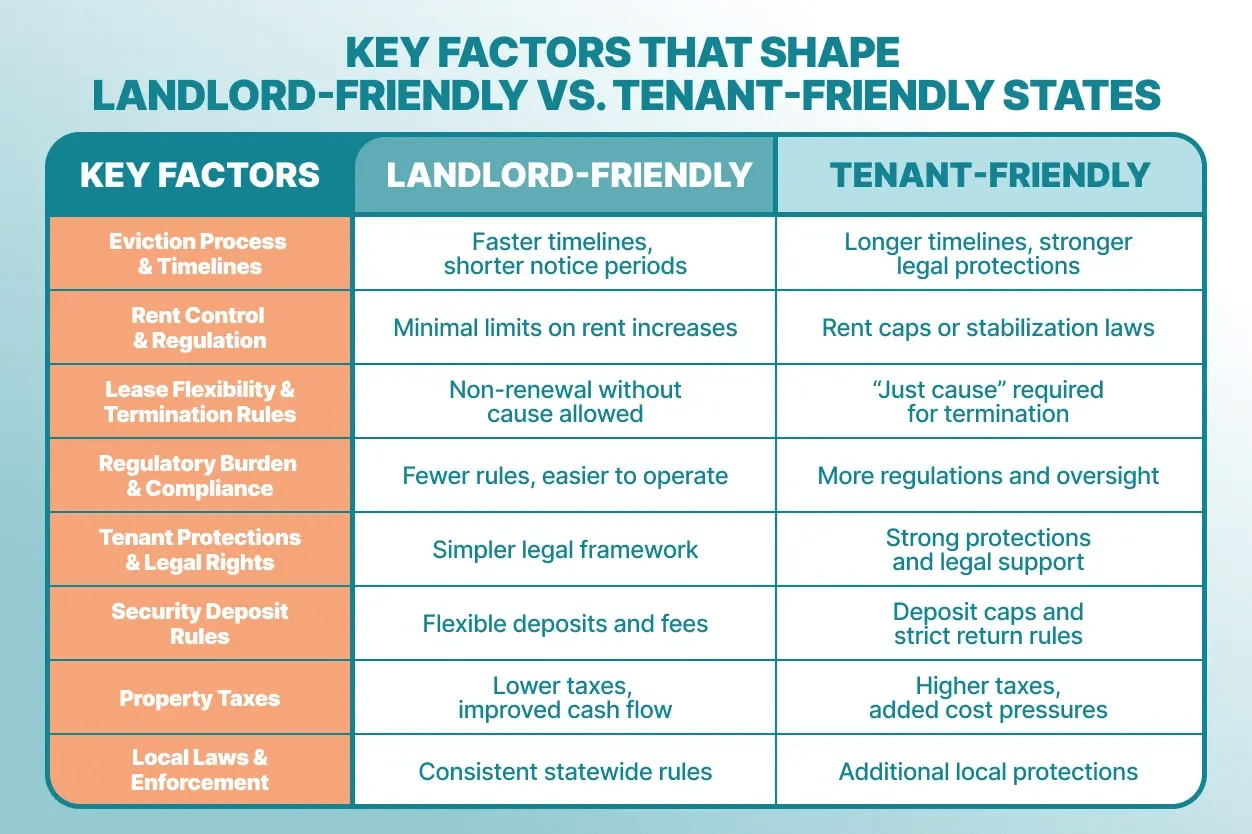
While regulations vary by state, many of the same fundamentals are used to determine how rental housing is managed. The difference lies in how these rules are structured and enforced, which can influence both landlord operations and tenant protections.
Below are the core factors that influence how landlord- or tenant-friendly a state is:
1. Eviction Process & Timelines
- In landlord-friendly states:
Eviction processes are typically faster, with shorter notice periods and streamlined court procedures, allowing landlords to regain possession quickly. - In tenant-friendly states:
Evictions often involve longer timelines, extended notice requirements, and additional legal protections, giving tenants more time to respond or resolve issues.
2. Rent Control & Rent Regulation
- In landlord-friendly states:
There are little to no restrictions on rent increases, allowing landlords to adjust pricing based on market conditions. - In tenant-friendly states:
Rent control or stabilization laws may limit how much and how often rent can increase, helping tenants maintain affordability.
3. Lease Flexibility & Termination Rules
- In landlord-friendly states:
Landlords can often choose not to renew leases without providing a specific reason, giving them more control over occupancy. - In tenant-friendly states:
“Just cause” requirements may apply, meaning landlords must provide a valid reason to terminate or not renew a lease.
4. Regulatory Burden & Compliance Requirements
- In landlord-friendly states, Fewer licensing requirements and less administrative oversight can make it easier to operate and scale.
- In tenant-friendly states:
Additional regulations, inspections, and compliance requirements increase oversight and operational responsibility.
5. Tenant Protections & Legal Rights
- In landlord-friendly states:
Legal frameworks are generally simpler, with fewer tenant protections that can delay or complicate enforcement. - In tenant-friendly states:
Stronger protections, such as anti-retaliation laws and access to legal support, give tenants more leverage in disputes.
6. Security Deposit Rules
- In landlord-friendly states:
Landlords have more flexibility in setting deposit amounts and fees, helping offset potential risks. - In tenant-friendly states:
Deposit caps and strict return rules are enforced, reducing upfront costs and protecting tenants from unfair deductions.
7. Property Taxes
- In landlord-friendly states:
Lower property taxes and fewer cost burdens help improve cash flow and overall returns. - In tenant-friendly states:
Higher taxes or added costs may exist, sometimes supporting housing programs or regulations, which can indirectly impact rental pricing.
8. Local Laws & Enforcement Variability
- In landlord-friendly states:
Laws are typically applied more consistently, with fewer local restrictions that override state-level rules. - In tenant-friendly states:
Local governments may introduce additional regulations, and enforcement may favor tenant protections (depending on the jurisdiction).
Keep in mind that these factors can vary significantly from state to state. Looking at real examples can help put these differences into perspective.
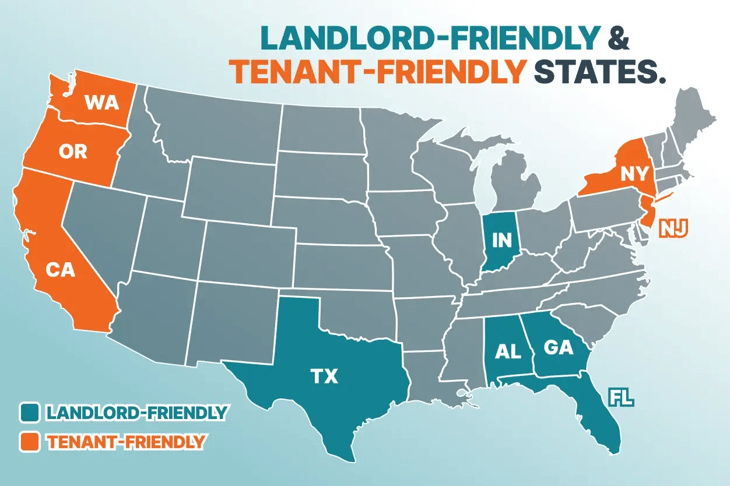
Below are states where landlord-friendly regulations influence how rental properties are managed.
Top 5 Most Landlord-Friendly States
1. Alabama
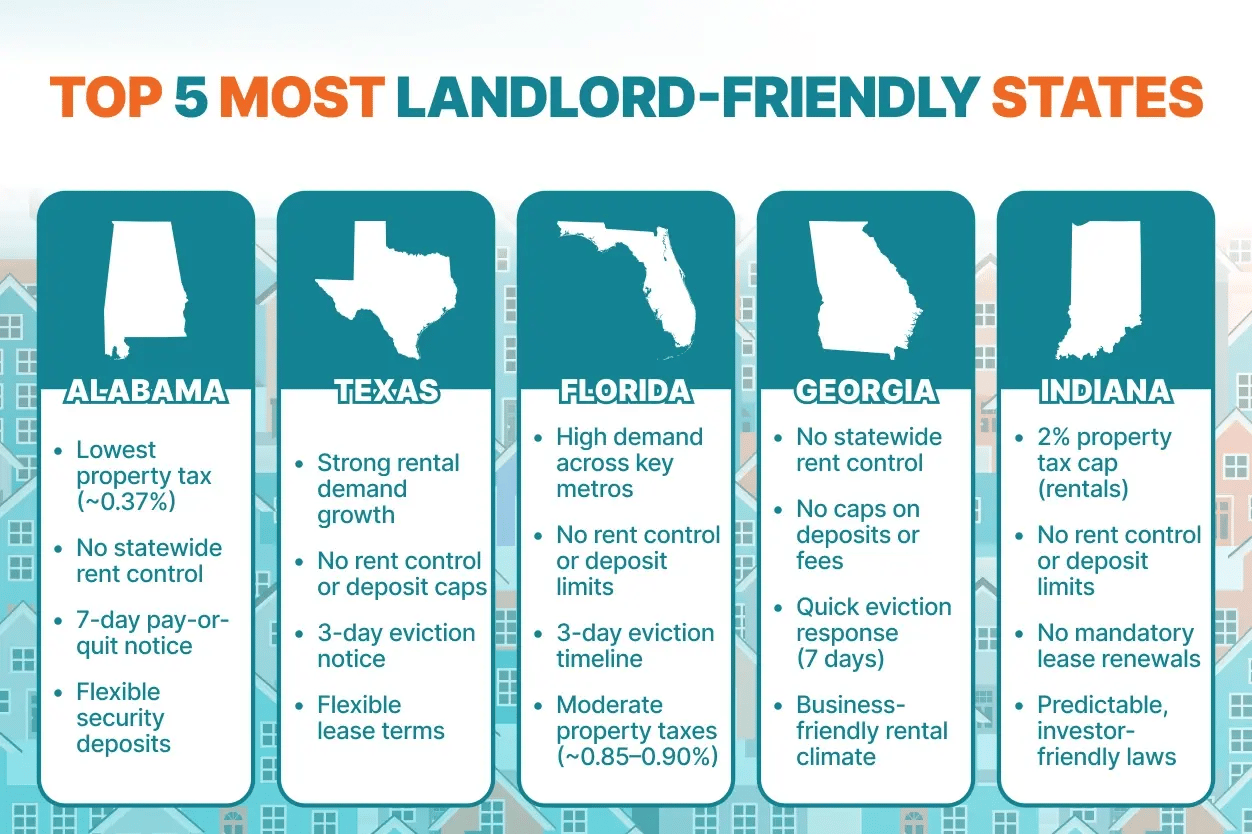
Alabama continues to be a standout for those seeking low overhead and high autonomy. A major draw is the state’s property tax structure; with a median effective rate of roughly 0.37%, it remains among the lowest in the nation. This helps keep operating costs predictable and can support long-term cash flow strategies.
Additionally, Alabama maintains a strong stance on market-rate flexibility, allowing you to adjust your rates to keep pace with market fluctuations without extra hurdles.
Landlords can generally charge up to one month’s rent for a security deposit, though you can collect additional amounts for pets or property alterations. If rent falls behind, Alabama’s "7-day notice to pay or quit" is one of the most efficient in the country, giving tenants a clear 7-day window to settle their balance before you can move forward with an eviction filing.
Pro Tip: If you're buying your first rental property, look for markets with lower entry costs and fewer regulatory barriers to make getting started more manageable. Just be sure to understand local requirements, such as entry notice rules, before managing a property.
2. Texas
Texas continues to attract investors with strong rental demand, driven by population growth, job opportunities, and business-friendly policies across major metros such as Dallas, Houston, and Austin. This helps support consistent occupancy and rental income.
Additionally, Texas does not have statewide rent control and does not impose statutory limits on security deposits. There is also no statewide landlord license requirement, giving landlords flexibility in managing rental properties. While property taxes are relatively high, with a median effective rate of around 1.80% to 2.00%, the state’s overall regulatory environment remains favorable for investors.
Tenants are typically given a 3-day notice to pay overdue rent or vacate before landlords can begin eviction proceedings. Recent updates under Senate Bill 38 have further streamlined the process by standardizing procedures across courts, allowing electronic delivery of notices when included in the lease, and focusing eviction hearings strictly on possession rather than unrelated disputes.
Finally, Texas allows landlords to structure lease agreements with fewer statewide limitations, though procedures may vary depending on local courts and lease terms.
3. Florida
Source: Soldfast 2026 Landlord vs. Tenant State Rankings Index
Florida remains one of the most active rental markets supported by continued domestic migration and strong demand across major metros like Miami, Orlando, and Tampa. The state added nearly 200,000 new residents between 2024 and 2025, helping sustain occupancy rates and rental demand, even as growth has normalized from earlier peaks.
Additionally, the median effective property tax rate in Florida is approximately 0.85% to 0.90%, which remains relatively moderate compared to many large states. There are no statewide rent controls, deposit limits, late fee regulations, or landlord license requirements, giving landlords more flexibility in managing their properties.
Once rent is overdue, tenants typically have only three days to pay before landlords can file for an eviction. It’s also worth noting that landlords and tenants generally need to provide 15 days’ notice to change or terminate a lease, and landlords must provide at least 12 hours’ notice before entering a unit for non-emergencies.
Pro Tip: Operating in high-demand markets like Florida often comes with rising costs. Check out our guide on how to lower operating expenses for a rental property to keep your Florida portfolio lean and profitable.
4. Georgia
Georgia is considered one of the more landlord-friendly states due to its flexible rental laws. The state does not allow local rent control, giving landlords the ability to adjust rental rates based on market conditions. Regulated under the Georgia Code, Title 44, there are no statewide limits on security deposits or late fees, and landlords can begin the eviction process as soon as rent is overdue. Once an eviction is filed, tenants typically have seven days to respond. Landlords are expected to provide reasonable notice before entering a unit, and 24 hours is a standard practice.
Georgia also keeps operating costs relatively manageable. The state has a median effective property tax rate of around 0.85% to 0.95%. There is no statewide landlord license requirement, though some cities and counties may require a local business license or registration.
Beyond the legal and cost advantages, Georgia continues to see steady rental demand, particularly in and around Atlanta. Population growth, job opportunities, and a business-friendly environment contribute to a stable tenant base for landlords.
5. Indiana
The state’s "2% Cap" on property taxes for rental properties makes it easier to forecast your long-term expenses and is thus a favorite for cash-flow-focused investors, largely due to its predictable tax environment.
Indiana recently passed House Enrolled Act 1210, a law that prevents cities from limiting the number of rental homes in a neighborhood, while HOAs can still regulate them. This makes it easier for investors to operate without facing local rental caps.
Indiana also offers a flexible regulatory environment. There are no statewide rent control laws or deposit limits, and the state does not require landlords to renew leases at the end of a term. This gives landlords more control over pricing and tenant turnover.
Regarding evictions, Indiana law does not specify a fixed notice period for nonpayment, but a 10-day notice to pay or quit is commonly used in practice. Landlords are also expected to provide reasonable notice before entering a unit for non-emergency purposes.
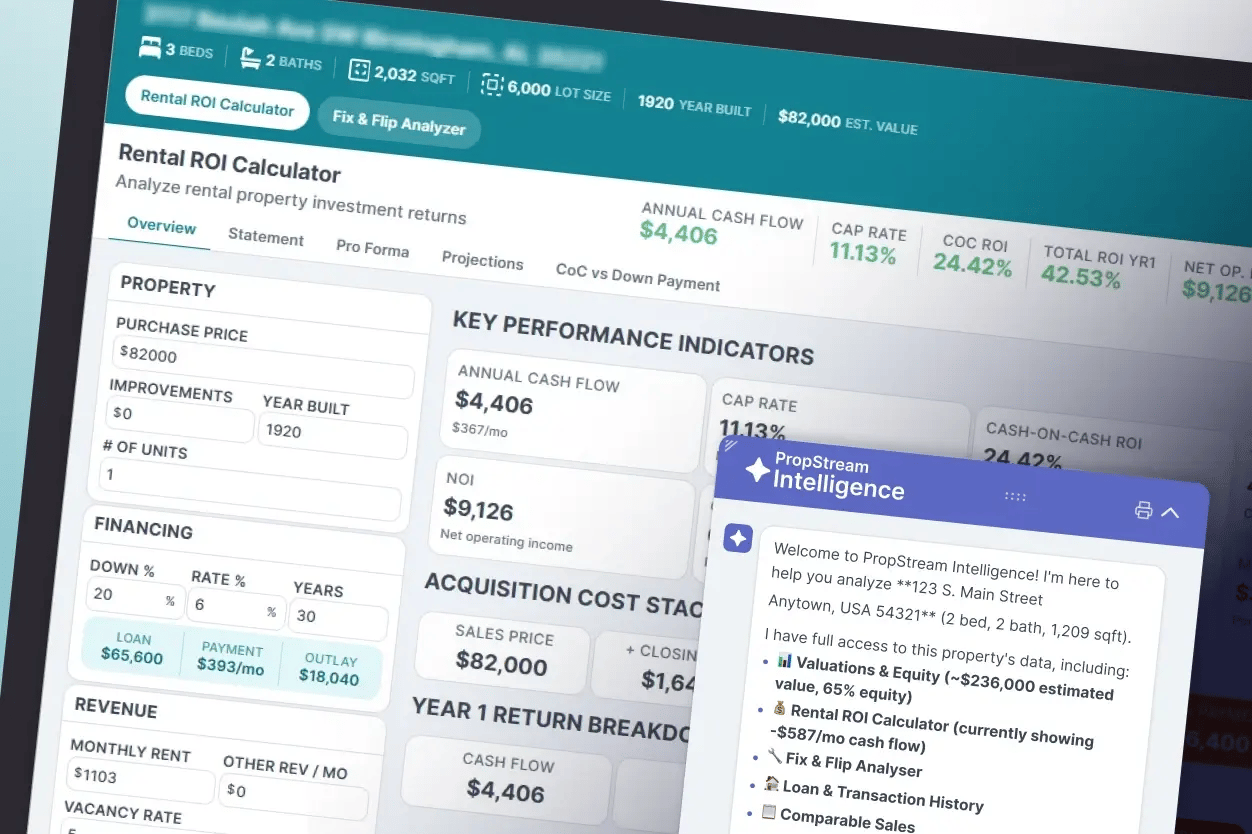
Pro Tip: Even in markets with strong cash flow potential, factors like property taxes and operating costs can impact long-term returns. Using tools like PropStream’s Rental ROI Calculator can help you estimate income, expenses, and projections before making a decision.
The above list is not exhaustive, and many states may offer similar advantages depending on how these factors are applied. Understanding these differences can help you evaluate other markets as well.
With that in mind, let’s look at states where tenant protections play a larger role.
Top 5 Most Tenant-Friendly States
1. California
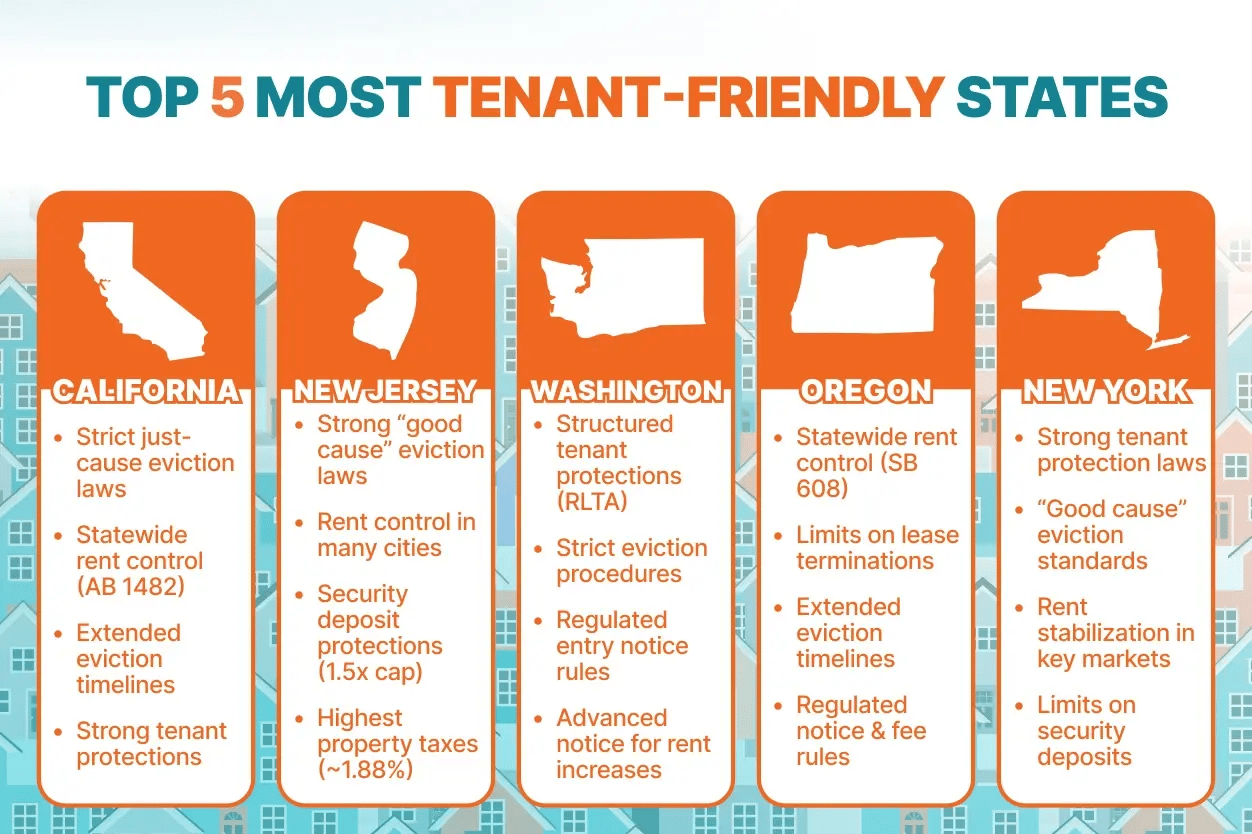
California continues to stand out for its strong tenant protections and layered regulatory environment. A major factor is the statewide rent control policy under The California Tenant Protection Act of 2019 (AB 1482), which caps rent increases and limits how often landlords can adjust pricing. This creates more predictability for tenants but adds constraints for property owners.
Additionally, California enforces “just cause” eviction laws, meaning landlords must provide a valid reason to terminate or not renew a lease. Combined with longer eviction timelines and strict local ordinances in cities like San Francisco and Los Angeles, this adds multiple layers of compliance.
Security deposit is limited to one month or a maximum of 2 months if the landlord has multiple rental properties. Landlords must provide 24 to 48 hours’ notice before entering a unit for non-emergency purposes, and stricter inspection requirements and detailed notice rules further shape how rental properties are managed across the state.
2. New Jersey
New Jersey attracts a large renter population, particularly due to its proximity to major job centers like New York City and Philadelphia, and is known for its strict “good cause” eviction laws, strong habitability standards, and protections against self-help evictions. Evictions can take several weeks to months, even in straightforward cases, which can extend timelines for resolving tenant issues.
Security deposits are capped at 1.5 times monthly rent, must be returned within 30 days of move-out, and may require annual interest payments to tenants for certain types of rentals (e.g., larger complexes or with specific, non-owner-occupied units). New Jersey also has one of the highest effective property tax rates in the U.S., averaging around 1.88%, with rates varying significantly by municipality and county. NJ offers programs such as the ANCHOR Benefit and Senior Freeze (Property Tax Reimbursement) to help offset these higher costs.
Many cities across the state enforce their own rent control or rent stabilization programs, adding another layer of regulation on top of state laws.
3. Washington
Washington attracts a steady stream of renters, particularly in areas like Seattle, driven by strong job markets in technology, healthcare, and other growing industries. Access to urban amenities and public transit continues to support rental demand across the state.
A key factor shaping this market is Washington’s Residential Landlord-Tenant Act (RLTA), which establishes a structured framework for landlord-tenant relationships. Evictions must follow strict legal procedures, including proper notice, such as a 3-day notice to pay rent or vacate, before filing an unlawful detainer action.
The RLTA also outlines clear operational requirements. Landlords must generally provide at least 2 days’ notice for entry related to repairs and one day’s notice for showings, except in emergencies. There is no statewide limit on security deposits, but landlords are required to provide a written move-in checklist documenting the unit's condition and must have a written agreement in place before collecting the deposit.
In cities like Seattle, local rules add another layer of protection for tenants, including limits on late fees and extended notice requirements for rent increases.
4. Oregon
The Beaver State was the surprising destination for Americans in 2025, with the highest inbound migration rate at 65%, according to a United Van Lines study.
Oregon has a statewide rent control law, established under SB 608, that caps annual rent increases at 7% plus the Consumer Price Index (CPI) for buildings over 15 years old, helping limit sharp rent increases and provide more predictable housing costs for tenants.
Landlords must provide tenants with at least 24 hours' written notice before entering a rental unit for inspections, repairs, or showing the property. The state also imposes restrictions on lease terminations after the first year, often requiring a qualifying reason. Combined with eviction timelines that can extend 8-12 weeks or longer, along with regulated late fees and notice requirements, these rules shape how rental agreements are managed.
In more populated areas, additional local regulations can add another layer of complexity to compliance and day-to-day operations.
Pro Tip: In Oregon, building long-term rental strategies around controlled rent increases can help maintain consistency while staying within regulatory limits.
5. New York
New York has one of the largest renter populations in the country, particularly in New York City, where a significant portion of housing is rental-based. This has influenced the development of policies focused on tenant protections across the state.
New York’s landlord-tenant laws are governed under the Real Property Law and General Obligations Law, with additional protections at the local level, including laws like the Rent Transparency Act (Local Law 86 of 2025) that require landlords of rent-stabilized units to provide clear notices about a unit’s status and how tenants can verify their rent protections.
In many cities, including New York City, Albany, and Rochester, “good cause” eviction rules limit a landlord’s ability to decline lease renewals without a valid reason. Landlords must provide reasonable notice, generally 24 hours before entering a rental unit for non-emergencies. Eviction timelines are typically longer and can take several months to resolve. Combined with higher property taxes, this can increase holding costs during the process.
There are also extensive tenant resources available across the state, including services like the NYC Tenant Helpline (311) and the New York City Tenant Resource Portal.
Psst! Didn’t see your state on this list, and aren’t if it’s tenant or landlord-friendly? Check out this interactive map to see where your market falls on the spectrum!
How to Succeed in Any Market
Success in real estate investing depends less on choosing a specific type of state and more on understanding how to operate within each environment. Whether a market leans landlord-friendly or tenant-friendly, aligning your strategy with local regulations can help you manage properties more effectively and identify opportunities with greater clarity.
In Landlord-Friendly Markets
Success in such markets often comes from efficiency, flexibility, and the ability to scale operations. With fewer regulatory constraints, investors may have more control over pricing, lease terms, and property management decisions.
- Focus on Operational Efficiency: Streamlined processes around leasing, rent collection, and tenant communication can help landlords manage multiple properties more effectively and support portfolio growth.
- Adjust to Market Conditions: With greater flexibility in pricing, monitoring local demand, and making timely rent adjustments can help landlords maintain occupancy and optimize returns.
- Evaluate Property Taxes and Costs Upfront: Many landlord-friendly states offer lower or more predictable property taxes, which can support long-term planning. With the Rental ROI Calculator, you can factor in taxes, expenses, and financing to understand how these costs impact returns.
- Manage Turnover Effectively: Faster lease transitions can allow for quicker tenant changes. Having a structured approach to turnover can help minimize downtime and maintain consistent performance.
Tenant screening, clear lease terms, prompt communication with tenants, and, most importantly, staying updated on changes in state or local regulations remain best practices.
In Tenant-Friendly Markets
In tenant-friendly states, success often depends on planning, consistency, and strong operational discipline. With longer timelines and stricter regulations, a more hands-on and proactive approach can help reduce risk and improve long-term stability.
- Focus on Tenant Quality: Since evictions can be time-consuming, strong tenant screening becomes critical. Reviewing credit, income, and rental history can help identify tenants who are more likely to meet lease terms and maintain the property.
- Stay Proactive with Maintenance: Timely maintenance is essential to day-to-day operations. Addressing issues early and conducting periodic inspections can help prevent larger problems and support tenant satisfaction.
- Understand and Follow Local Regulations: Be well-versed in the requirements for rent control, lease terms, and eviction procedures. Staying informed and maintaining proper documentation can help avoid delays and compliance issues.
- Focus on Long-Term Stability: Tenant-friendly environments often support longer-term occupancy. Building consistent relationships and maintaining clear communication can help create more stable rental outcomes over time.
By understanding how each market operates and adjusting your approach accordingly, you can work effectively across different regulatory environments.
Pro Tip: If you’re struggling to evict a troublesome tenant and want to avoid significant legal fees, you may find a cash-for-keys agreement is the solution. Before attempting a cash-for-keys agreement, ensure you understand any legal implications and seek professional guidance.
Use PropStream to Find Your Next Rental Property
Whether you’re a seasoned landlord or just getting your foot in the door, where you choose to invest can play a large part in your success.
Once you’ve narrowed down a state to invest in, you can use PropStream’s Heat Map to identify high-potential areas within that market. From there, analyze properties, build targeted lists, and evaluate opportunities with greater clarity.
Use PropStream’s AI-powered Intelligence Assistant to simplify your research by just asking all you need to know about the property, and it will provide answers based on the aggregated property data available. As an added advantage, the Rental ROI Calculator can quickly estimate cash flow, ROI, and overall profitability just by entering key details such as purchase price, rental income, and operating costs (Psst! You can even get the PSI Assistant to input the details for you!)
Whether you’re targeting high-growth markets or cash-flow-focused deals, PropStream helps you move from research to action with confidence.
*PropStream engages an independent third-party to perform skip tracing.