
08.24.2026 PropStream
Disclaimer: PropStream does not offer legal advice. This article is for informational purposes only. Consult a legal professional before reaching out to motivated seller leads.
|
Key Takeaways:
|
Despite an increase in listings, high interest rates and home prices are keeping properties on the market longer. At the same time, housing supply continues to fall short of demand. For example, 2025 saw a deficit of 4.03 million homes—one of the worst inventory gaps in over a decade.
So while abundant listings create the illusion of opportunity for agents, the reality is that competition has only gotten tougher.
To adapt, many agents have had to get creative in how they find clients. In this article, you’ll learn some of the most common lead generation mistakes and which methods will help you start more conversations and maintain a full sales pipeline.
Table of Contents |
Why Many Agents Struggle to Find Leads

Every year, new agents enter the real estate business. Some rise to the top, steadily expanding their client base, while others struggle to find their next prospect. So why is lead generation so much harder for these agents?
1. They rely solely on referrals & inbound leads
Referrals can be a powerful source of warm leads and repeat business. And having a strong online presence can help attract people you might not find through active outreach.
Don’t be surprised, though, if you find that these sources aren’t reliable enough to maintain consistent lead flow. Most agents need to supplement their marketing with more proactive strategies to continue growing their businesses year over year.
2. They think they need a huge advertising budget
Contrary to popular belief, most agents don’t need to spend thousands of dollars on ads and paid lists. Waiting until your budget can accommodate these paid methods only delays meaningful business growth.
3. They have no clear lead generation system
Without a clear path forward, some agents get overwhelmed, and their marketing stalls. Others flit from one idea to another, hoping something will eventually work. But lead generation works best when agents choose a proven method (or mix of methods) and show up every day.
4. They haven’t niched down

In real estate, the old adage is true: if you market to everyone, you market to no one. When you try to attract too wide an audience, you may still generate leads, but far fewer will actually sign on as clients. Narrowing your niche and identifying who exactly you serve helps you understand and speak to prospects’ pain points more clearly.
How Real Estate Lead Generation Becomes Easier
Knowing how to leverage real estate data and marketing tools can significantly improve your lead generation. For example, platforms with access to multi-sourced property records allow agents to identify likely opportunities instead of guessing which homeowners might be interested in selling.
Search filters are another quick way to zero in on top-quality prospects. Look for tools with the ability to filter leads based on:
- Equity: High-equity homeowners may be more willing to sell and cash out their investment.
- Ownership: Longtime homeowners may need a change and are more likely to have higher equity in their properties.
- Distress signals: Signals like foreclosure, divorce, probate, and vacancy indicate a homeowner may need to sell quickly.
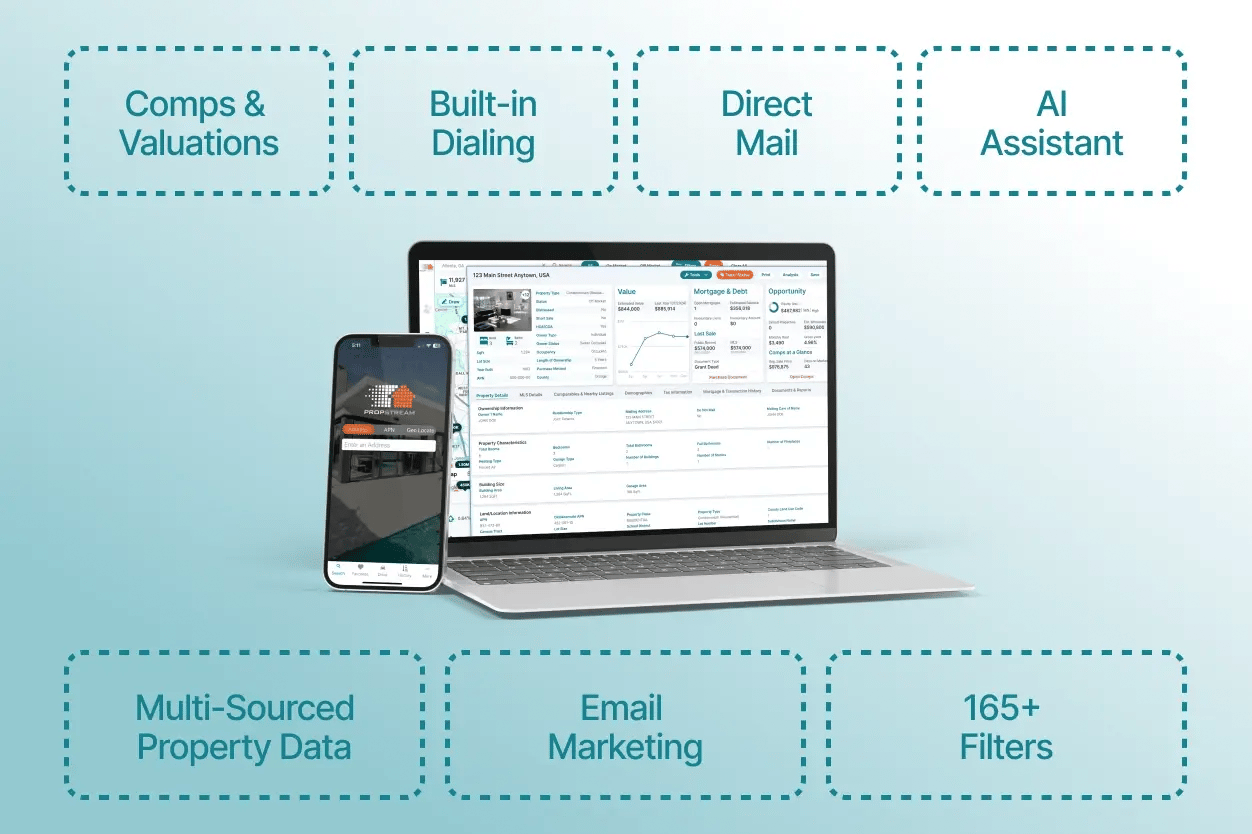
Next, use a platform that can help you quickly analyze deals using comps, estimated value, and property insights. For example, PropStream’s Run Comps tab allows you to quickly scan a list of comparable properties based on your criteria, while the platform’s 165+ search filters help you identify likely sellers at the neighborhood level.
Don’t forget speed-to-lead. Research has long shown that faster responses improve conversion rates, and many sellers end up hiring the first agent they talk to. Contacting leads soon after you find them may help you land more deals.
The Best Ways to Find Real Estate Leads
Many agents experience success by combining relational, digital, and data-driven marketing strategies. We outline some of these top methods below.
1. Build relationships within the community
Effective networking is more than exchanging business cards. It’s cultivating relationships within your local market.
This could look like getting to know small-business owners, attending local events and charity functions, or simply talking to other parents when you take your child to the park. Building rapport with your local community is still one of the best ways to generate referrals and repeat business.
2. Create an online brand
In today’s tech-driven age, marketing your brand online is nearly non-negotiable, which is why 75% of real estate agents use social media for their businesses. Not to mention, going completely analog makes it hard to reach Millennial and Gen Z consumers, who make up over 30% of the home-buying market.
If you’re not sure where to start, consider creating quick videos with house-hunting or selling tips, real-life testimonials, market trends, or fascinating real estate stories from your career. Posting regularly builds awareness and can turn followers into clients once they’re ready.
3. Host in-person and digital events
Hosting an open house doesn’t just market your listing. It also puts you in front of a group of new leads who may need your services down the road. Hosting online contests and giveaways is another way to collect email addresses to add to your CRM.
4. Use aggregated real estate data platforms
Real estate data is critical for staying up to date on the latest market trends and finding high-quality leads. To ensure accuracy, look at both MLS and public records. Or you can use platforms like PropStream, which offer wide, reliable aggregated datasets, simple search filters, and built-in marketing tools to boost your outreach efforts.
How to Identify High-Quality Leads
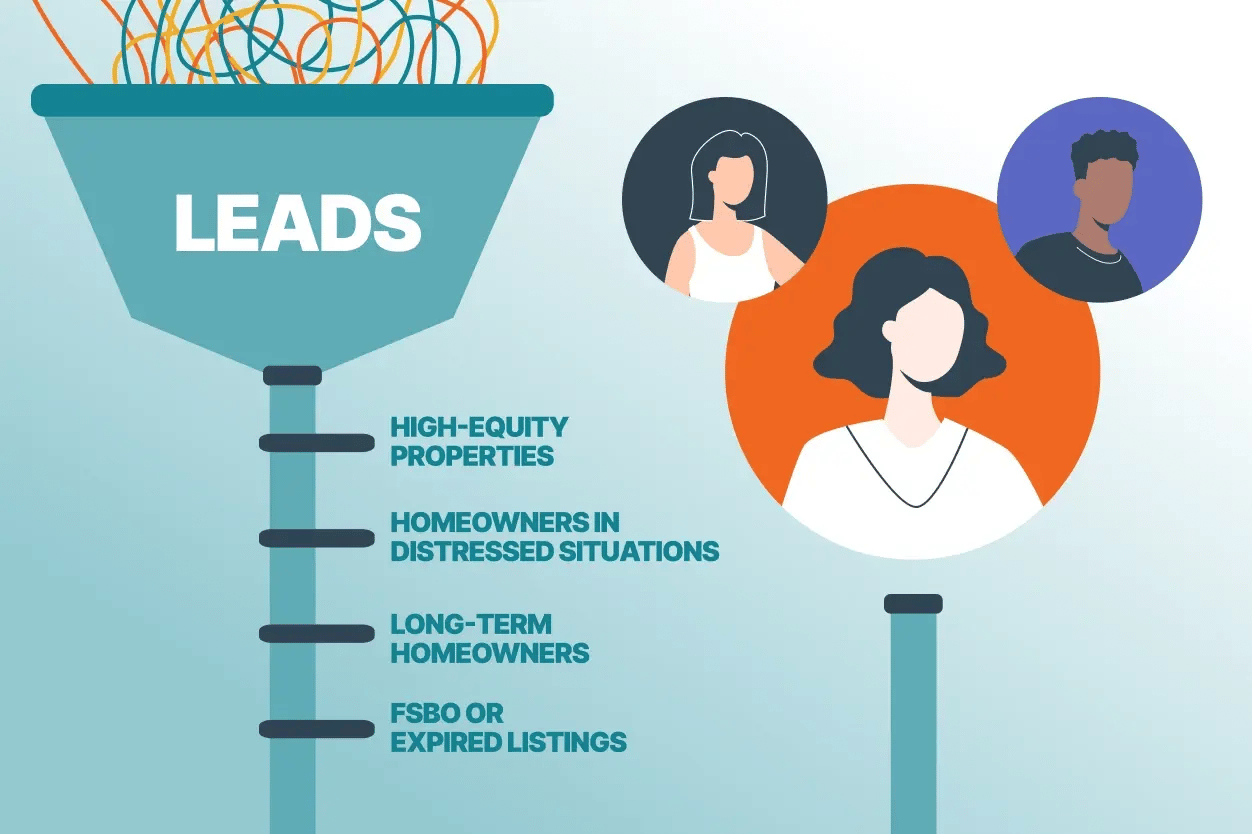
High-intent leads come in many different forms. But they all have one thing in common: they need to sell—and fast.
|
Here are some ways to find these types of prospects:
|
Want to speed up your data analysis efforts? Let the PropStream Intelligence Assistant guide you! Powered by AI, the PSI Assistant allows users to ask questions about a subject property to determine its lead eligibility.
As an agent, you can use prompts like:
- What makes this homeowner a motivated seller?
- Run comparables on the property.
- Give me a breakdown of the property’s flipping potential
- What is the rental ROI?
These questions are useful for determining a homeowner's likelihood to sell, which could result in a new listing for you, or if the property presents a solid investment opportunity for the real estate investors in your network. Try it yourself with a 7-day free trial!
Turn Leads Into Conversations Faster
Once you’ve collected your leads, be sure to segment them into categories (e.g., “high-equity,” “preforeclosure,” “divorce,” etc.). Then, instead of sending generic pitches, tailor your outreach messages to these situations.
Next, consider using PropStream’s built-in tools to contact leads directly and manage outreach campaigns for calling, emails, and direct mail. For example, with Click-to-Dial, you can organize numbers, call directly, and track your cold-calling efforts.
There’s no single way to grow your business as a real estate agent. But if you’re cultivating local relationships, letting the data guide your marketing, and showing up consistently, you’re already setting yourself up for success.
*PropStream engages an independent third party to perform skip-tracing.