

08.26.2026 PropStream
Disclaimer: This article is provided for general informational and educational purposes only and does not constitute legal, financial, or real estate investment advice. PropStream does not endorse or recommend the use of novation agreements or any particular transaction structure. Real estate laws, contractual requirements, and the legal interpretation of novation vary by jurisdiction and individual circumstances. Readers should consult a qualified real estate attorney or other appropriate licensed professional regarding questions about specific agreements, transactions, or applicable laws.
|
Quick Answer: What Is Novation in Real Estate? Novation in real estate is a legal process in which an existing contract or contractual obligation is replaced with a new one, with the agreement of the required parties. The original obligation is discharged and replaced by the new obligation. Novation may involve changing a party to a contract or replacing the terms of an existing agreement. |
Real estate transactions involve legally binding contracts that establish the rights and responsibilities of buyers, sellers, and other parties. In some situations, the parties may agree to replace an existing contractual obligation with a new one through a process known as novation.
The term novation comes from contract law and is not exclusive to real estate. It generally refers to the substitution of a new contract or obligation for an existing one, with the intention of extinguishing the original obligation.
In real estate, novation can arise in purchase agreements, financing arrangements, and other contractual relationships. Its legal effect depends on the agreement, the parties' intentions, and applicable state law.
|
Key Takeaways:
|
How Does Novation Work in Real Estate?

A novation generally involves an existing contractual obligation, an agreement to replace that obligation, and the discharge of the original obligation.
Depending on the circumstances, novation may involve:
- Substitution of parties: A new party replaces an original party to a contract, with the required consent and release of the original party from the relevant obligations.
- Replacement of contractual obligations: The parties agree to substitute a new obligation for an existing one, extinguishing the original obligation.
- A new contractual agreement: An existing agreement is replaced by a new agreement that the parties intend to supersede the original.
Not every contract modification qualifies as a novation. For example, changing a closing date or adjusting a purchase price through an amendment does not necessarily extinguish the original contract.
Example of Novation in Real Estate
Consider a hypothetical real estate transaction in which a buyer and seller enter into a purchase agreement for a property.
Before closing, the parties agree that a different buyer will replace the original buyer under a new agreement. The seller, the original buyer, and the replacement buyer consent to the substitution, and the original buyer is released from the obligations under the original agreement.
Depending on the specific agreements and applicable law, this arrangement may constitute a novation.
Note: This example illustrates the contractual concept of novation rather than a recommended transaction structure.
Why Might a Real Estate Investor Consider a Novation Agreement?In real estate investing, novation agreements may be considered when parties want to replace an existing contractual obligation or restructure their contractual relationship. The circumstances vary depending on the property, the parties involved, and the terms of the original agreement. Some situations in which novation may arise include:
From an investor's perspective, the potential appeal of novation may involve greater flexibility in how contractual relationships are structured, particularly when circumstances change before a transaction is completed. Important note: Novation does not automatically provide greater flexibility, eliminate liability, or create a financial advantage. Its legal and financial implications depend on the specific agreement, the consent of the relevant parties, and applicable laws. Agreements described as novations may also involve additional considerations related to disclosures, licensing, financing, and contractual responsibilities. We recommend working with a legal professional before attempting a novation agreement. |
What Is a Novation Agreement in Real Estate Wholesaling?

In real estate wholesaling, the term novation agreement is sometimes used to describe an arrangement in which a property owner and another party enter into an agreement concerning the property's sale, potentially involving a replacement purchase agreement or buyer.
However, the term is not always used consistently in real estate marketing or investment discussions. An agreement labeled a "novation agreement" does not automatically qualify as a legal novation.
Whether an arrangement constitutes novation depends on its actual contractual terms, the parties' consent, whether the original obligations are discharged, and applicable law.
Feature Spotlight: Investor OutreachInvestor Outreach streamlines the disposition process by helping wholesalers quickly identify active buyers and verify their purchasing history before assigning contracts.
|
Novation vs. Assignment in Real Estate
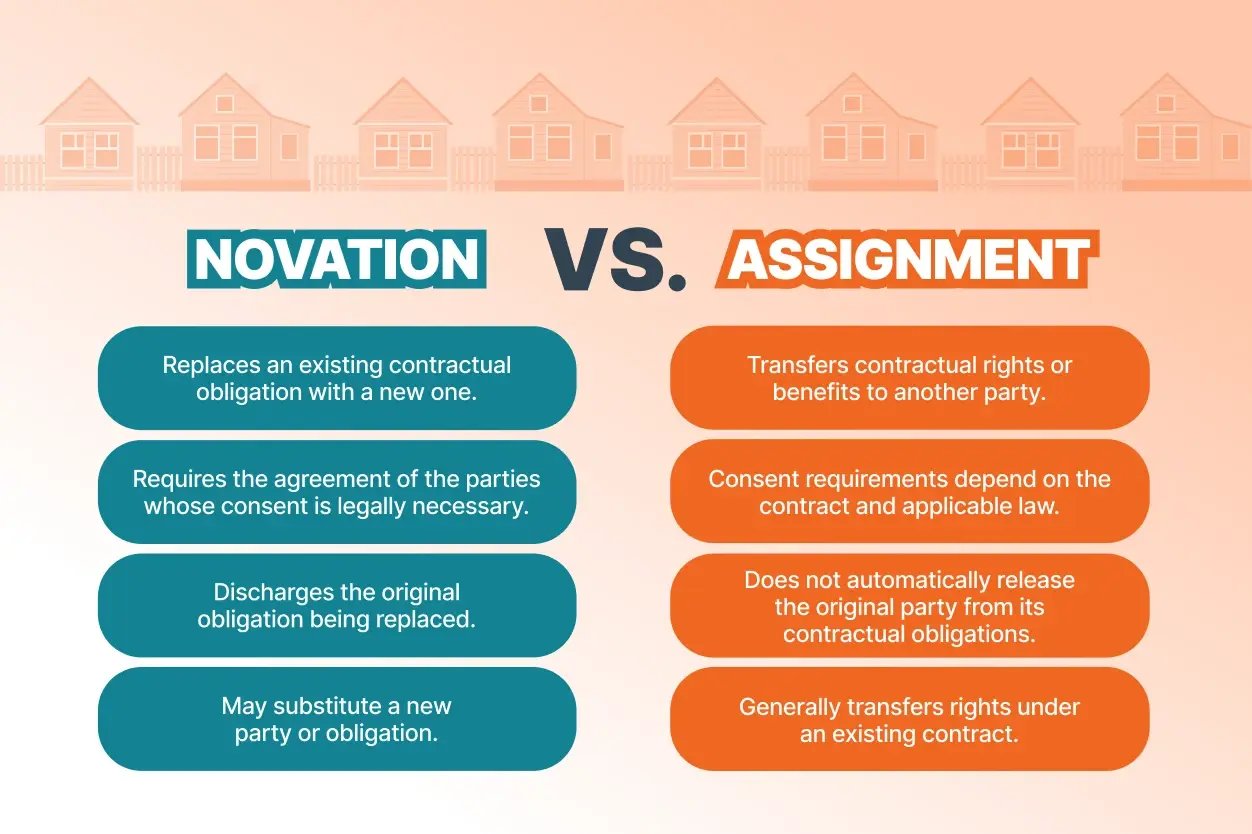
Although novation and assignment may both involve changes to contractual relationships, they have different legal meanings.
| Novation | Assignment |
| Replaces an existing contractual obligation with a new one. | Transfers contractual rights or benefits to another party. |
| Requires the agreement of the parties whose consent is legally necessary. | Consent requirements depend on the contract and applicable law. |
| Discharges the original obligation being replaced. | Does not automatically release the original party from its contractual obligations. |
| May substitute a new party or obligation. | Generally transfers rights under an existing contract. |
Is Novation Legal in Real Estate?
Novation is a recognized concept in contract law. However, its validity and legal effect in a particular real estate transaction depend on applicable state law, the terms of the agreements, and the circumstances surrounding the transaction.
Final Thoughts
Novation is a legal mechanism in real estate that allows contracts and parties to be substituted while fully discharging the original obligations.
Unlike assignment, it fully releases the departing party from future liability, provided all necessary parties give mutual consent. Understanding the distinction between novation and other contractual adjustments ensures clarity, legal compliance, and smoother transactions for buyers, sellers, and real estate professionals alike.
*PropStream engages an independent third party to perform skip tracing.