
07.28.2025 PropStream
Disclaimer: PropStream does not offer investing advice and/or profit promises. This article is for educational purposes only. We recommend doing your due diligence and/or consulting financial professionals before investing in real estate.
|
Key Takeaways:
|
For years, an ongoing housing inventory squeeze and intense buyer competition have made finding investment properties increasingly difficult across much of the United States. With more listings, softer competition, and longer selling timelines than during the peak pandemic housing boom, some markets are beginning to shift toward more balanced conditions.
Although elevated mortgage rates and affordability pressures have slowed buyer activity in parts of the country, some U.S. cities have more homes for sale than others or more than they had last year, creating potential buying opportunities for savvy investors.
In this article, we’ve ranked the top ten U.S. metros with the highest housing inventory levels (as of April 2026) to help you find your next investment.
1. Miami, FL
| Active Listings | 45,280 |
| Active Listings YoY Change | +5.69% |
| Median Listing Price | $525,000 |
Miami tops the list for housing inventory in 2026 with 45,280 active listings, reflecting a 5.69% increase year over year. With median listing prices sitting around $525,000, the market continues to offer a large supply of available homes compared to many other major U.S. metros.
While Miami continues to benefit from migration, international buyers, and strong luxury demand, rising condo inventory and increasing ownership costs are beginning to reshape the market. Higher insurance premiums, stricter condo reserve requirements following Florida’s updated building safety laws, and growing buyer leverage have contributed to longer selling timelines and increased negotiating pressure across portions of the condo market.
2. New York, NY
| Active Listings | 33,514 |
| Active Listings YoY Change | +0.89% |
| Median Listing Price | $799,000 |
New York City (NYC) remains the most populous U.S. metro, with nearly 19.5 million residents. It also ranks second nationally for housing inventory in 2026 with 33,514 active listings, a modest 0.89% increase from last year.
According to recent National Association of REALTOR® data, pending home sales in the Northeast rose 4.4% month over month in March 2026, signaling renewed buyer activity across major metros like New York as inventory levels improve. With one of the nation’s deepest housing markets and a growing selection of available homes, NYC could continue to offer long-term investment opportunities.
3. Houston, TX
| Active Listings | 32,681 |
| Active Listings YoY Change | +17.47% |
| Median Listing Price | $369,995 |
Houston has 32,681 active listings, a strong 17.47% increase from last year. Despite rising inventory, Houston remains one of the more affordable major metros in the country, with median listing prices sitting around $369,995 compared to many other large U.S. markets.
Single-family home sales in Houston increased 3.7% year over year in March 2026, with 7,644 homes sold. The Houston metro added more than 140,000 residents between 2023 and 2025, helping sustain long-term housing demand across both the ownership and rental markets.
With inventory levels rising while home prices remain comparatively affordable, Houston could continue offering investors a rare combination of scale, affordability, and sustained housing demand.
4. Atlanta, GA
| Active Listings | 26,496 |
| Active Listings YoY Change | +4.31% |
| Median Listing Price | $422,400 |
Atlanta has 26,496 homes for sale, a 4.31% increase from last year. Despite rising inventory, Atlanta remains relatively affordable compared to many other major metros, with median listing prices sitting around $422,400.
Investors are pivoting to Atlanta for rent growth rather than just flipping. Atlanta is expected to rank second among major U.S. apartment markets for mean effective rent growth in 2026. With multifamily development at its slowest pace in a decade, the supply of rental units is tightening, making long-term hold strategies highly attractive.
5. Dallas-Fort Worth, TX
| Active Listings | 26,487 |
| Active Listings YoY Change | +0.06% |
| Median Listing Price | $430,000 |
Dallas-Fort Worth ranks fifth nationally for housing inventory in 2026 with 26,487 active listings, remaining relatively flat year over year at +0.06%. Even with elevated inventory levels, the metro’s median listing price of roughly $430,000 remains comparatively affordable for one of the nation’s largest housing markets.
While inventory growth has started stabilizing, a recent report shows that the median closing price declined 2.16% to roughly $385,000, giving buyers and investors more negotiating leverage as homes take longer to sell.
6. Phoenix, AZ
| Active Listings | 19,948 |
| Active Listings YoY Change | -0.17% |
| Median Listing Price | $499,000 |
Phoenix housing inventory currently has 19,948 active listings, remaining relatively flat year over year at -0.17%. Even after the market cooldown following the pandemic housing boom, Phoenix’s median listing price remains near $499,000, reflecting the city’s continued long-term population and housing demand growth.
According to data from the Arizona Regional MLS (ARMLS) and the Cromford Report, the average home is selling for roughly 2.4% below list price as sellers become more moderate in their expectations. With a median of 54 to 57 days on market, investors have gained substantial negotiating leverage, often securing significant concessions such as repair credits or mortgage rate buydowns to offset financing costs.
7. Tampa, FL
| Active Listings | 17,967 |
| Active Listings YoY Change | -6.96% |
| Median Listing Price | $406,500 |
Tampa's housing inventory has declined 6.96% year over year to 17,967 active listings, as the market begins stabilizing after Florida’s post-pandemic housing surge. With median listing prices around $406,500, Tampa remains one of the more active major housing markets in the Southeast.
Median home prices across Florida’s largest metros are projected to decline an average of 1.9% in 2026, compared to a projected 2.2% national increase. For investors, that softer pricing environment could create more favorable entry opportunities as the Tampa market continues normalizing after years of rapid appreciation.
8. Los Angeles, CA
| Active Listings | 17,489 |
| Active Listings YoY Change | +29.84% |
| Median Listing Price | $1,199,000 |
Los Angeles ranks eighth nationally for housing inventory in 2026 with 17,489 active listings, a sharp 29.84% increase from last year. Despite the increase in supply, Los Angeles still has the highest median listing price among the top inventory markets on this list, with homes approaching $1.2 million on average.
The rise in inventory may reflect both slowing buyer demand and California’s ongoing push to expand housing supply after years of severe shortages. In recent years, Los Angeles has expanded adaptive reuse and housing development initiatives aimed at accelerating residential construction and converting underutilized commercial properties into housing.
For investors, 2026 represents a strategic "normalization window": a rare moment where inventory is rising fast enough to grant leverage, yet prices continue to climb, ensuring immediate equity growth.
9. Washington, DC
| Active Listings | 13,265 |
| Active Listings YoY Change | +12.90% |
| Median Listing Price | $625,000 |
Washington has 13,265 homes for sale, a 12.90% increase from last year. Even with rising inventory, the metro remains one of the country’s higher-priced housing markets, with median listing prices around $625,000.
The median list price in the Washington metro dropped more than 10% year over year in April 2026, while homes also took longer to sell. As inventory expands and pricing softens, buyers and investors may now have more negotiating leverage than they’ve had in recent years.
10. Orlando, FL
| Active Listings | 13,218 |
| Active Listings YoY Change | -3.97% |
| Median Listing Price | $419,000 |
Orlando has 13,218 active listings, though inventory declined 3.97% year over year as the market begins stabilizing after Florida’s pandemic-era housing surge. With median listing prices around $419,000, Orlando remains more affordable than several other major Florida metros on this list, including Miami.
Despite a softer housing environment, Orlando continues to benefit from strong long-term population growth and rental demand. The Orlando metro added 37,690 new residents between July 2024 and July 2025, making it the sixth fastest-growing large metro in the United States.
Florida’s largest metros could see average home prices decline 1.9% in 2026, which may give investors a better entry point in a market still supported by tourism, job growth, and renter demand from international migration.
Uncover Off-Market Inventory With PropStream
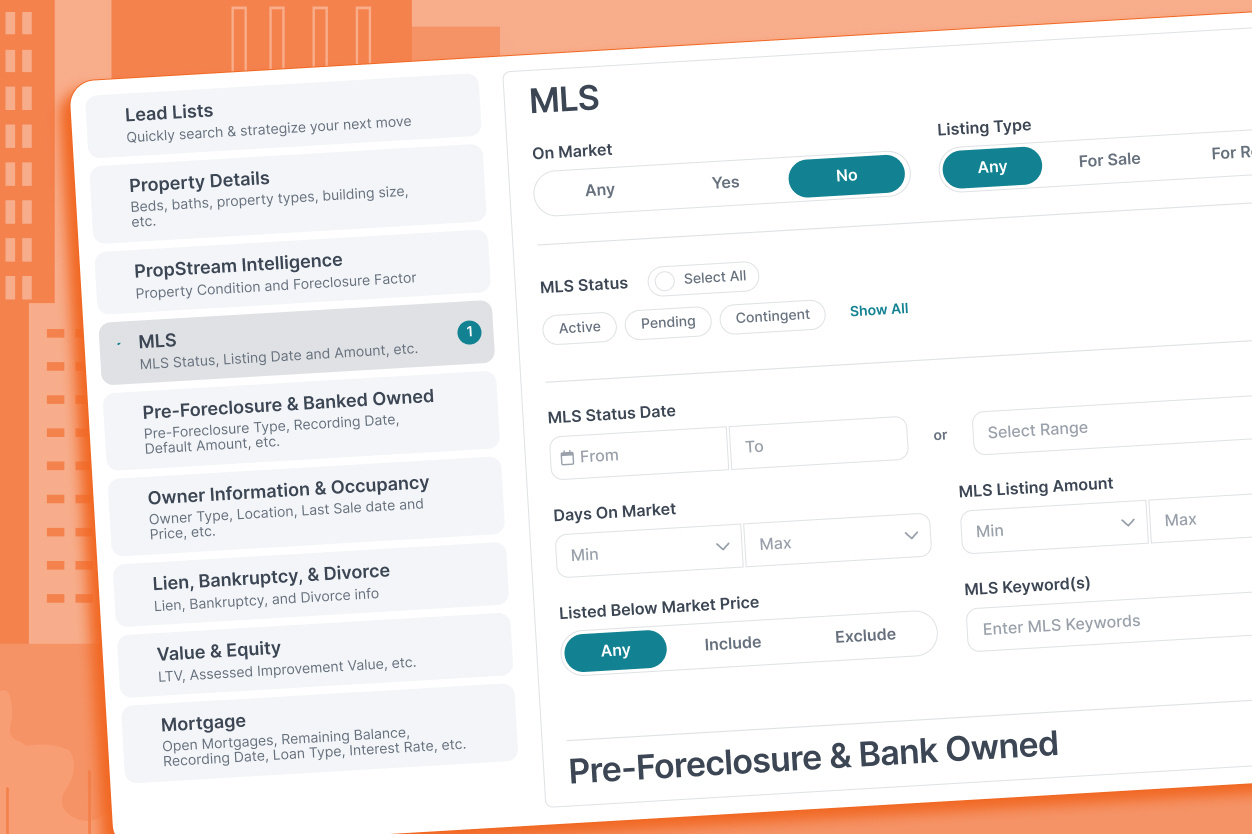
Of course, rising inventory or declining listing prices alone don’t guarantee a great real estate deal. Investors still need to identify the right opportunities, evaluate local market conditions, analyze property values, and move quickly before competition increases again.
That’s where PropStream can help. With nationwide aggregated property data, MLS and public records, built-in comps, investment calculators, and marketing tools, PropStream helps investors uncover opportunities both on- and off-market.
Investors can also leverage newer tools like the PropStream Intelligence Assistant for AI-powered property analysis, the Rental ROI Calculator for long-term cash flow projections, Lead Automator to continuously monitor changing inventory and motivated seller activity in target markets, and a built-in dialer to quickly connect with property owners directly from the platform.
Whether you’re targeting cooling markets, rising inventory metros, or long-term rental opportunities, PropStream gives you the tools to search, identify, connect, and transact, in one platform.
Notes on sources:
- Active listings, active listing YoY changes, and median listing prices based on April 2026 data from Realtor.com® Economic Research (unless otherwise cited)