

10.5.2026 PropStream
Disclaimer: This article is for informational purposes only and does not constitute financial, legal, or investment advice. Loan assumption rules and eligibility vary. Inclusion in PropStream's Assumable Mortgages Lead List does not guarantee a loan is assumable or that a buyer will qualify. Verify details directly with the lender or servicer.
|
Quick Answer: An assumable mortgage allows a qualified buyer to take over an eligible seller’s existing home loan, potentially including its remaining balance, interest rate, and repayment terms. With the average 30-year fixed mortgage rate sitting at 7.03% as of September 24, 2026, finding a property with an older, lower-rate assumable loan could significantly change the financing equation for a buyer. However, not every mortgage is assumable; buyers generally must qualify with the loan servicer, and they still need a way to cover the difference between the remaining mortgage balance and the purchase price. |
When mortgage rates rise, the price of a home is only part of the affordability equation.
As of October 7, 2026, the average rate on a 30-year fixed mortgage was 7.28%, according to Freddie Mac. One year earlier, it was 6.30%.
Even seemingly small differences in interest rates can have a significant effect on monthly principal-and-interest payments and total borrowing costs. Freddie Mac notes that lower mortgage rates increase purchasing power because buyers can borrow the same amount with less interest.
That's one reason an often-overlooked financing feature is particularly relevant in today's market: the assumable mortgage.
|
Key Takeaways:
|
What Is an Assumable Mortgage?
An assumable mortgage allows a buyer to take over an eligible seller's existing mortgage rather than replacing it entirely with a new loan.
Depending on the loan and program requirements, the buyer may be able to assume the seller's remaining mortgage balance along with its existing interest rate and repayment terms.
That's particularly noteworthy when today's market rates are substantially higher than the rate attached to the existing loan.
For example, imagine a homeowner purchased a property several years ago using an assumable mortgage with a 3% fixed interest rate. If the owner decides to sell when new mortgage rates are around 7%, a qualified buyer may be able to assume the remaining balance at the existing 3% rate rather than financing that portion of the purchase with a new mortgage at prevailing rates.
The potential savings can make the financing attached to a property an important part of the opportunity—not just the property itself.
| Example Scenario | ||
| 3% Assumable Mortgage | 7% New Mortgage | |
| Loan balance | $350,000 | $350,000 |
| Monthly principal & interest | ~$1,476 | ~$2,329 |
| Total interest over 30 years | ~$181,221 | ~$488,281 |
| Difference | ~$307,060 less interest | |
Which Mortgages Can Be Assumed?
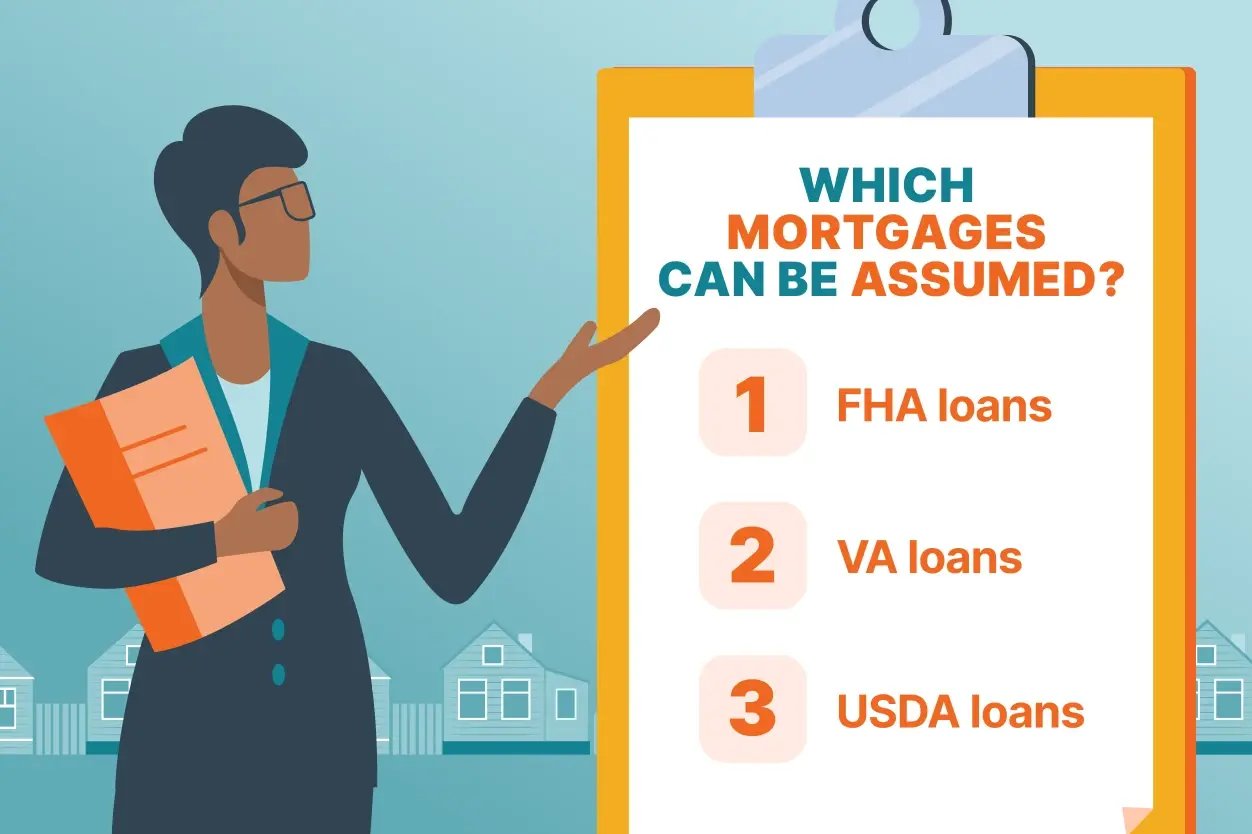
Assumability depends heavily on the loan program and the individual mortgage.
Government-backed mortgages are especially important to understand.
FHA loans: HUD states that FHA-insured mortgages are assumable, although restrictions and creditworthiness requirements can apply.
Related Read: FHA vs. Conventional Loans: How Do They Differ?
VA loans: VA-guaranteed loans can also be assumed by qualified purchasers. The VA states that the purchaser must meet applicable credit and income underwriting standards, and the loan must be current at closing. Importantly, the purchaser does not necessarily have to be a Veteran to assume a VA loan.
VA transactions require another consideration for Veteran sellers: an approved assumption does not automatically restore the seller's VA loan entitlement. Substitution of entitlement generally requires an eligible Veteran buyer with sufficient entitlement who meets VA requirements.
Related Read: Can You Use a VA Loan to Buy a Rental Property?
USDA loans: Certain USDA guaranteed loans can also be transferred and assumed, subject to USDA requirements and approval. USDA guidance allows a qualifying transferee to assume an eligible guaranteed loan under its existing rate and terms in applicable circumstances.
Conventional mortgages, by contrast, generally should not be assumed to be transferable unless the loan documents specifically permit it.
Why Assumable Mortgages Can Be So Valuable When Rates Are Elevated
The most obvious advantage is the possibility of obtaining a lower interest rate.
Suppose a property is being sold for $500,000 and has an eligible assumable mortgage with:
- A $350,000 remaining balance
- A 3% interest rate
- $150,000 in seller equity
Instead of financing the entire purchase at today's rates, a qualified buyer might be able to assume the $350,000 mortgage at 3% interest.
However, that brings us to one of the biggest considerations with assumable mortgages.
Don't Forget About the Equity Gap
Assuming a mortgage does not mean assuming the entire purchase price.
If the seller owes $350,000 but the agreed purchase price is $500,000, there is a $150,000 difference.
The buyer still needs to determine how that gap will be covered. Depending on the transaction and available financing, that could involve cash or additional financing.
The larger the seller's equity position, the larger that gap can become.
That means a low mortgage rate alone doesn't necessarily make a property a good opportunity. Buyers need to evaluate the entire financing structure, purchase price, remaining balance, property condition, and their investment or ownership goals.
The Hard Part: Finding Properties With Potentially Assumable Mortgages
Understanding assumable mortgages is one thing. Finding properties that may actually have one is another.
Searching property by property for mortgage type, outstanding loan information, and estimated interest rates can become a time-consuming research project.
That's where property and mortgage data can become especially useful.
Find Potential Assumable Mortgages With PropStream
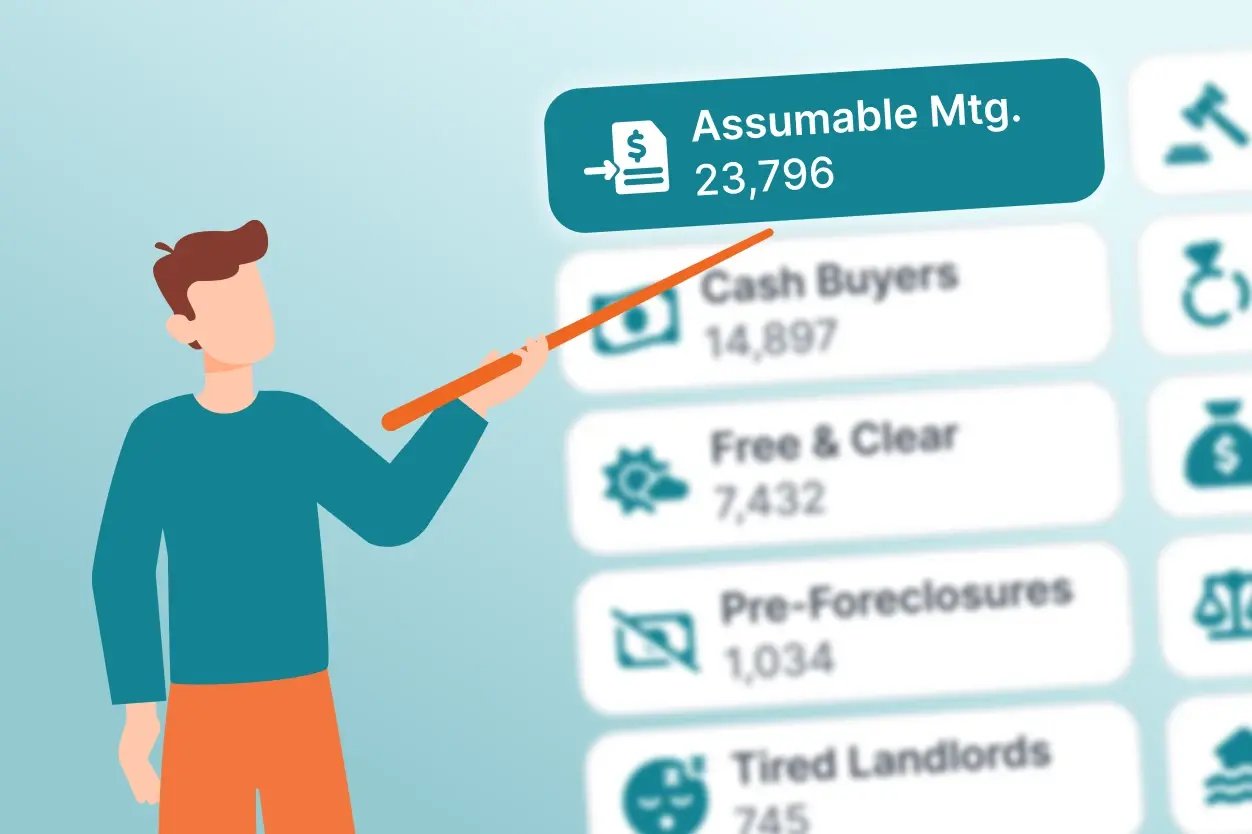
PropStream's Assumable Mortgages Lead List is designed to help real estate professionals quickly identify properties with assumable financing.
The Lead List identifies properties with at least one open FHA, VA, or USDA loan, and all open loans on the property must fall into one of those categories for the property to qualify for the list. PropStream also displays the loan type, estimated loan balance, and estimated interest rate to help users evaluate why a property appears in the results.
Users can then layer additional PropStream property and owner filters onto the results to narrow the search based on their specific strategy.
For example, a real estate professional might use the list to identify properties with potentially assumable financing and then narrow the results based on factors such as location, ownership characteristics, equity, property details, or other relevant criteria.
Once relevant leads are identified, users can also leverage PropStream Connect to seamlessly launch targeted marketing campaigns—using features such as skip tracing, direct mail, or Click-to-Dial—directly to property owners to start the conversation.*
Important: Appearing on PropStream's Assumable Mortgages Lead List does not guarantee that a mortgage can be assumed. PropStream identifies loan types commonly eligible for assumption, but the actual transaction remains subject to the applicable loan program, lender or servicer approval, buyer qualification, and other requirements.
Turn High Interest Rates into a Competitive Advantage
In today’s high-rate market, existing low-rate financing can be a dealmaking superpower. Unlocking an eligible assumable mortgage slashes borrowing costs, transforming property affordability and opening doors that standard financing closes.
While buyers must still evaluate the equity gap and lender approval, identifying these rare opportunities gives savvy real estate professionals an undeniable edge.
Instead of manually digging through records property by property, leverage PropStream’s Assumable Mortgages Lead List to uncover high-potential leads in seconds and deliver game-changing value to your clients.
*PropStream engages an independent third-party to perform skip tracing.
Note on sources:
- Data taken from ATTOM and ICE Mortgage Monitor unless otherwise cited.


