11.4.2026 PropStream
Disclaimer: Calculator results are estimates based on user-provided assumptions and are for informational purposes only. Actual costs, property values, financing expenses, timelines, and investment returns can vary. Investors should conduct independent due diligence and consult appropriate financial, tax, legal, or real estate professionals when needed.
| Quick Answer: Enter your ARV, purchase price, rehab budget, and other project costs in a flipping calculator to see your estimated profit, profit margin, and cash needed. Then stress-test the numbers with different scenarios before deciding whether to pursue the deal. |
The faster you can evaluate a fix-and-flip opportunity, the faster you can seize it or move on to the next one. That’s what makes flipping calculators so powerful. They tell you just enough to decide whether to pass on a property or explore it further.
Read on for a step-by-step guide on how to use a flipping calculator and size up deals quickly.
|
Key takeaways:
|
Start With the After-Repair Value (ARV)
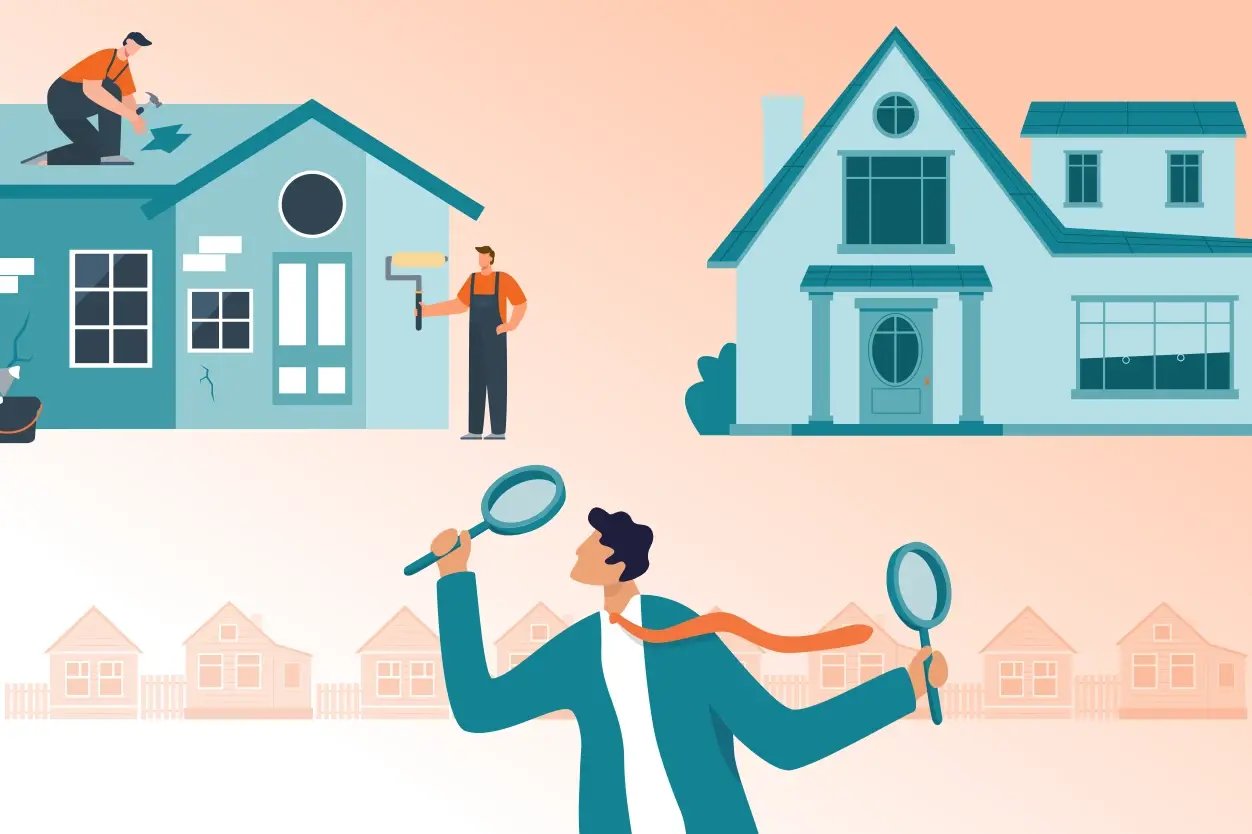
After-repair value (ARV) is a property’s value after it’s been renovated. In other words, it’s how much you can expect to sell the property for, directly impacting the property’s profit potential.
To estimate ARV, don’t assume a certain amount of appreciation. Instead, estimate the value of the renovated property by looking at how much similar nearby properties sold for recently (aka comps). Make needed adjustments for any differences in features (property age, size, condition, etc.) between your property and comps. Then average the comp values to arrive at an ARV.
Estimate Your Total Investment, Not Just the Purchase Price
Next, estimate your all-in cost. This isn’t just the purchase price. It’s everything it costs to get a deal off the ground and across the finish line.
Here’s a list of expenses to account for:
- Purchase price: The cost of the property itself, negotiated with the seller and finalized in a purchase agreement.
- Rehab and materials: The cost of renovating the property, including labor and materials. Get quotes from contractors and review past deals for a reliable estimate.
- Financing: Any cost related to financing the property, including monthly mortgage payments and closing costs.
- Holding costs: These are the ongoing costs of owning the property while you renovate it, such as property taxes, utilities, and home insurance.
- Selling costs: These are the costs of selling the property, including agent fees and commissions.
- Contingency for unexpected expenses: This is a reserve fund for unexpected expenses that might arise.
By adding up all of the above, you can arrive at your estimated all-in cost.
Calculate Your Potential Profit
Now that you have the ARV and your total project costs, you can calculate the deal’s potential profit with this formula:
| Potential Profit = Expected Sale Price − Total Project Costs |
For example, if the expected sale price is $600,000 and the total project costs are $400,000, your potential profit would be $200,000 ($600,000 - $400,000).
That said, your potential profit isn’t the only thing to consider when analyzing a deal. It should be weighed against the upfront capital investment, time required, risks involved, and other factors.
Try the Numbers Yourself
Have an actual property in mind? Enter your estimated purchase, rehab, and resale numbers below to get a quick look at the deal.
|
Here’s what your results mean:
|
If these numbers aren’t what you expected, consider revisiting your estimates for ARV, renovation costs, and other expenses.
Stress-Test the Deal
Before taking the fix-and-flip analyzer numbers as fact, stress-test the deal by assessing what would happen to its viability and profitability under different conditions.
For example, what happens if renovations cost more than expected? What if the project takes two months longer? What if the property sells for less than the projected ARV?
Run the calculator several times using optimistic, expected, and conservative scenarios. That way, you get a well-rounded view of the deal in question.
Look Beyond the Projected Profit
Finally, some deal factors aren’t captured in a simple profit calculation.
For instance, neighborhood conditions, market trends, contractor availability, property-specific risks, financing terms, and your own goals and risk tolerance can all impact a deal’s overall appeal. So don’t rely too heavily on expected profit alone; shop around to compare costs that could impact your profit.
Want to Analyze the Property in Greater Detail?
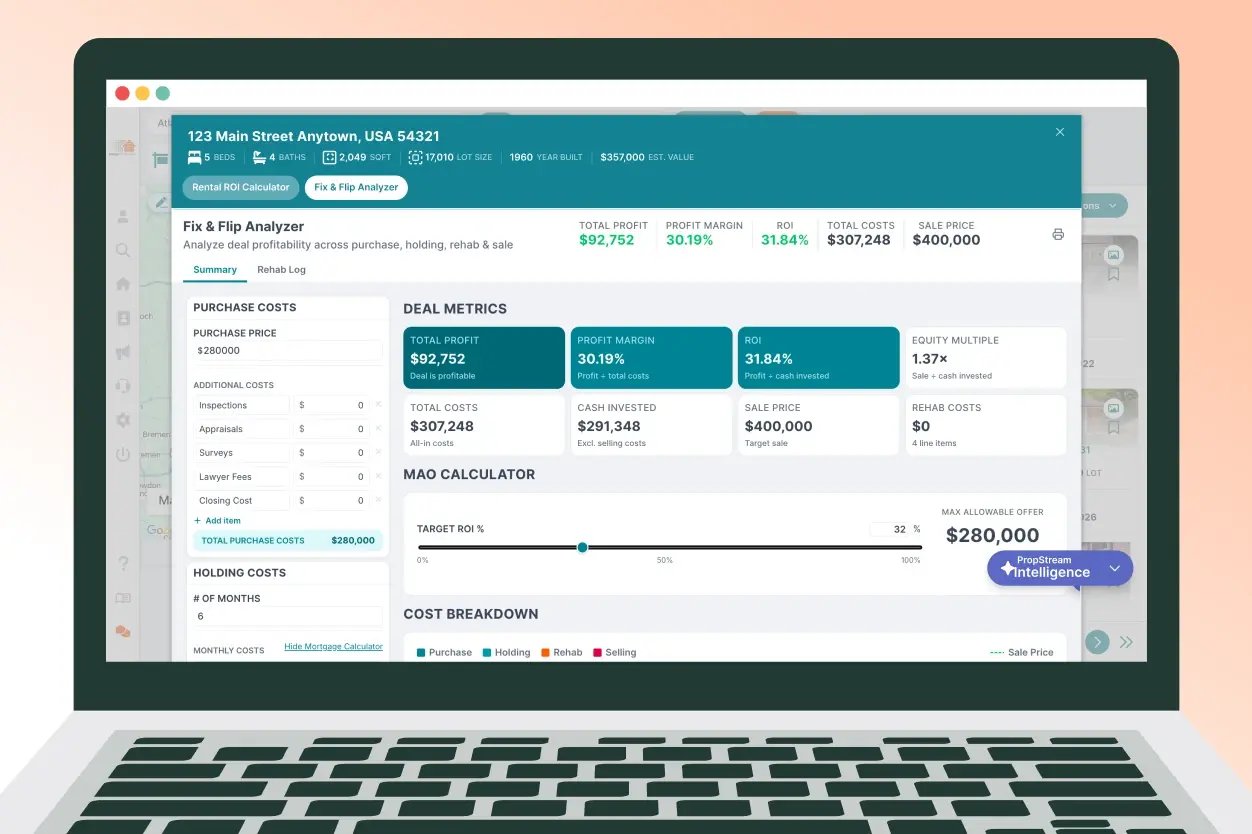
Ready to go beyond the quick calculation? Use PropStream to research properties, review comparable sales and property data, estimate potential costs, and run a more detailed analysis with the full Fix & Flip Analyzer.