
08.10.2026 PropStream
Disclaimer: PropStream does not offer financial or legal advice. This article is for informational purposes only. We recommend performing individual research or consulting financial and/or legal professionals before investing in Florida pre-foreclosure properties.
|
Key Takeaways:
|
In May 2026, Florida had the highest foreclosure rate across all fifty U.S. states. One in every 2,110 Florida properties had a foreclosure filing. Meanwhile, the national foreclosure rate reached its highest level in nearly seven years.
While the prospect of foreclosure can be stressful for homeowners, it can also be an opportunity. For instance, many don’t know that selling their home could help them avoid foreclosure, recover their equity, and collect enough cash to move elsewhere.
In this article, we’ll examine the recent rise in foreclosures in Florida, what it means for local investors and agents, and how to guide homeowners through this challenging process.
Florida Foreclosure Activity Snapshot
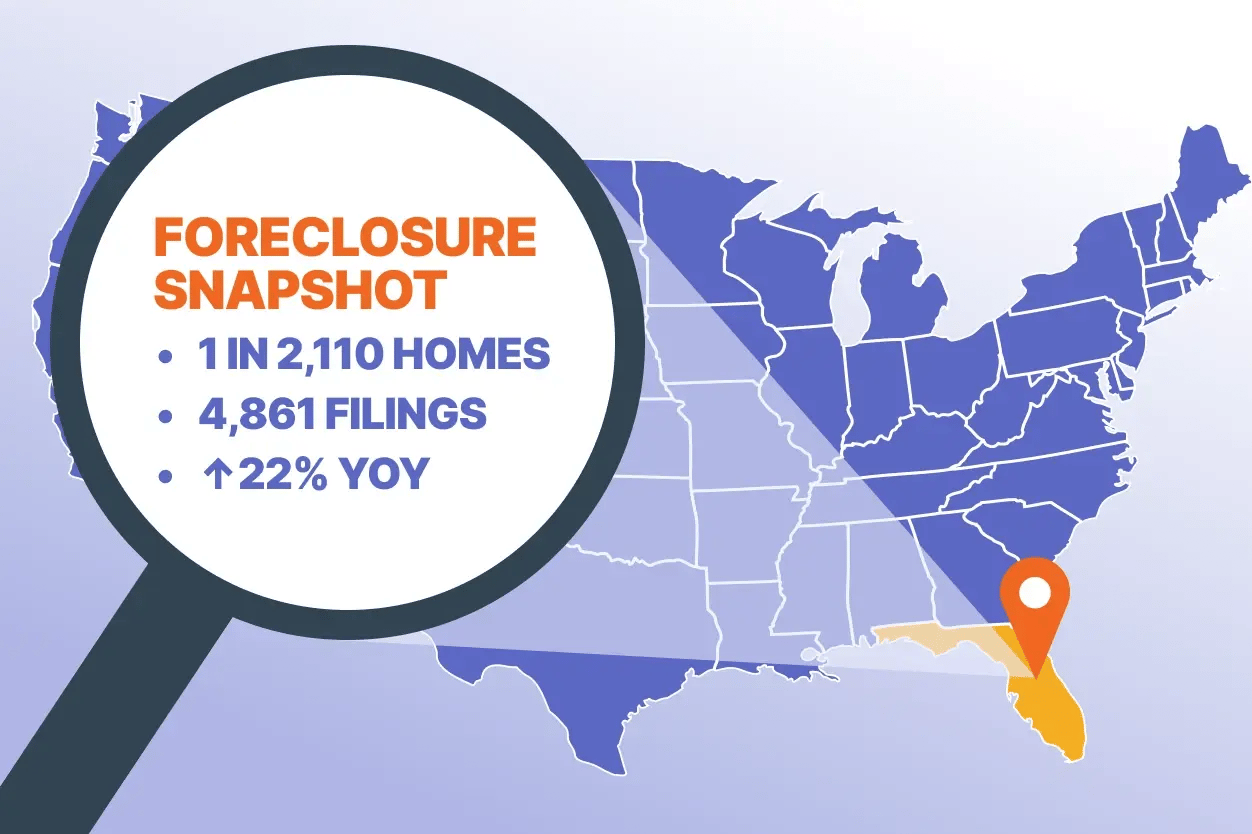
According to ATTOM, in May 2026, Florida saw 1 in every 2,110 housing units receive a foreclosure filing (4,861 filings / 10,256,470 units). That’s down 0.84% from the previous month but up 22.26% from a year ago. Florida counties with the worst foreclosure rates included Hamilton, Charlotte, Hendry, and Osceola.
For comparison, the U.S. as a whole saw one 1 in every 3,562 housing units receive a foreclosure filing, down 4.89% from the previous month but up 13.68% from last year.
What’s Driving Foreclosures in Florida
To understand what’s driving foreclosure activity in Florida, it’s important to get some context.
Despite their recent rise, foreclosure filings are relatively low compared to historical figures. The 2020 pandemic launched a series of financial relief programs, including foreclosure moratoriums and mortgage forbearance initiatives aimed at protecting homeowners during the crisis. This, and significant home equity gains, helped suppress foreclosure activity over the next few years.
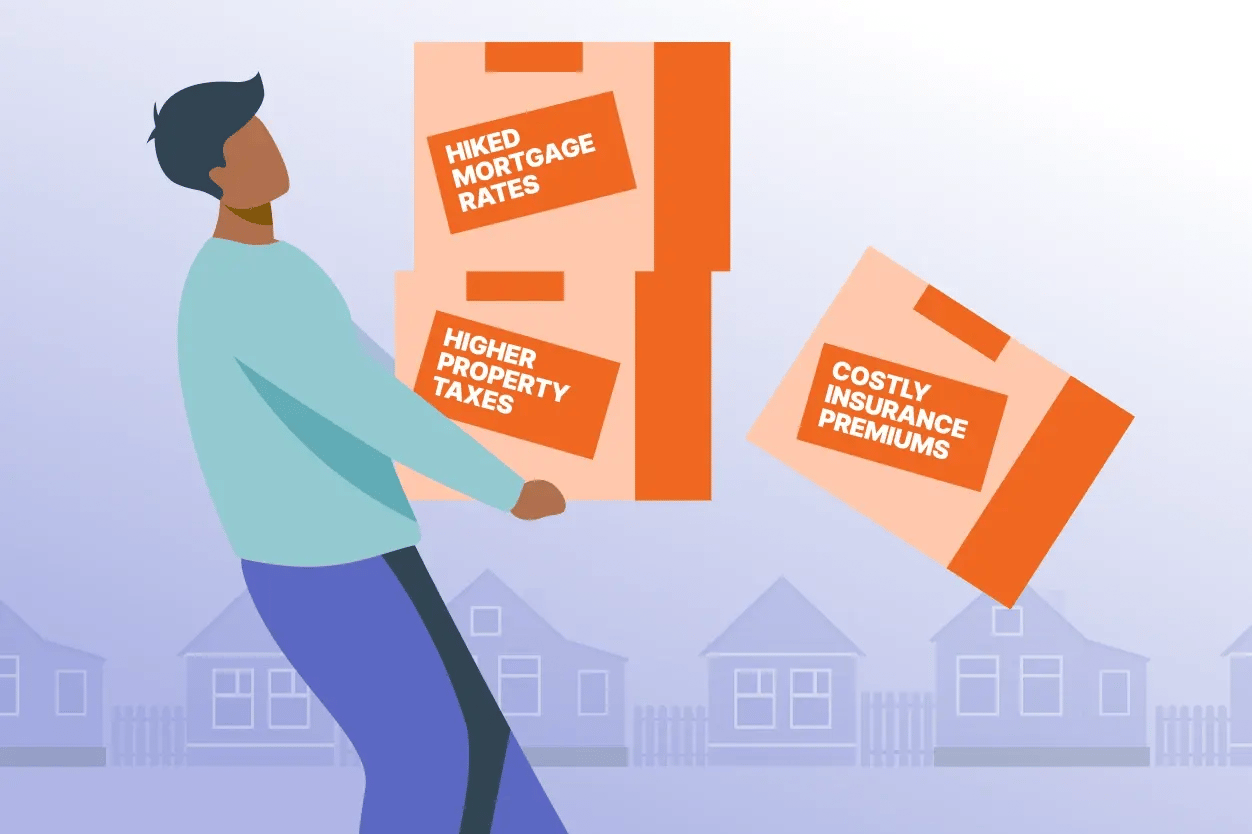
Since then, however, foreclosure rates have gradually increased in Florida (and elsewhere) due to mounting financial pressures, including the following:
Elevated Mortgage Rates
To combat rampant inflation, the central bank started a series of aggressive interest rate hikes at the end of 2021. The average 30-year fixed mortgage rate went from about 3% to nearly 8% within a year. Since then, it’s hovered around 6-7%, reaching 6.43% as of July 2nd, 2026.
For homeowners with adjustable-rate mortgages (ARMs) or those who took out loans after the rate hikes, this means higher monthly payments (all else equal).
Related Read: How Do a Fixed-Rate and an Adjustable-Rate Mortgage (ARM) Differ?
Rising Insurance Costs
Increasingly costly weather disasters have pushed up Florida homeowners' insurance rates. Between 2021 and 2025, home insurance premiums nationwide rose 38%. Meanwhile, premiums in Florida rose 75% (nearly double the rate), according to a recent report.
This means a larger portion of homeowners’ income is put toward home insurance, reducing the funds available for other living costs.
Higher Property Taxes
Higher property taxes are also burdening homeowners. While tax rates vary by county, home values (on which property taxes are calculated) skyrocketed during the pandemic. The median listing price went from $320,000 in January 2021 to $493,500 in June 2022.
While home values have since moderated, they’re still well above pre-pandemic levels, with a median home listing price of $423,900 in June 2026. At the state’s average 2024 effective tax rate of 0.78%, that’s $3,306.42 in property taxes per year, a significant burden for many.
What This Means for Real Estate Investors and Agents
For real estate investors and agents, Florida’s recent rise in foreclosure activity could yield new business opportunities. After all, most homeowners want to avoid foreclosure, so if you identify those at risk of foreclosure, you can step in to educate them on their selling options.
As an investor, this could mean making a cash offer to secure a property at a discount. As an agent, this could mean listing the property on the owner's behalf.
How to Identify Homeowners in Pre-Foreclosure
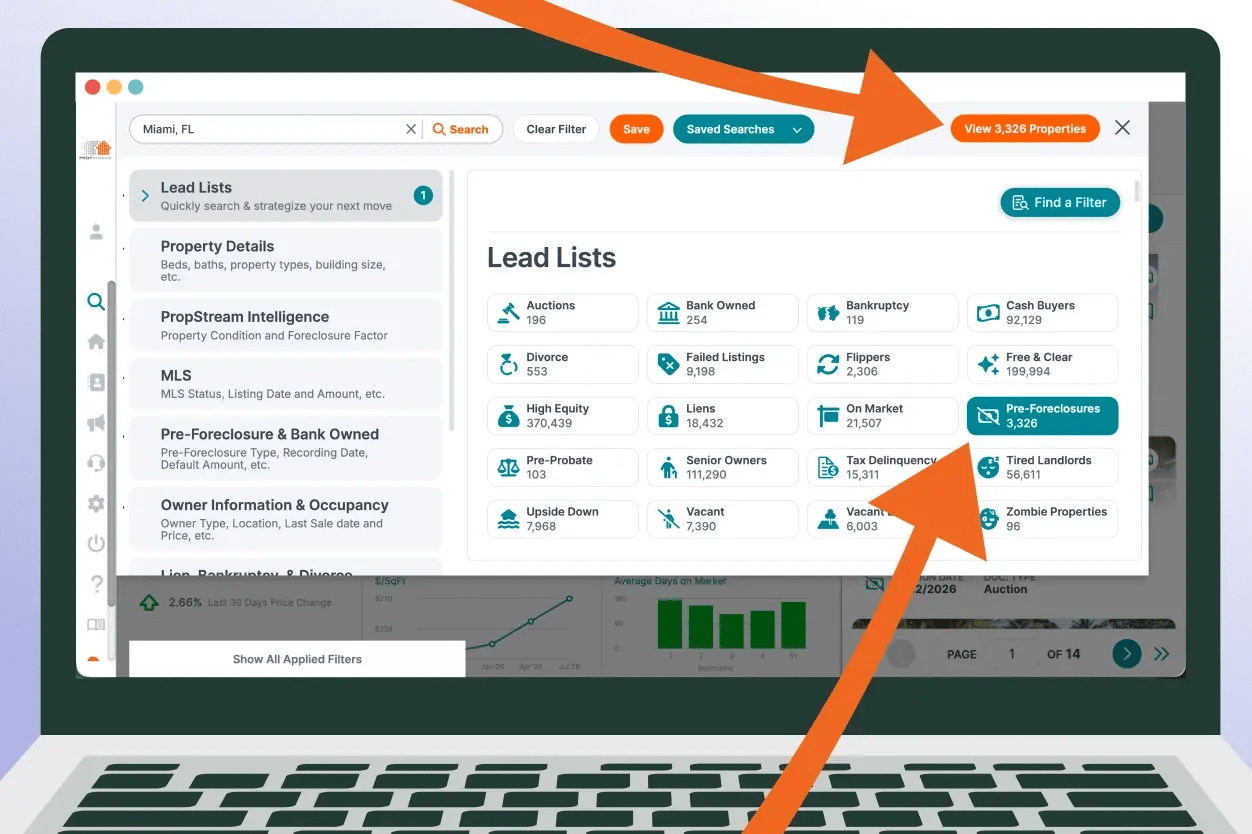
That said, you must first identify homeowners who’ve defaulted on their mortgage but whose property hasn’t yet been foreclosed on (aka pre-foreclosure).
Since default notices are publicly available, you could scour public records at your local county office for this information. However, there’s a better way: PropStream it!
PropStream has a dedicated Pre-Foreclosure Lead List that will show you all the properties in your market where the lender has filed a default document (e.g., a Lis Pendens, Notice of Default, Notice of Sheriff’s Sale, or Notice of Trustee’s Sale).
Pro Tip: Stack additional search filters to narrow your pre-foreclosure lead list even further.
How to Approach Homeowners in Pre-Foreclosure
Once you’ve finalized your pre-foreclosure lead list, you can start reaching out to prospects.
The key here is to take a persistent but sensitive approach. Facing foreclosure can be stressful and scary. Ease homeowners’ worries by educating them on their options and helping them navigate what is often a daunting process.
To make your initial contact, you don’t have to leave PropStream. The platform includes tools to start email, postcard, and dialing campaigns. Experiment with different channels and outreach timing to see what yields the best results.
Common Mistakes to Avoid
Whatever you do, avoid these common pitfalls when working with pre-foreclosure leads:
- Being too aggressive or pushy. Coming on too strong with excessive calls or high-pressure scripts can alienate homeowners who are already stressed. It also risks violating harassment provisions in consumer protection laws.
- Ignoring compliance requirements. Not following state and federal telemarketing rules can lead to legal trouble and damage your reputation.
- Making lowball offers without justification. Offering far below market value without explaining your reasoning (repair costs, closing speed, avoiding agent fees, etc.) can feel exploitative and be a turn-off for homeowners.
- Failing to explain all of the homeowner’s options. Focusing solely on your own offer (e.g., a cash sale) rather than mentioning alternatives such as loan modification or forbearance can come across as self-serving and misleading.
- Not Following Up Consistently. Many investors and agents give up after one attempt at contact. Since pre-foreclosure homeowners may need time to consider their options, a structured follow-up cadence (without being overbearing) tends to be more effective.
Find Your Next Pre-Foreclosure Lead with PropStream for Free
Ultimately, Florida’s rising foreclosure rates reflect broader economic pressures that show no sign of easing soon. As an investor or agent, you can use this as an opportunity to build a pipeline of motivated sellers while helping homeowners in need. Just remember to be tactful in your approach.
Use PropStream to identify and reach pre-foreclosure homeowners early. Then turn a challenging situation into a win-win for everyone involved.