Disclaimer: This article is intended for informational purposes only and should not be considered financial, legal, or tax advice. Housing market conditions vary by location and change over time. Homeowners should consult qualified financial, legal, or real estate professionals before making decisions regarding their property.
|
Quick Answer: An underwater mortgage occurs when a homeowner owes more on their mortgage than their home is currently worth. It is also referred to as an “upside-down mortgage.” According to ATTOM, approximately 3.2% of U.S. mortgaged homes are seriously underwater, representing about 813,000 homeowners. While most homeowners still have significant equity, recent buyers in markets where home prices have softened are more likely to experience negative equity. For real estate professionals, tools like PropStream's Upside Down Lead List can help identify homeowners who may benefit from guidance before financial challenges escalate. |
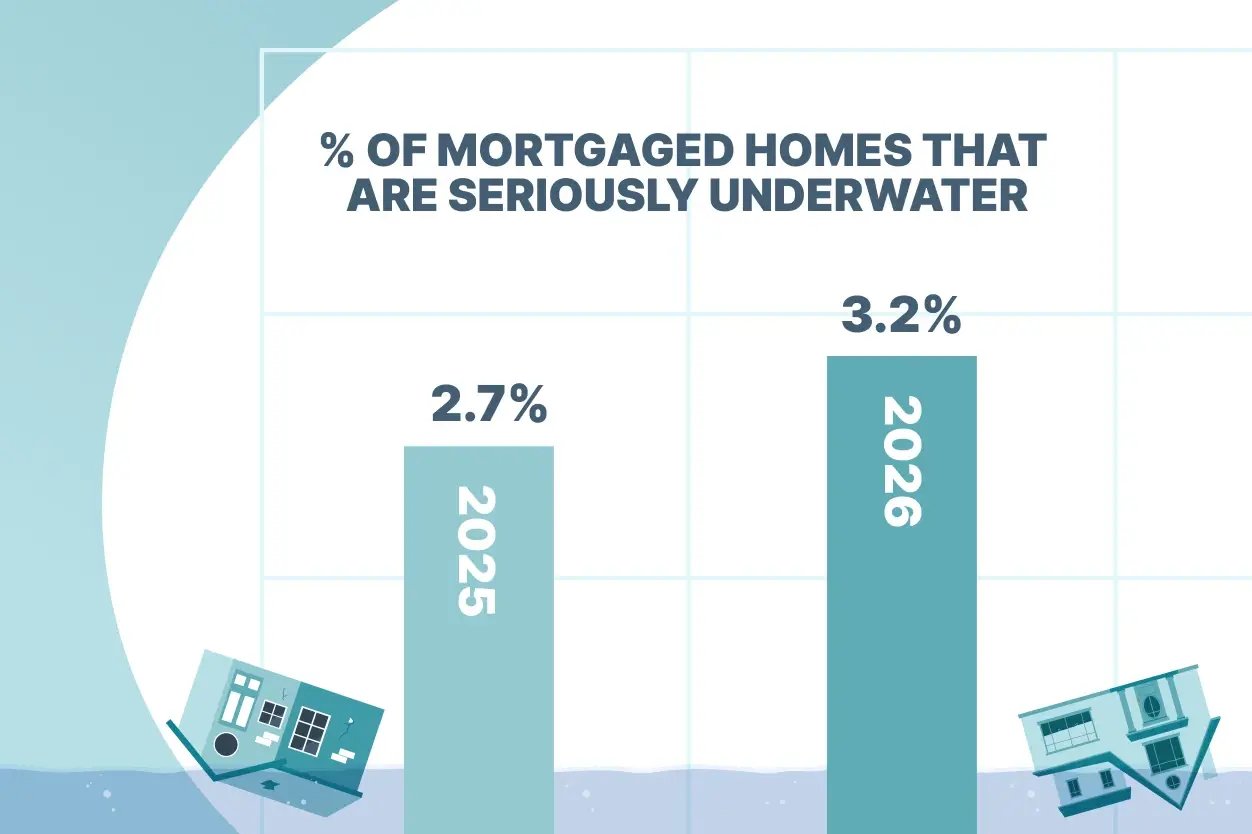
Although the vast majority of U.S. homeowners continue to hold significant equity, negative equity is beginning to increase after several years of rapid home price appreciation. According to ATTOM Data, approximately 3.2% of mortgaged homes are seriously underwater, up from 2.7% a year ago. While this remains well below levels seen during the Great Recession, certain regional housing markets are experiencing growing pressure as home prices soften, affordability challenges persist, and borrowing costs remain elevated.
For real estate professionals, these trends represent more than just market statistics. They can signal opportunities to educate homeowners, provide solutions, and connect with those who may need guidance before financial challenges become more severe.
Key Statistics
| Metric | Current Value |
| Seriously underwater mortgages | 3.2% of mortgaged homes |
| One year ago | 2.7% |
| Estimated underwater borrowers | Approximately 813,000 homeowners |
| Annual increase in underwater borrowers | 44% |
| Total homeowner equity | $18 trillion (record high) |
| Homeowners with tappable equity | 47.5 million |
Key Takeaways:
- Recent buyers with low down payment loans are generally the most vulnerable to negative equity when home prices decline.
- Rising negative equity may create opportunities for real estate professionals to educate and assist homeowners before financial challenges escalate.
- PropStream's Upside Down Lead List helps agents and investors identify properties that may have negative equity, making it easier to connect with homeowners who could benefit from professional guidance.
What Is an Underwater Mortgage?
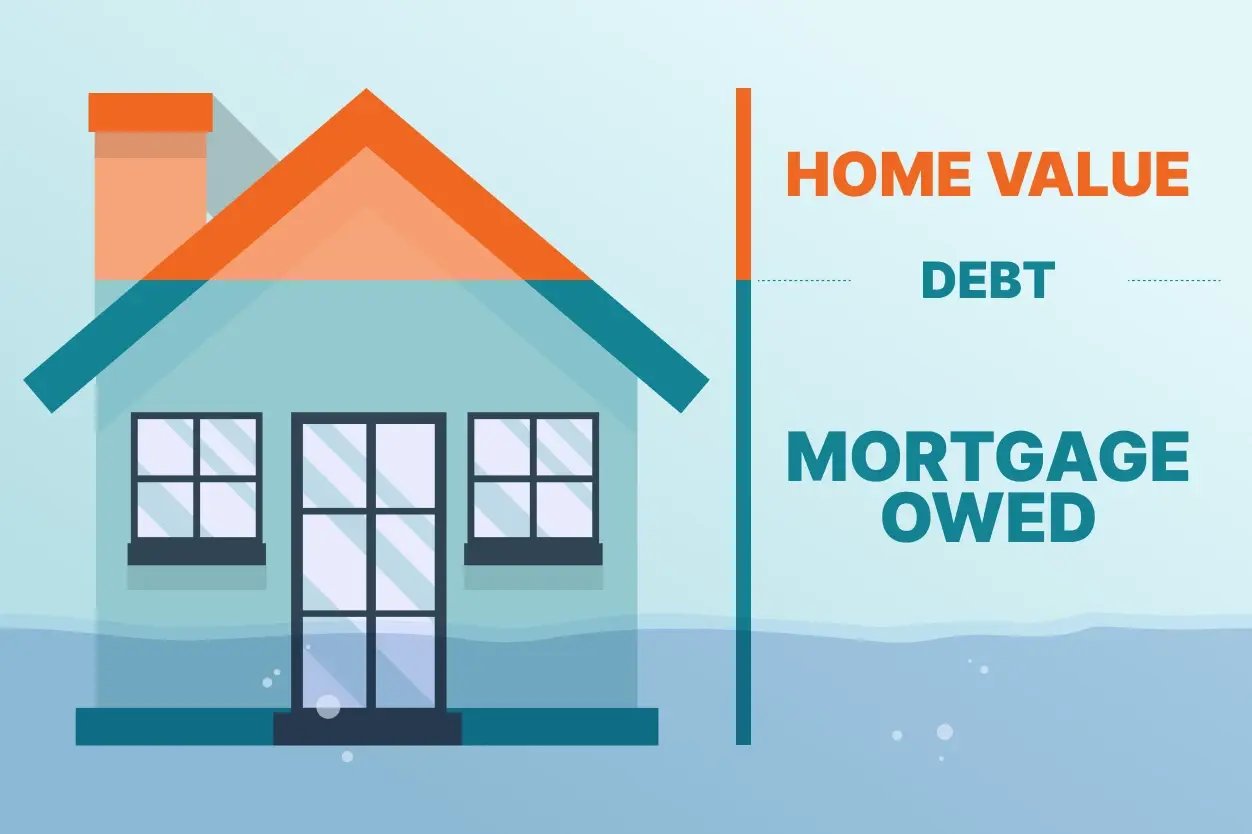
An underwater mortgage—also called negative equity or upside down—occurs when a homeowner owes more on their mortgage than their home is currently worth.
For example:
- Current home value: $350,000
- Remaining mortgage balance: $375,000
In this example, the homeowner has $25,000 in negative equity.
Being underwater doesn't automatically mean a homeowner is in financial trouble. However, it can make it more difficult to refinance, sell the home, or relocate without bringing additional funds to closing.
Why Are Underwater Mortgages Increasing?
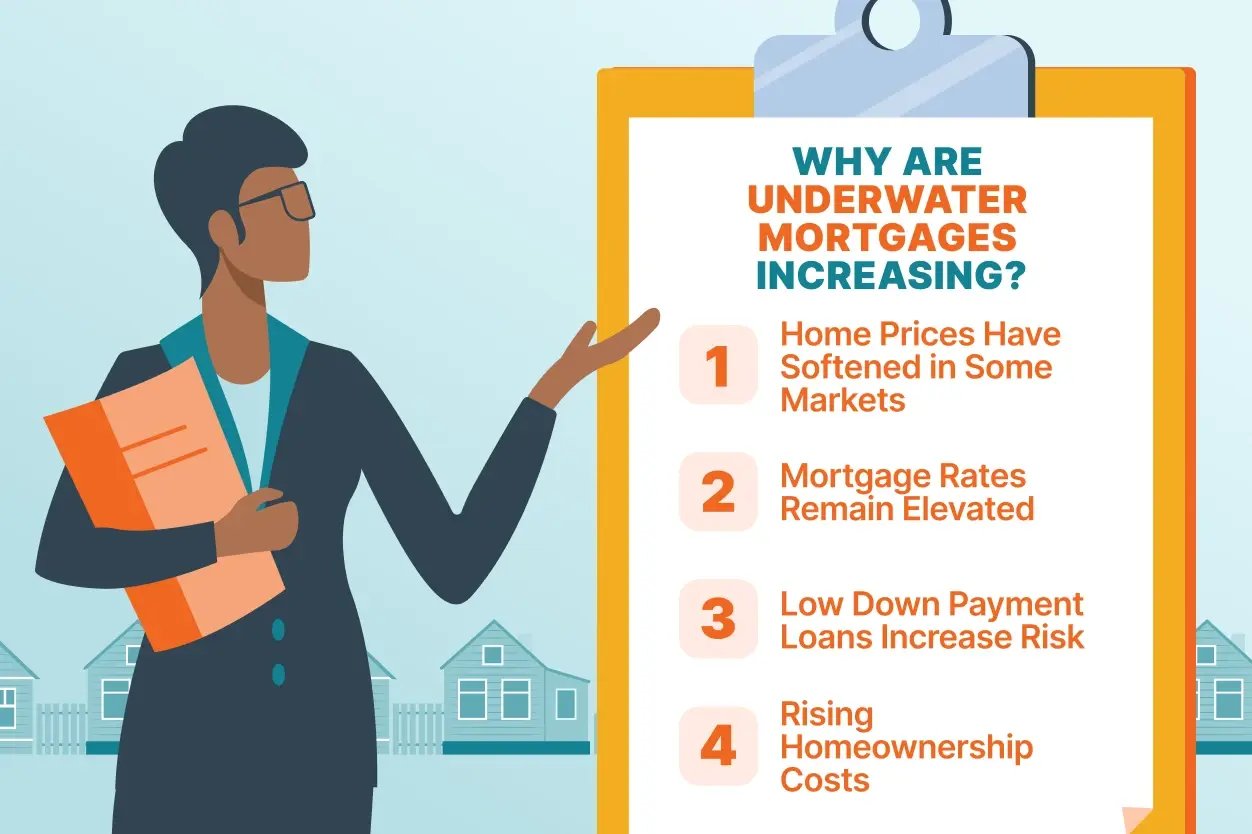
Several factors are contributing to the recent rise in negative equity.
Home Prices Have Softened in Some Markets
Many housing markets experienced extraordinary appreciation between 2020 and 2022. As inventory has increased and affordability has weakened, prices in some regions have begun to level off or decline.
Homeowners who purchased near peak pricing have had less time to build equity, making them more vulnerable to market corrections.
Mortgage Rates Remain Elevated
Mortgage rates continue to remain well above the historic lows seen during the pandemic. Higher borrowing costs reduce affordability, limiting buyer demand and putting downward pressure on home prices in some markets.
Low Down Payment Loans Increase Risk
Many underwater homeowners purchased using FHA, VA, or other low-down payment financing programs. While these loans expand access to homeownership, they also leave buyers with less equity at closing. Even modest declines in property values can result in negative equity.
Rising Homeownership Costs
Increasing homeowners' insurance premiums, property taxes, maintenance expenses, and other ownership costs have added financial pressure for many households. While these expenses do not directly create negative equity, they can make it more difficult for homeowners to navigate changing market conditions.
Where Are Underwater Mortgages Most Common?
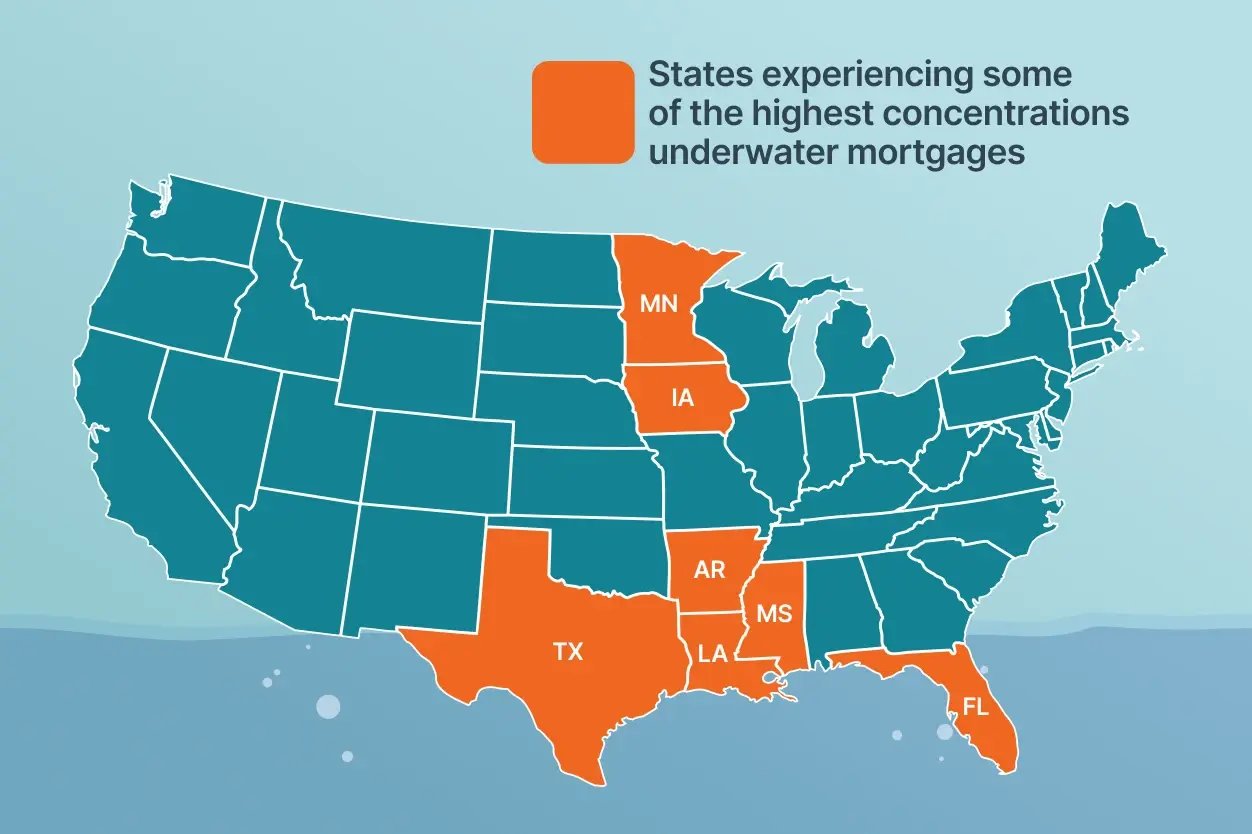
Negative equity is not evenly distributed across the country.
|
States experiencing some of the highest concentrations of underwater properties include:
*Data on underwater (upside-down) properties by state was sourced from PropStream's Upside Down Lead List. The figures reflect the data available when this report was created. Because property records and market conditions are continuously updated, these totals may change over time, and current results may differ from those shown in this report. |
Many of these markets experienced rapid appreciation during the pandemic, followed by increasing inventory and moderating buyer demand.
Conversely, many Northeastern markets and areas with a tighter housing supply have generally maintained stronger homeowner equity.
Why Today's Market Is Different From 2008
Although underwater mortgages are increasing, today's housing market is fundamentally different from the conditions that contributed to the Great Recession.
| 2008 Housing Crisis | Today's Market |
| Widespread speculative lending | Stricter lending standards |
| High-risk mortgage products common | Fixed-rate mortgages dominate |
| Millions of underwater homeowners | Approximately 813,000 underwater borrowers |
| Broad negative equity nationwide | Record $18 trillion in homeowner equity |
| Weak homeowner balance sheets | Most homeowners still have significant equity |
Today's increase in negative equity is largely concentrated among more recent buyers in markets where prices have softened, rather than across the entire housing market.
The Bigger Picture
One of the most notable aspects of today's housing market is that two seemingly opposite trends are occurring simultaneously.
Overall, homeowner equity has reached a record $18 trillion, according to ICE Mortgage Monitor, yet the number of underwater borrowers has begun to increase.
This reflects a growing divide between longtime homeowners, who have accumulated significant equity over many years, and recent buyers, who may be more susceptible to changing market conditions.
How This Could Affect the Housing Market
If negative equity continues to rise, several trends could emerge.
What to Watch Going Forward
|
Several economic indicators will influence whether underwater mortgage rates continue to rise over the coming year, including:
|
If mortgage rates remain elevated while home prices continue softening in certain markets, additional homeowners may find themselves underwater. Conversely, stronger home price growth or lower borrowing costs could help stabilize homeowner equity.
How Real Estate Professionals Can Help
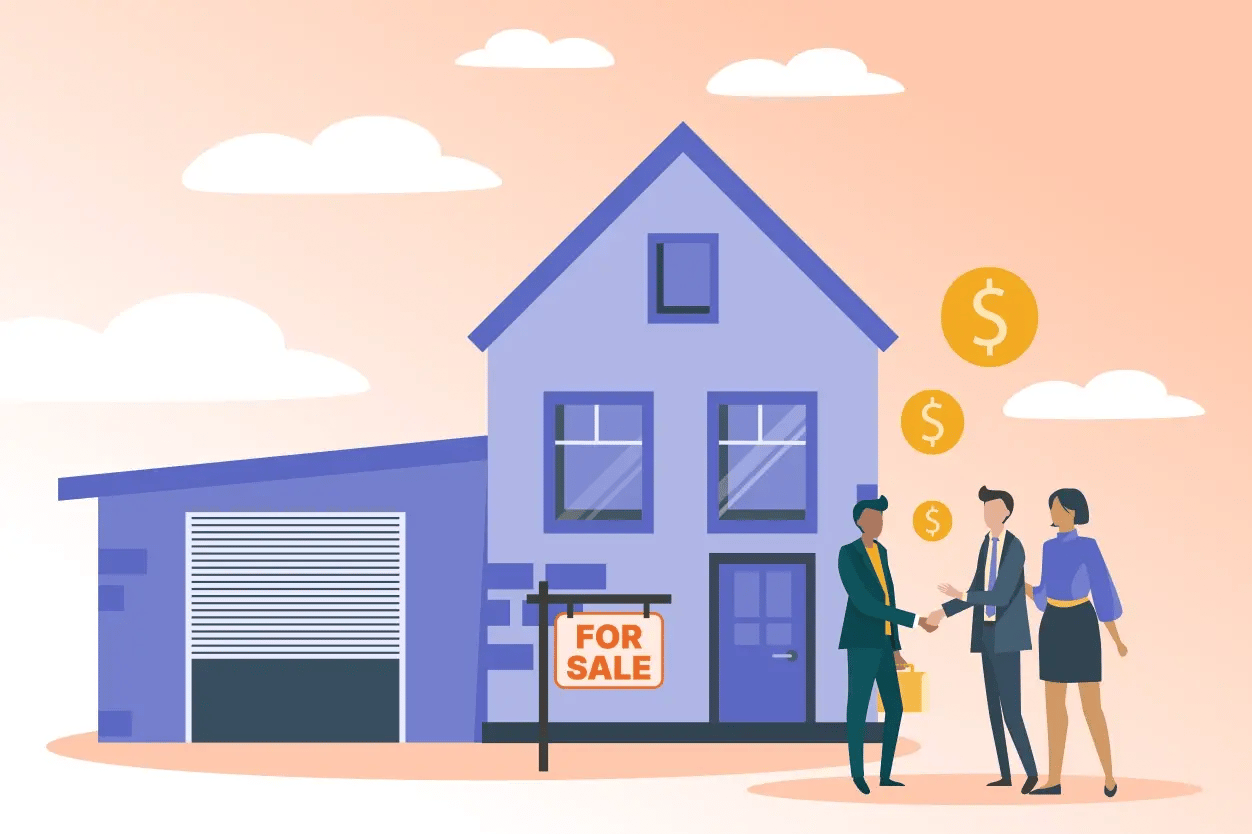
For agents and investors, rising negative equity is more than a housing statistic. It can identify homeowners who may benefit from professional guidance before their situation becomes more challenging.
Some homeowners may not realize they have options beyond waiting for the market to recover. Others may need assistance understanding whether selling, negotiating with their lender, refinancing, or pursuing a short sale makes the most sense for their circumstances.
Reaching homeowners early gives real estate professionals an opportunity to educate, provide resources, and help homeowners evaluate their available options before financial challenges become more severe.
Find Potential Upside Down Leads with PropStream
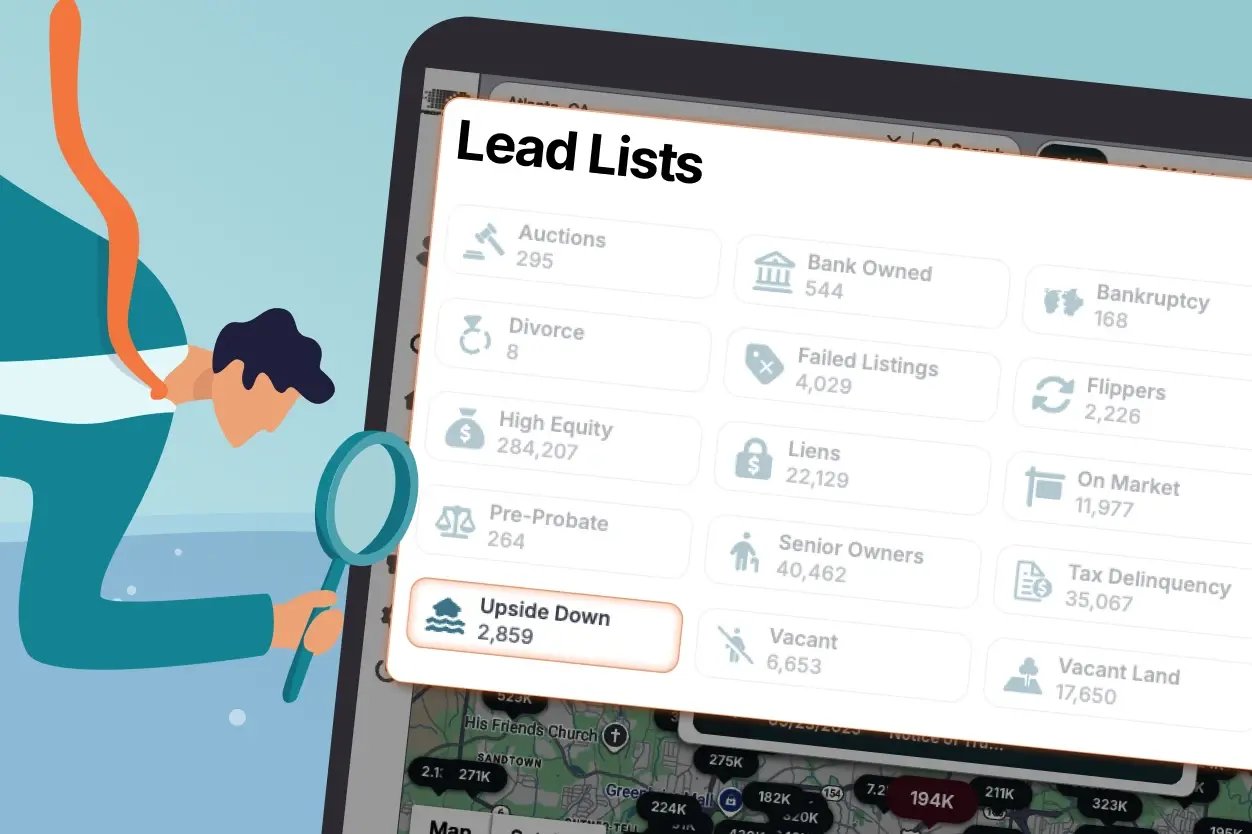 Identifying homeowners who may be facing negative equity doesn't have to rely on guesswork.
PropStream's Upside Down Lead List helps real estate professionals identify properties where the estimated loan balance exceeds the property's estimated market value. Instead of researching properties one at a time, users can quickly build niche lead lists of homeowners who may be experiencing financial pressure.
|
To further refine your outreach, the Upside Down Lead List can be combined with many of PropStream's additional search filters, including:
|
Whether you're helping homeowners explore alternatives before foreclosure, identifying potential listing opportunities, or searching for motivated sellers, PropStream provides the property data needed to start more informed conversations.
Note: Property values and mortgage balances are estimates and can change over time. Always verify property information and perform appropriate due diligence before making business decisions or contacting property owners.
In addition to finding upside-down leads, PropStream enables real estate professionals to launch a full marketing campaign—without leaving the application! Perform a skip trace*, send emails, cold call, mail postcards and letters, and track your results in one convenient location.
| Psst! PropStream Connect allows you to save on your marketing spend with free skip tracing, Click-to-Dial, Dialer Campaigns, Lead Automator, and discounted direct mail! You can try it for 14 days free. |
From finding the lead to closing the deal, PropStream is the premier all-in-one real estate software that makes it easier for investors, agents, and more to:
Search → Identify → Connect → Transact.
*PropStream engages an independent third-party to perform skip tracing.
Note on sources:
- Data taken from ATTOM and ICE Mortgage Monitor unless otherwise cited.